

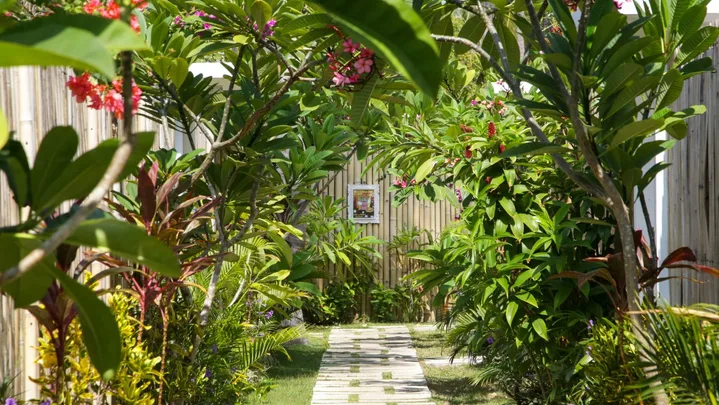
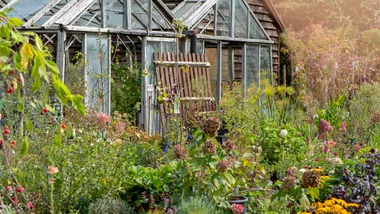
Not exactly groundbreaking news, but many of us don’t live on a rolling country estate or even a traditional quarter-acre section with a lemon tree out back these days. With downsized living on the rise, the definition of what constitutes a garden has become broader.
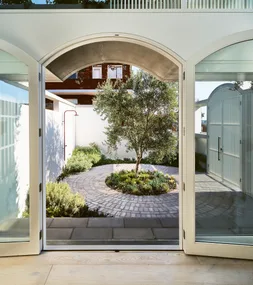
A growing space can be a courtyard, a tiny balcony, a small square of concrete or a line of potted cacti on a front porch. In fact, often the most charming gardens are the surprising ones where owners have been creative and clever with their space. It doesn’t need to cost a fortune either. Even with limited funds, you can still create an un petit jardin (small garden – see it sounds fancy already) where you harvest homegrown tomatoes, pick a posy or relax in a deck chair under the canopy of a potted palm.
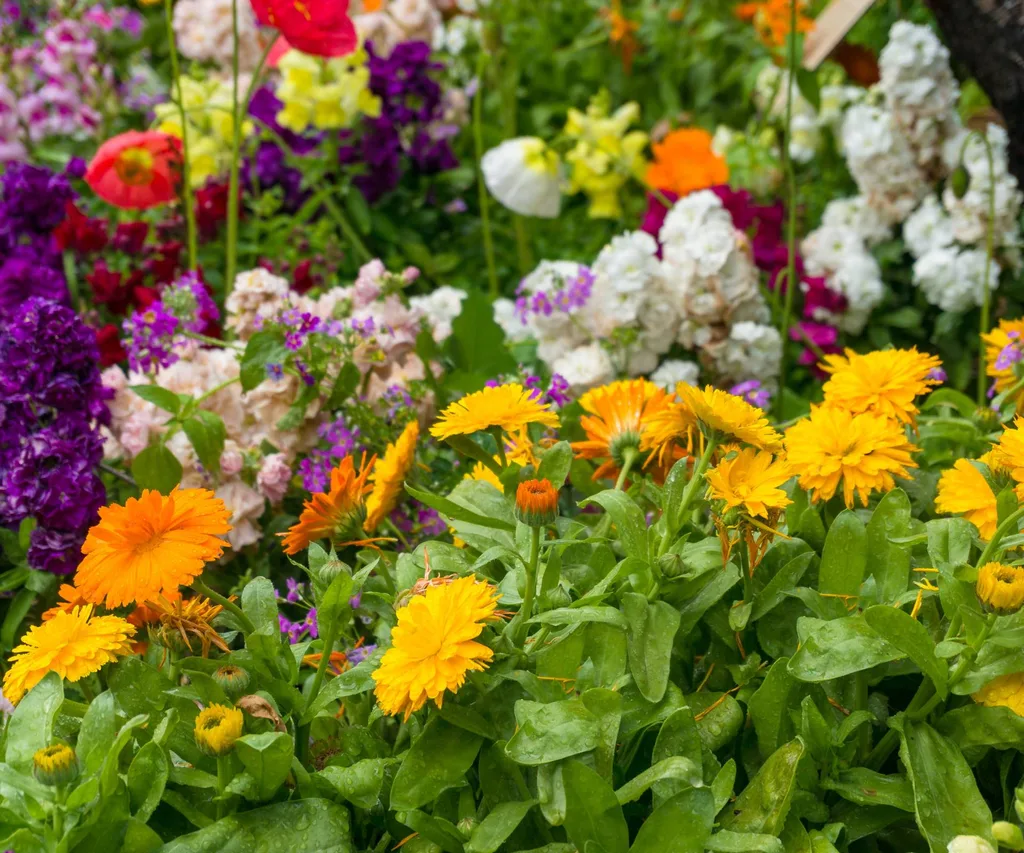
Find your style – controlled or chaotic?
When conceptualising your revamped outdoor area, come up with a theme that appeals to your sense of style. It will make the space feel more cohesive and distract from the less attractive but necessary items, like bins and bikes. Do you want a tropical oasis with a cool, calm colour scheme in green and white, or does a wild ‘crazy daisy’ cottage garden vibe make your soul sing? If so, you might like to go full lolly scramble aesthetic and embrace chaos gardening. A TikTok trend where you do away with formality and sow a random selection of seeds and wait to see what comes up.
Obviously, there are still a few gardening rules to follow here – decent soil, six hours of sun and regular watering – but otherwise, the beauty is in the spontaneity. If you yearn for a plot-to-plate lifestyle and have a sunny spot, pack in as many herbs and veggies as you can. Or perhaps you’re looking for easy wins with low-maintenance greenery? In that case, go for drought-tolerant succulents that you’ll barely need to water.
Grow your vision
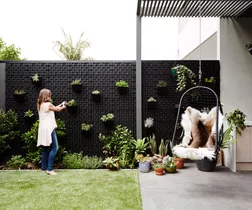
Have you really looked at your space? You might think your growing area is confined to that broken raised bed filled with weeds, but what about that small unused area around the side of the house or behind the garage? Could it be transformed with some large-leaved plants, deck chairs and festoon lights? Or maybe you could grow pots of tomatoes and cheerful Mexican marigolds along that set of steps.
Develop a mindset like that dandelion growing out of a crack in the pavement. Remember that plants and gardens can be created anywhere. For inspiration, search keywords describing your particular area, such as ‘narrow outdoor space’ or ‘plants up a staircase’, and you’ll be overwhelmed with inspiring images.
Gain ground
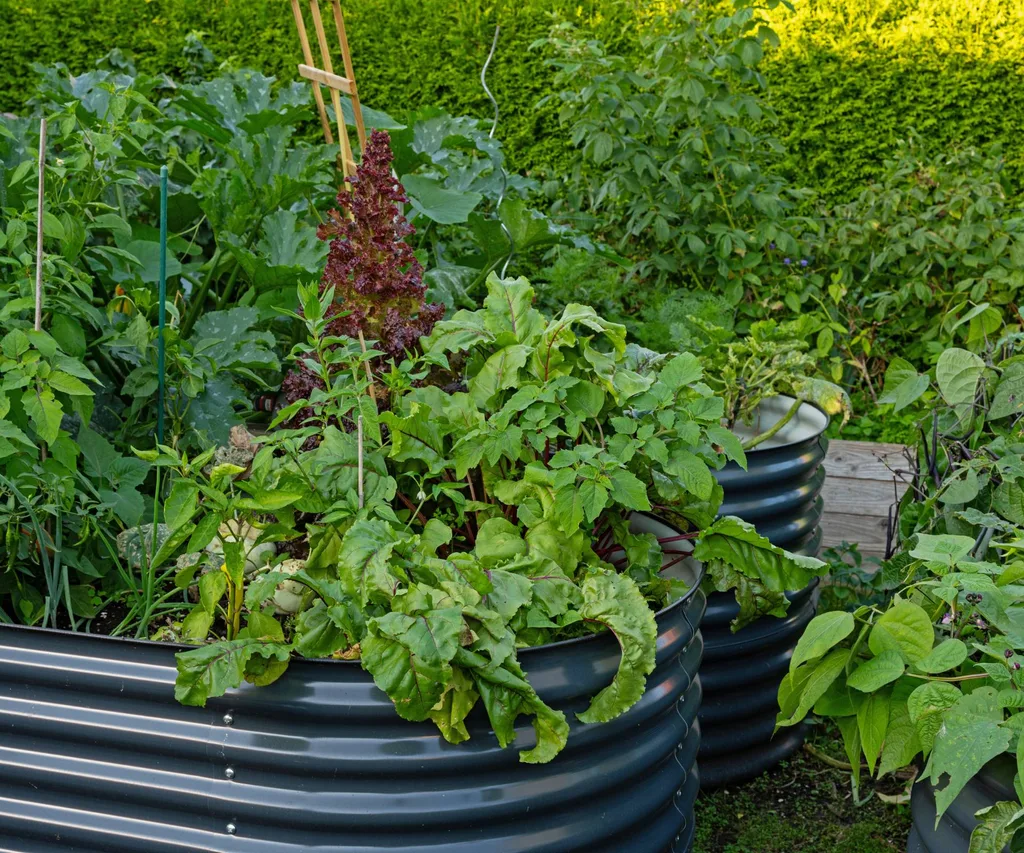
If you don’t have in-ground garden beds, you can buy metal raised beds relatively cheaply, but you can also make them for free. There are loads of tutorials online that show you how to make raised beds and planters out of old pallets. They’re easy to come by, as many businesses put them out on the street for people to take. They often have stencilled words on the side, which adds a cool rustic vibe.
Don’t have tools? Borrow some from a friend or join a local tool library for a small fee. Otherwise, pots are your go-to.
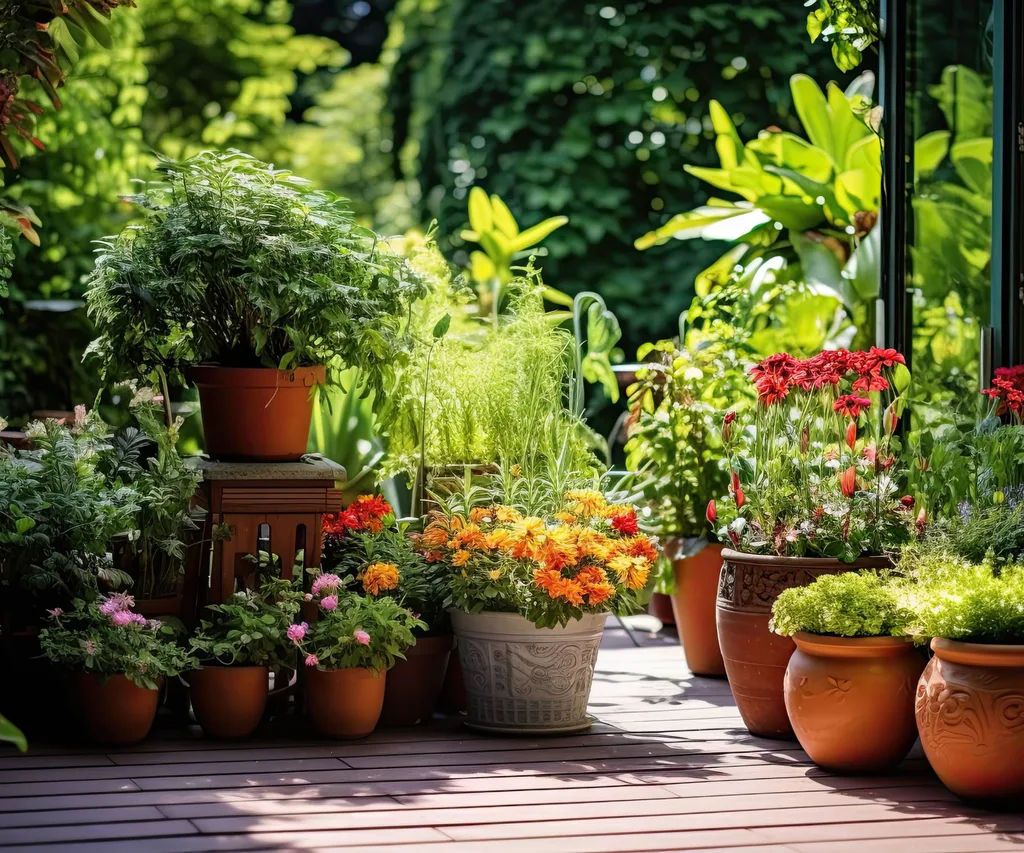
While terracotta or glazed pots are elegant and traditional compared to plastic, they dry out more quickly and, to be honest, once a container is brimming with bright flowers or a teepee of sweet peas, the pot is secondary. Pots can be picked up cheaply from thrift shops, Trade Me or Freecycle but you can pretty much use any container as a pot as long as it has drainage holes in the bottom of it. These can be drilled into most containers, including 10L buckets.
A line of tomatoes in bright red buckets definitely gives off cheerful edible-garden vibes. Or embrace a vintage aesthetic and disguise plastic pots inside old tins, containers or baskets, which you can slip off when watering.
Dirty secrets
Plants in containers have to work harder because they’re essentially caged canaries in an artificial environment and can’t send their roots deep down into the soil to find nutrients, so you have to give them extra TLC.
If you want your plants to survive, avoid buying the cheapest bag of potting mix just so you can afford the pricey pot. Instead, spend your money on a potting mix that includes a slow-release fertiliser and a wetting agent, so moisture is evenly spread throughout the container.
Potted plants also need their soil replaced by a third every year or so. If this is outside your budget, grow drought-hardy succulents, cacti or native grasses and reeds, such as oioi (Apodasmia similis), which don’t require frequent watering.
Move up in the world
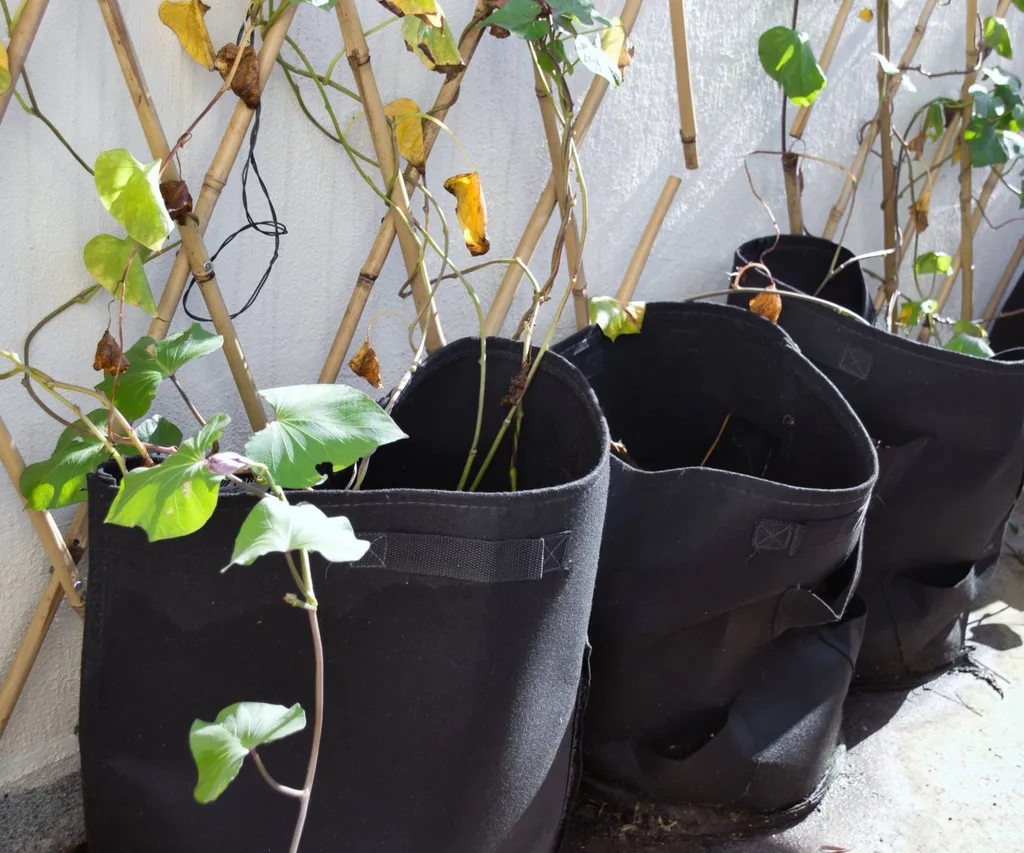
One of the best ways to maximise the lushness within a small garden space is by going vertical. Climbing plants don’t need much encouragement to scale balcony pillars or walls, as long as you give them a leg up by training them along a trellis or wire. For a stylish trellis option, concrete reinforcing mesh looks like Corten steel and can be purchased and cut to size for free at your local hardware store, or source it at a recycling centre.
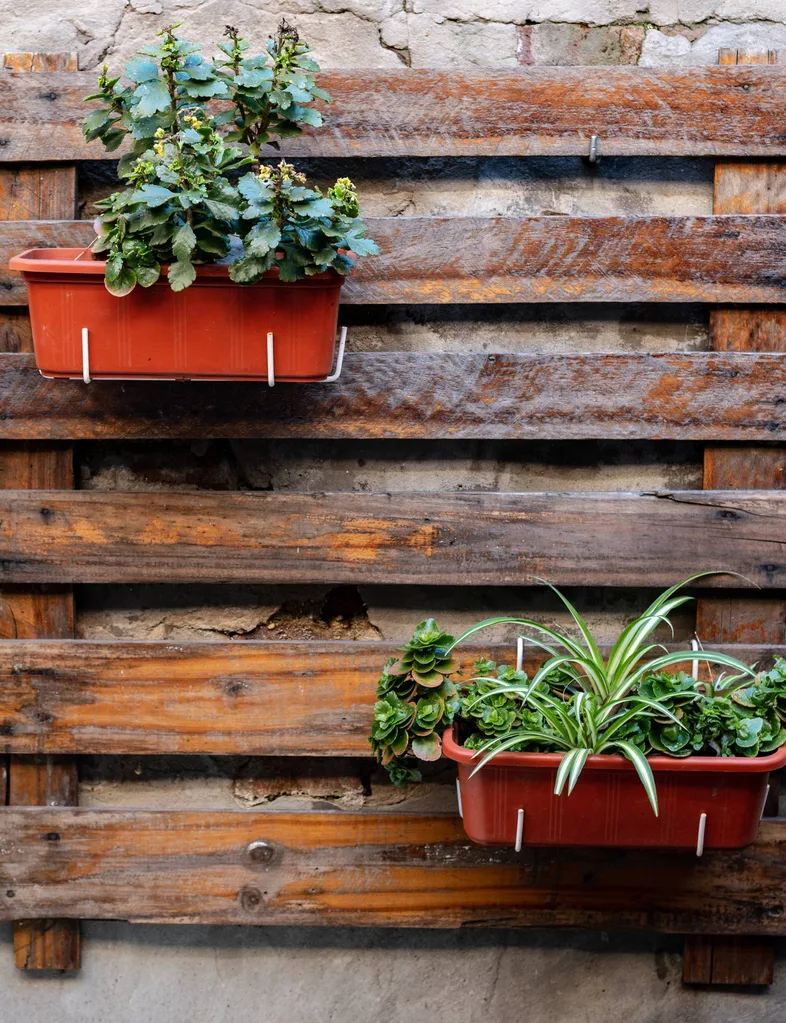
You can also attach pots to walls. Choose from a wide range of vertical wall systems, from rectangular planters with frames that can be hung over rails and fences, to complete vertical growing systems that you fix to a wall. Pallets again provide a free option for creating a wall planter. If you’re looking for a less weighty option, fabric pocket systems are ideal for plants like strawberries, herbs and ferns in shaded areas. Buy purpose-made ones or upcycle an old shoe organiser. You can also create height and raise plants to eye level by placing pots on shelves or stacking them on upturned pots or breeze blocks.
Hot tip: Including some larger plants in a small space will make it feel more expansive and create focal points.
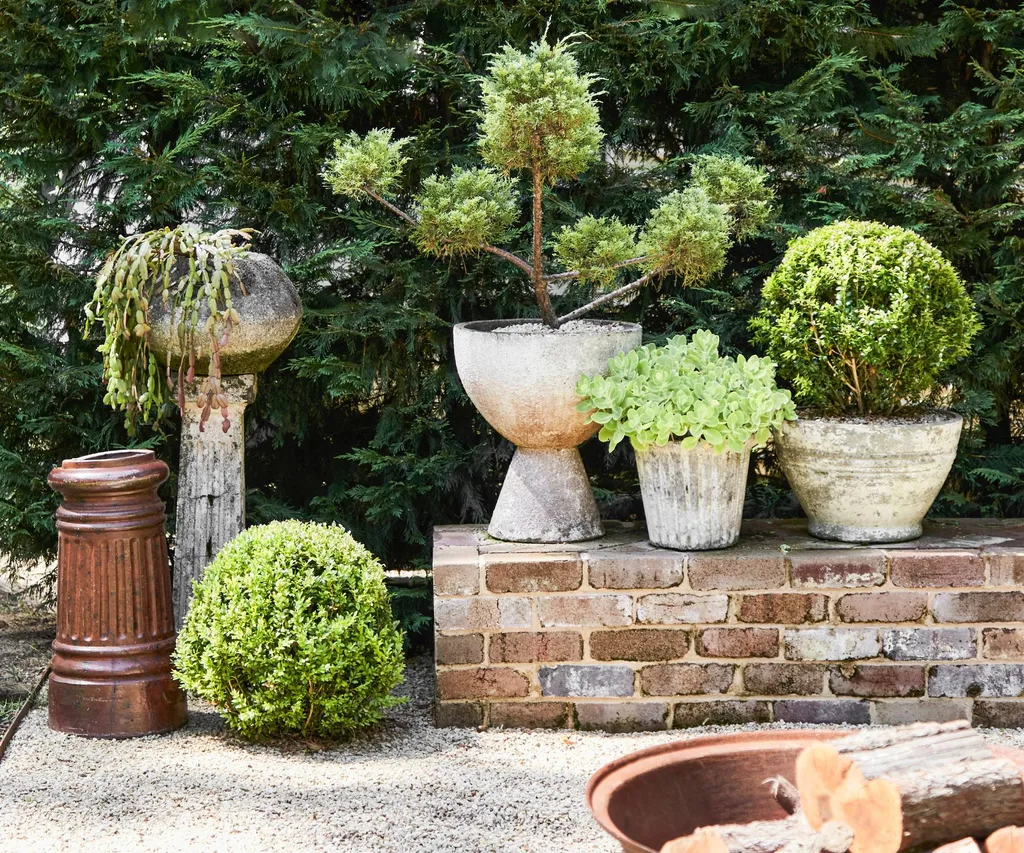
Think big for small
A common misconception is that a small space requires small plants. In fact, the opposite is true. By incorporating some larger statement plants into your outdoor area, you’ll make it feel lusher and more expansive.
Consider pots of clumping bamboo, harakeke, ponga, cordylines and palms or even a dwarf peach. Always ensure that larger plants are grown in a sufficiently large pot so their roots have space to spread out. Instead of having a bare patch of dirt at the base of the pot, plant it with a ground cover such as native Lobelia angulata, which has pretty white flowers, or fragrant thyme. Include medium-sized and smaller plants too, to create a feeling of abundance and scale.
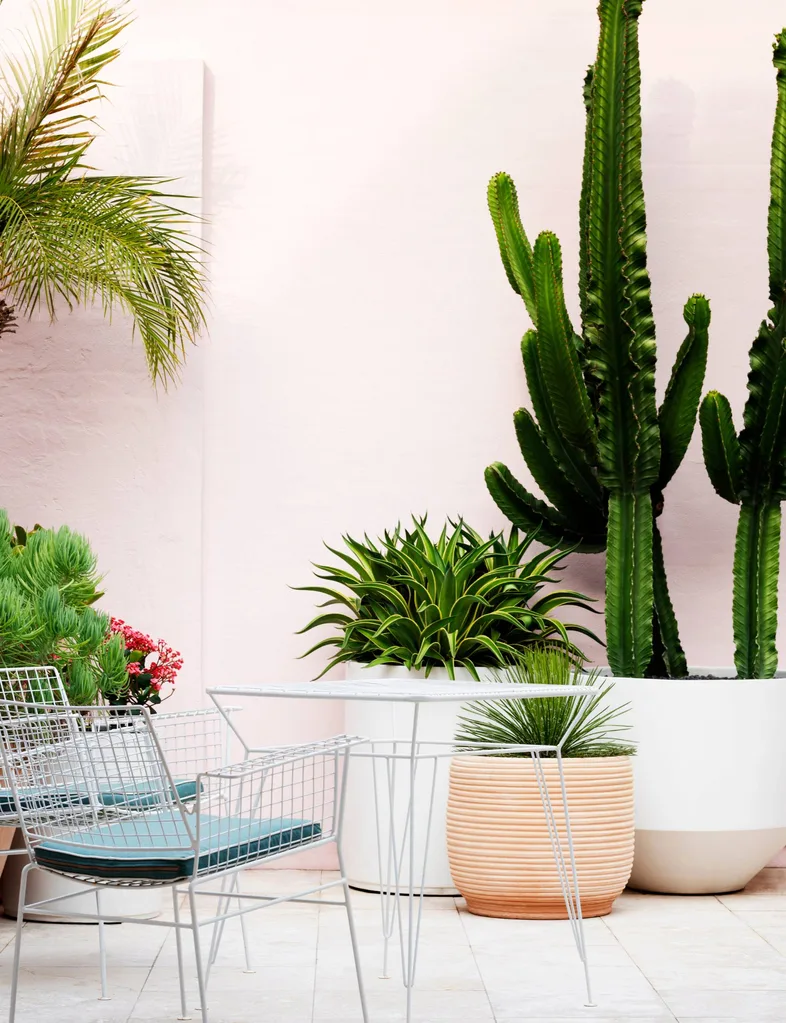
Curate your nature lounge
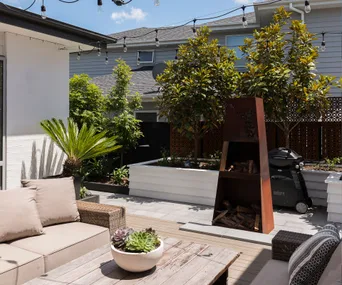
You don’t need to spend a fortune on outdoor furniture to create a zone for relaxing in your space. Scour op-shops for rugs, outdoor cushions, mats and throws that can be used to disguise tatty outdoor seating or surfaces.
Even a plank of wood and some breeze blocks can be transformed into a simple garden seat. An old curtain can be strung up and used as a shade sail, or hang it vertically for a makeshift screen that gives you privacy. Keeping to a palette of three colours, such as green, white and grey, if a calm and curated look is your preference, is an easy way to add a sense of cohesion to your outdoor furnishings.
Mismatched outdoor furniture and pots can be unified if you paint them all the same colour. Or maybe you want a maximalist boho riot of competing florals and stripes to amp up the ‘no rules’ vibe in your chaos garden. Create an enchanting ambience at night with fairy or festoon lights, or display chunky candles in terracotta pots. For a simple water feature, fill a metal bucket with water and float tealights and flower petals in it.

