

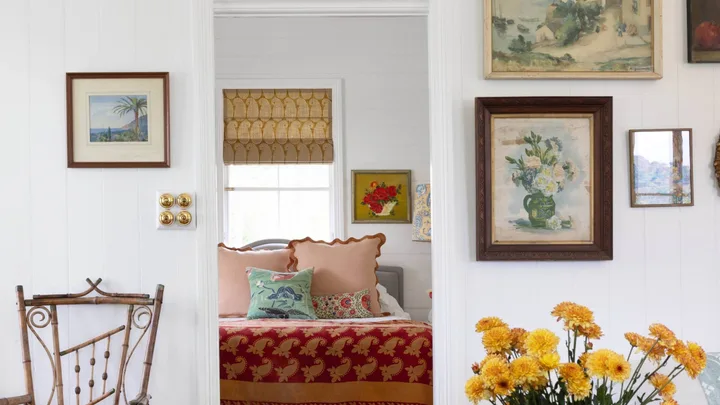
 Photography: Louise Roche
2026 is Your Home and Garden’s Year of Art, in which we include a free art print by New Zealand artists and photographers in each issue. Consider this the beginning of your art collection, if you haven’t started already. Don’t miss another copy – subscribe here.
More than any rug or armchair, art can tell a story, imprinting a home with personality. “Art adds character while creating a real connection between a room and the people who live there. It turns a house into a home,” says Anna Silcock, co-director of Parnell Gallery in Auckland.
Though art speaks to us on an elemental level, the purchasing and display of it often induces a kind of stage fright. Knowledge is power, so we shoulder-tapped the experts for their best artistic advice for newbie collectors.
How should I choose art?
Your choice of art can be driven by your interiors, selected to match or fill the need for a focal point in the home. But to truly paint your home with personality, choose art not because it matches the curtains, but because you can’t live without it.
Anna says to “trust your instincts and select works that resonate with you. Go for pieces you love and feel drawn to, whether it’s the colours, the energy, or the story behind them. Art should speak to you on a personal level, so when in doubt, follow what feels right”.
What if I can’t afford established artists?
You’re ready to dip your toes into the world of art, but there’s no need to dive straight into the deep end. There are plenty of ways to enjoy beautiful art without taking a second mortgage. Start by seeking out emerging artists whose work you connect with.
“One of the great joys of building a collection is to acquire a work by a young or emerging artist and follow their career,” says Emily Gardener, director of art at Webb’s auction house. “Whether they become the next rising star is unpredictable, but it is a privilege to acquire a work and know that you have supported their career at an early stage.”
If you’ve already fallen for an established artist, prints are an excellent way to enjoy their work – and if you can afford a limited edition, its rarity means it will hold or increase value over time.
“The secondary market is a fantastic place to pick up rare prints and affordable works by emerging and established artists,” says Emily. Check out auction houses, online marketplaces, op shops or charity stores, and some galleries for fab secondhand finds.
Is it okay to mix artistic styles?
Being drawn to wildly different art genres needn’t impede your art collection – in fact, it can enhance it.
“Collecting and hanging art can be quite an intuitive process, and it can be interesting to combine genres and art forms. Works might speak to one another through their subject matter, or complement each other through texture, colour, scale and form or their surrounding environment. Some of the most interesting private collections are minimalist or bold, eclectic and daring, reflecting the personalities of their patrons,” says Emily.
Embrace the eclectic – it represents who you are, after all. But if you want to steer away from chaos, consider how you display genres together. Aim for balance – for example, position a bold piece with quieter, minimalist works.
How do I display a group of artworks?
One big artwork is simple, but hanging a cluster of small pieces can throw people into a spin. “When it comes to displaying multiple artworks, there’s no one-size-fits-all rule; so much depends on your space and style,” says Anna. “If you love clean lines and simplicity, a linear arrangement could be your thing. It brings structure and clarity to a space.”
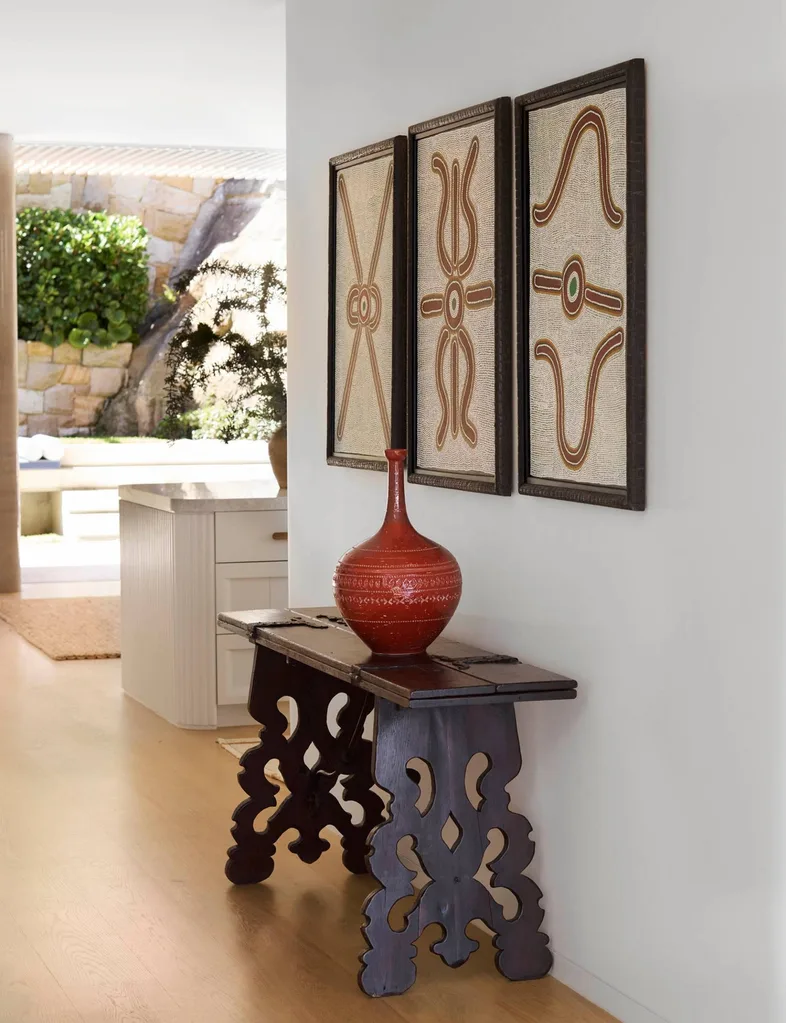
This tidy, grid arrangement is the best way to display a handful of artworks of the same size, a similar theme and identical frames.
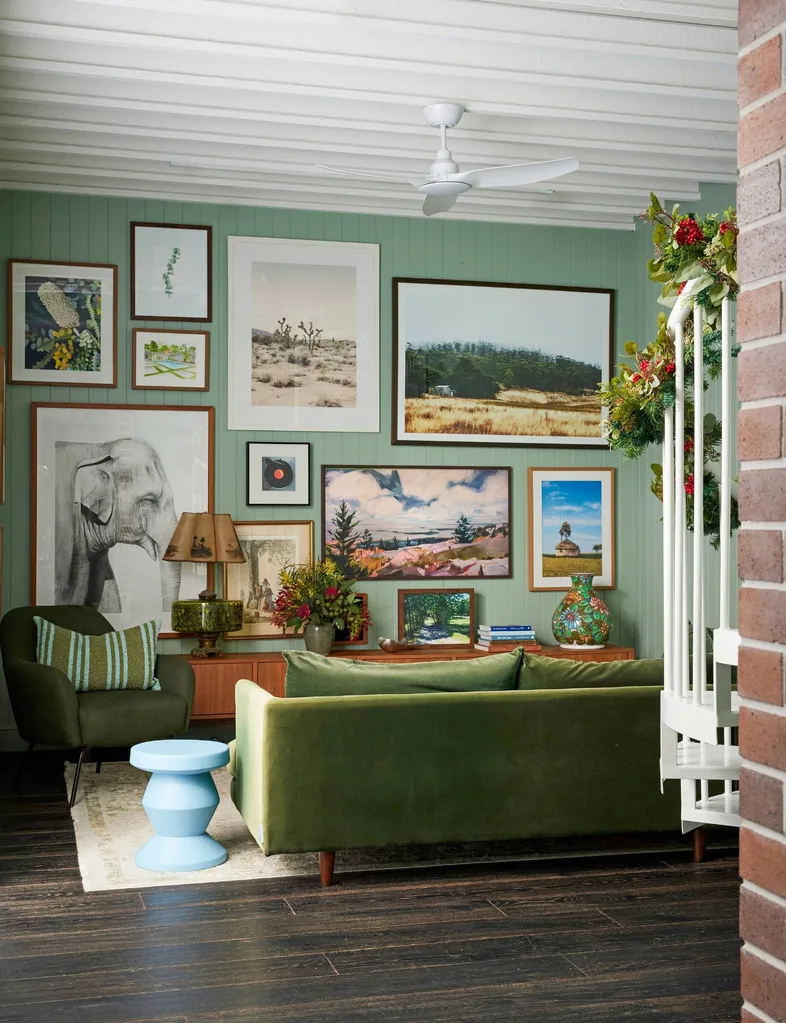
“If you’re more into an eclectic vibe, try a ‘salon hang’. That’s when you cluster works together on one wall. It’s playful, personal and lets you get creative with the arrangement,” says Anna.
A few guidelines to get started on a salon hang: keep the configuration reasonably tight, so the eye can appreciate it all at once; place larger pieces in the middle and smaller on the outside; map it out with paper before banging in nails; and embrace difference – varied sizes, styles and frames keep it interesting.
Do my walls have to be gallery white?
Kiwis are re-learning to embrace colour on walls, but where does that leave our art collections?
“Many galleries choose white because it creates a neutral backdrop, which lets the artwork take centre stage without distractions,” says Anna. But at home, art can play very nicely with coloured walls. “Rich colours or muted tones can work beautifully as a backdrop to your art. They can enhance the mood of a piece or complement your overall decor. Even a soft, subtle shade can add warmth and depth without overshadowing the art.”
A pale artwork might shrink against a pale wall but pop against a coloured one. A wall of classical artworks looks elegant against the backdrop of saturated colour in a traditional hue. Pulling a background colour from an artwork and taking it to the wall can give the art a new dimension. Long story short, white is all right, but feel free to experiment.
What art should I put where?
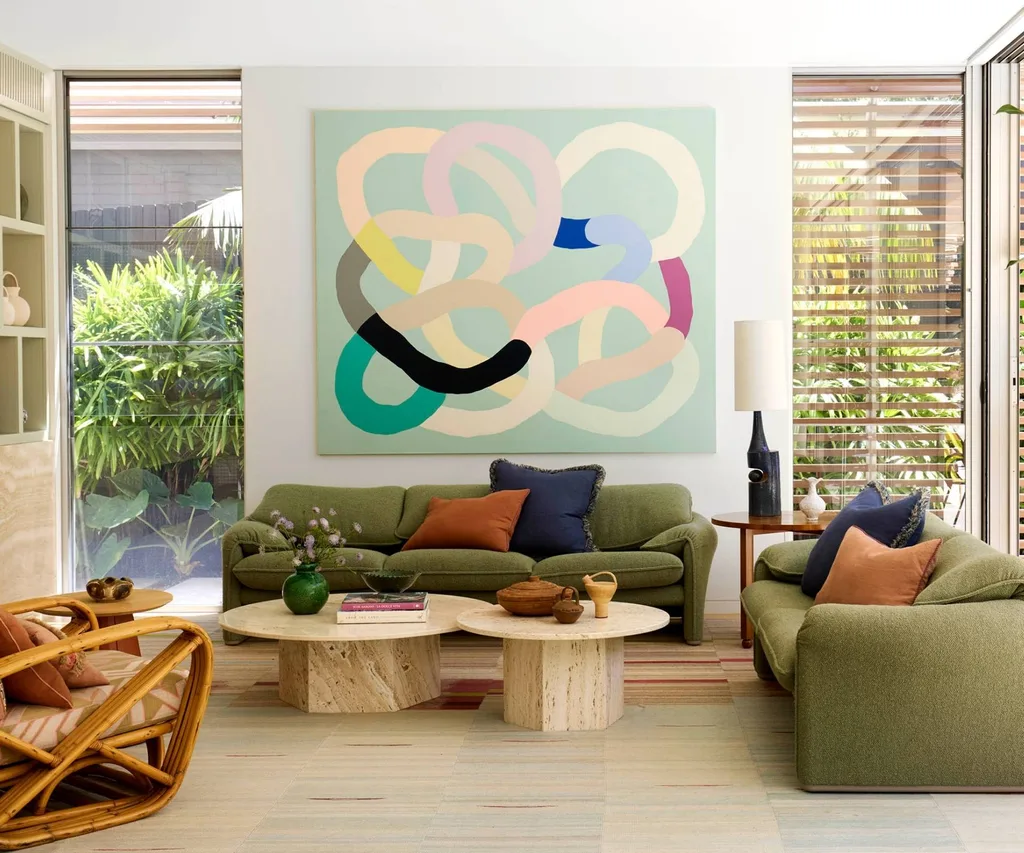
A common mistake is putting small artworks on large expanses of wall, which makes the artwork look dwarfed and sad. Generally, oversized art is better than undersized art. If hanging above furniture, a good rule of thumb is to choose art that is at least half to two-thirds the width of the furniture piece.
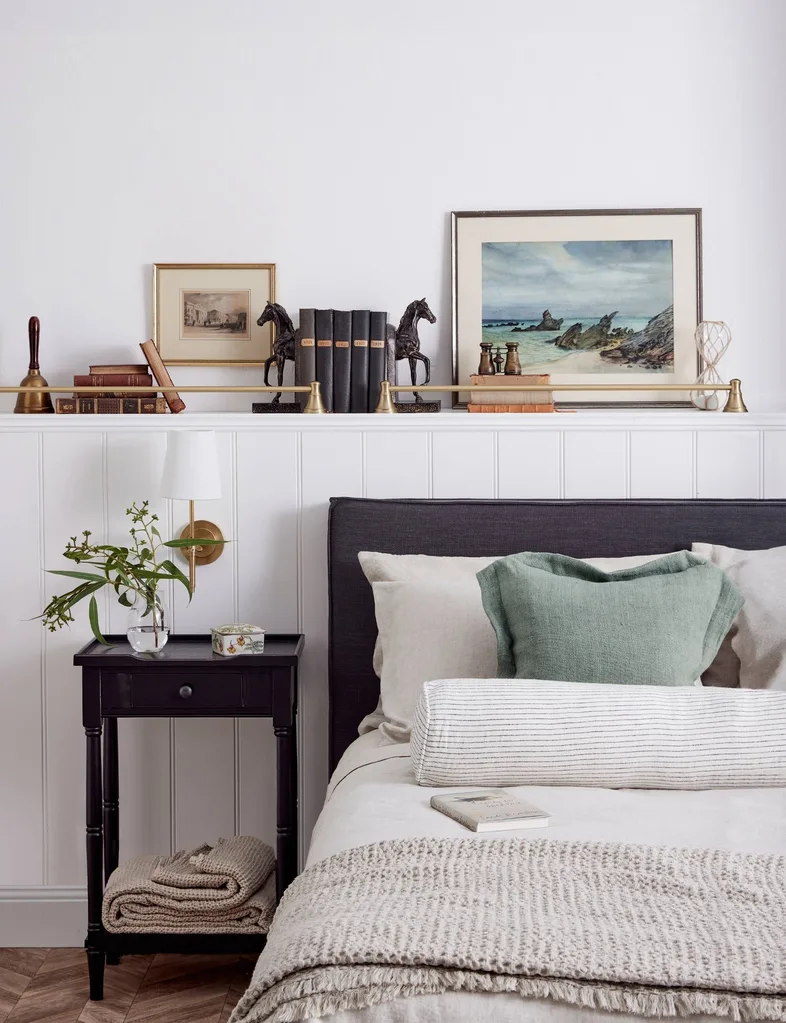
Small artworks have the advantage of flexibility – pop them on small walls or propped up on shelves; use them in a salon-style arrangement; or use a group of similar pieces (in a grid pattern or trio) to create the effect of one large piece.
To the question of where to hang an artwork on the wall, Emily advises, “As a general guide, aim to hang the centre of the artwork at eye level – typically around 145-150cm from the floor. However, context matters, so placement above furniture, in stairwells, or within a salon-style hang may require adjusting this rule.”
As an example, if hanging art above a piece of furniture, like a bed or a sideboard, an eye-level hang will leave it floating too high. Try a lower position – 15cm above the furniture is a good place to start.
Is there any space art shouldn’t go?
Art suits every space, but not every space suits art – particularly if you’ve invested in a valuable piece. “Prolonged exposure to sunlight and humidity is your enemy. Direct sunlight can cause fading over time, and glare can make it harder to appreciate the details,” says Anna.
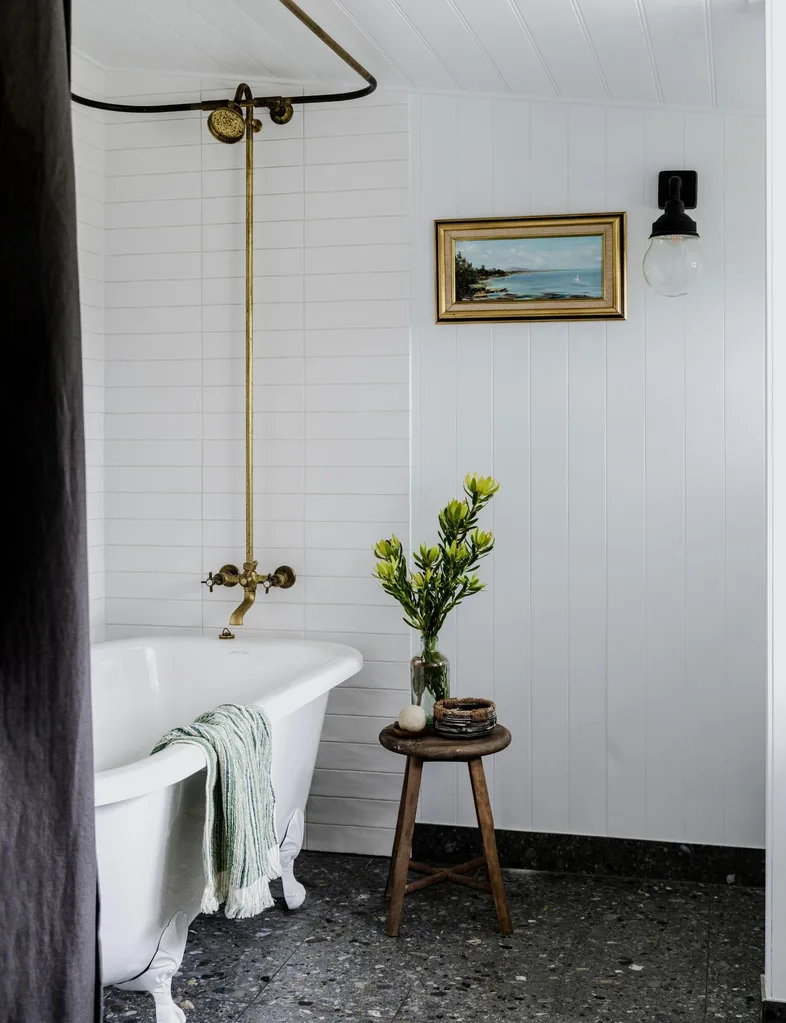
“Also, avoid places like bathrooms where the humidity can damage more delicate works, especially prints or works on paper. If you’re framing something sensitive, ask your framer about UV-protective glass. It’s a small detail that goes a long way in preserving the art.”
How do I hang art on the walls?
A single picture hook is perfectly adequate for lightweight frames, snagging onto a sawtooth hanger (which is fixed to the top of the frame) or standard picture wire.
To get the positioning right, accounting for the drop of the wire, first hold the artwork where you want it to hang and mark the wall at the top of the frame. Then hook the wire on your finger and pull it taut. Measure the distance between the arch of the wire and the top of the frame, then mark the same distance down from your wall mark to find the point where the nail or hook needs to sit.
For lightweight works, you can also use adhesive strips, which are great for renters or if you’re likely to change your mind.
Heavier artworks will likely feature a pair of D rings, fixed opposite each other on the frame. These will similarly grab onto picture hooks, and with two points of contact, they’re stable and won’t slide sideways. The artwork will also sit flat against the wall, rather than popping out at the top.
Really heavy artworks demand heavy-duty fasteners; interlocking brackets will spread the weight, keeping your wall and your artwork intact. If in doubt, professional art installers can advise on both placement and safe hanging.
What frame should I choose – and do they all need to match?
There are no hard and fast rules, and frames definitely don’t have to match each other. It’s more important that the frame complements the art within it, which might mean a simple frame (in some cases, no frame at all) for a modern piece, or an ornate, gilded frame for a classical work.
Mismatched frames look charmingly eclectic and, in the case of vintage art, the frame tells its own story, offering tantalising clues about the history of the piece. In a ‘salon hang’ arrangement, varied frames deliver playfulness and an element of the unexpected. If you prefer the clean lines of a grid-style hang, however, matching frames will create a calm, cohesive aesthetic.
Ready-made frames are the cheapest option and can look great. If you’ve bought a valuable artwork, it’s worth spending the extra on good framing.
“Investing in a custom frame – along with options like UV-protective glass and museum-grade materials – can help preserve the piece over time, which is especially important in New Zealand’s strong sunlight,” says Emily. Ask the experts for advice, she adds – art dealers will happily provide advice and some, like Webb’s, will offer a framing service, too.
How do I illuminate artworks?
The unsung hero of homes, lighting makes a huge difference to the look and feel of your space. Anna says, “When choosing lights, go for a warm, neutral tone to preserve the true colours of the artwork. Avoid cool, blue-toned lights that can distort the hues and steer clear of overly warm lights that might hide fine details.”
In terms of lighting styles, wall-mounted picture lights are a design statement in themselves, transforming a single stunning artwork into the centrepiece of a room. “For single works, a picture light adds a more focused, intimate touch,” says Anna.
For multiple artworks and maximum flexibility, Anna recommends track lighting–movable spotlights on a ceiling-mounted track. “You can adjust the direction to highlight specific artworks as your collection grows.”
Meet the artists featured in our Year of Art series:

Related stories
Native ad body.

Native ad body.




Native ad body.