

Our annual deep dive into global kitchen trends always offers fascinating insights – not only about the colours and materials we’re fizzing for, but also into the way we live. And right now, we’re all about our home as a haven, with the kitchen at the centre of it all.
Phoebe Clinton-Baker of Workshop Designs describes what they’re seeing in New Zealand kitchens.
“There’s a softness emerging – kitchens that blend old and new, feel slightly nostalgic, and incorporate personal pieces,” she says.
“Overall, design is becoming more expressive but also more thoughtful, with clients focusing on longevity, warmth and meaning.”
Read on for the 10 kitchen trends defining 2026, from toasty tones and pattern splicing to AI-powered kitchen appliances.
Top kitchen trends for 2026

Soft kitchens
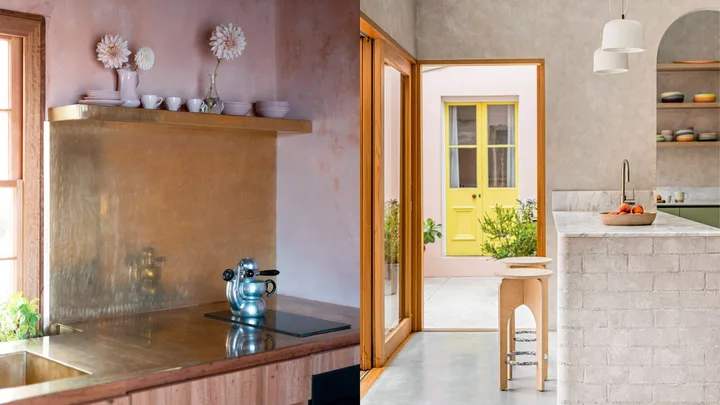
Despite our love of open plan, kitchens remained stubbornly sterile and functional for the longest time. Not so much anymore. The strongest trend in kitchens is the ‘soft’ kitchen, which swaps hard edges for curves and cushions, crisp tones for warm colours and textured materials. The trend sits hand in silk glove with the ‘cashmere kitchen’ trend, which uses warm tonal colours to create a sense of quiet luxury. Luli Farrell, co-founder of Abi Interiors, agrees.
“We’re absolutely seeing a shift toward softer kitchens in 2026, with warmer palettes, tactile finishes and materials that feel grounded and inviting rather than overly polished. In a New Zealand context, this translates to a strong preference for materials such as timber, stone, microcement, brick and raw concrete, layered with muted, earthy tones that echo the surrounding landscape.”
Add texture at every opportunity.
“From rugged, handmade tiles to subtle detailing in joinery and tapware, these elements add depth and character without overwhelming the space.”

The not-a-kitchen
Softer still is the unfitted kitchen, which is essentially a kitchen that doesn’t look like a kitchen at all. While still functional, this style of kitchen discards the utilitarian aesthetic that traditionally characterises the space, instead taking aesthetic cues from living spaces – making it essentially a furnished room, with appliances.
Cabinetry-wise, this means wall cabinets are out and even lower cabinets might be freestanding instead of fitted, with unique or vintage furniture standing in for (or sitting alongside) built-in units. More not-a-kitchen style is brought in through ambient lighting, seating and soft furnishings like rugs and window treatments.
The secret weapon for a successful unfitted kitchen is a scullery, a tucked-away space for purely functional pieces. Even though we love our air fryers, there’s no selling them as a decorative item.

Loud and proud stone
Natural stone and its quality lookalikes dress a kitchen in an attitude of quiet luxury, but this year we’re turning up the volume on our stone choices.
“Marble, quartzite and travertine are enduring favourites, but in 2026 we expect to see a more confident, expressive approach to stone. Think bold veining, unexpected colourways and dramatic patterning,” says Luli.
“Rather than acting as a quiet backdrop, statement stones are transforming benchtops, splashbacks and even full-height walls into defining design features.”
Natural stone can introduce vivid colour and a strong sense of movement, while still making a space feel calm and grounded. For example, take viola marble, which features strong burgundy veining and massive ‘look at me’ energy. Yet, for all its drama, it’s still serene and easy to work into a room.

Seamless splashback
Benchtop materials are on the move, creeping up over the splashback to deliver a calm and consistent effect that cries luxury. Taking the same material – usually a stone or porcelain product – from a horizontal surface to a vertical one creates a subtle and seamless look that’s serene and very easy on the eye, reducing the variety of materials in a kitchen.
Team it with cabinets in a similar hue for a tonal look that effectively encapsulates the luxe cashmere kitchen aesthetic. Alternatively, when combined with the trend for deeply coloured or heavily veined natural stone (or stone look) surfaces, the effect is bold and luxurious, sculptural and eye-catching.

Pattern splicing
If the quiet luxury of a seamless splashback is a little too subdued for your taste, great news: pattern is back.
Patterned tiles are a huge trend in kitchens, aided in New Zealand by the recent increase in variety available to New Zealanders. Interior designer Charlotte Minty says, “We are not as constrained as perhaps we once were, and designers and clients are relishing the opportunity of greater accessibility to be more adventurous with colour, texture, and materials. This is definitely an unmissable trend.”
A specific tile trend for 2026 is pattern splicing, which takes a highly patterned tile (think cottagecore Delft or floral tiles) and alternates it with plain tiles. The effect is to dilute the pattern, making it softer on the eye and a more accessible option for the pattern-shy.

Tech savvy
Kitchen appliances and storage are getting smarter – the latest geek buzz includes AI systems that track expiry dates and reorder your pantry staples for you. Here in New Zealand, we’re definitely open to some new ideas.
Smart technology in appliances is easy to access and can be like having an extra set of organisational hands in the kitchen – fridges can propose recipes to use up ingredients and minimise waste, ovens can suggest cooking times and notify your phone when it’s time to whip the roast out of the oven and energy-conscious scheduling ensures power-hungry functions operate at optimum times.
We’re pimping our storage in other ways too; it might not order a new bag of flour, but kitchen storage is benefitting from such tweaks as automatic cabinet lighting, motion-activated drawers, and to keep your life powered up, docking stations for charging within drawers and cupboards.

Cool metals
Brass isn’t going anywhere, but to balance the warm tones we adore in kitchens, we’re falling back in love with cool-toned metals.
Luli says, “In tapware and hardware, we’re seeing a return to cooler metals such as stainless steel, chrome and brushed nickel. These finishes feel fresh and contemporary, with a distinctly European influence and pair beautifully with textured surfaces and mixed materials. Importantly, these cooler tones offer longevity and versatility, allowing kitchens to evolve over time without feeling trend-led or dated.”
Stainless-steel splashbacks and work surfaces are forever fashionable, if you want to double down on cool metals. To draw the look away from a commercial kitchen aesthetic, brushed stainless steel – and other distressed, antiqued or even oxidised finishes – give this functional finish a softness and tactile warmth.

Toasty tones
Pantone’s Colour of the Year, Cloud Dancer, is a “lofty white” – but this doesn’t signal a conservative return to the all-white kitchen. Instead, Charlotte suggests this calm neutral is a “foundational colour”.
She says, “We know the importance of a soft, warm, and timeless neutral to contrast and complement braver and deeper colour/pattern choices.”
What Cloud Dancer does signal, however, is a trend toward quieter, calmer hues.
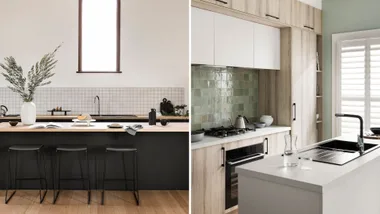
“Typically, the colours are not bright and vivid; rather, they tend to be deeper or softer, dusty hues or even rich timber tones, which easily marry with timber flooring, furniture and joinery,” says Charlotte.
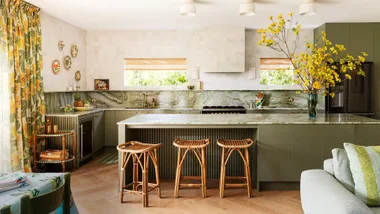
The consistent element is warmth; whether it’s butter yellow, rich brown or olive green, the overall effect is nature-driven and warmly enveloping.

Task zoning
The predicted demise of the open-plan kitchen has been whispered (and ignored) for almost as long as we’ve had open-plan layouts. But there’s no doubt the cultural embedding of remote/hybrid work has inspired designers to take a second look at our default ‘working triangle’ and open-plan formula. The solution is not U-turning to a separate space – instead, designers are exploring function-specific zoning.
“While open-plan living remains dominant, we’re also noticing a shift toward considered zoning within kitchens. Coffee bars are also on the rise, reflecting a desire to create dedicated, ritual-driven moments within the kitchen rather than one all-encompassing workspace,” says Luli.
Moving particular tasks, like coffee, cold beverages or breakfast prep, to another zone (the scullery or an adjacent space) boosts efficiency in a multi-person household – essential when caffeine-seeking home-workers collide with snacking teens.

Breakfast nook
Sick of balancing on barstools like a parrot on a perch? Where space allows, modern kitchens are going back to a cosier formula, with built-in breakfast nooks.
“We’re definitely seeing a move away from the default island-with-stools setup, with clients exploring more intentional ways of eating and gathering in the kitchen,” says Phoebe.
“Breakfast nooks, banquette seating and cosy dining corners are coming through more and more.”
Still love an island? Phoebe says the breakfast bar isn’t disappearing and is still an unbeatable option for small spaces, but it’s more likely to sit alongside another eat-in option. That means you can have your bar stools, as well as cosy banquette seating and bistro chairs, simply choose the one that suits your mood.
Read more:
- 11 colourful kitchens to inspire your next renovation
- Pink and green make for a wicked combination in this New Plymouth kitchen
- How to make your kitchen work for your lifestyle

