

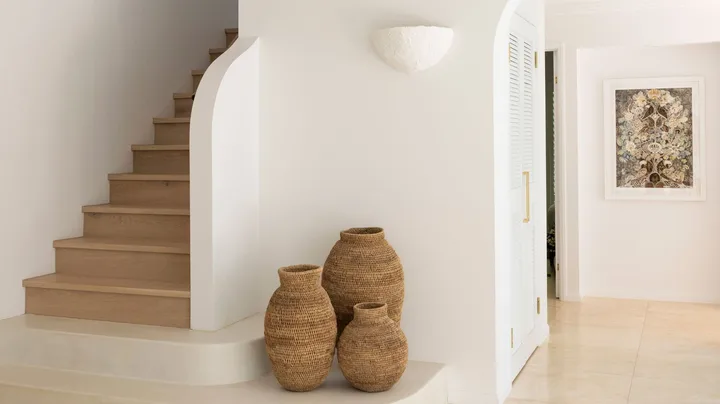
There was initially some confusion around the launch of the 2026 Pantone Colour of the Year – Cloud Dancer.
Firstly, is white even considered a colour? And why are we heralding it and giving it its time in the sun – haven’t we moved past the neutralness (some might say boringness) of previous years, hankering instead for colours that uplift, envelop, make us feel safe or joyful? Isn’t white the colour of nothingness? The colour of paper, ceilings and kitchen appliances? Is Pantone’s pick “pan-tone deaf”?
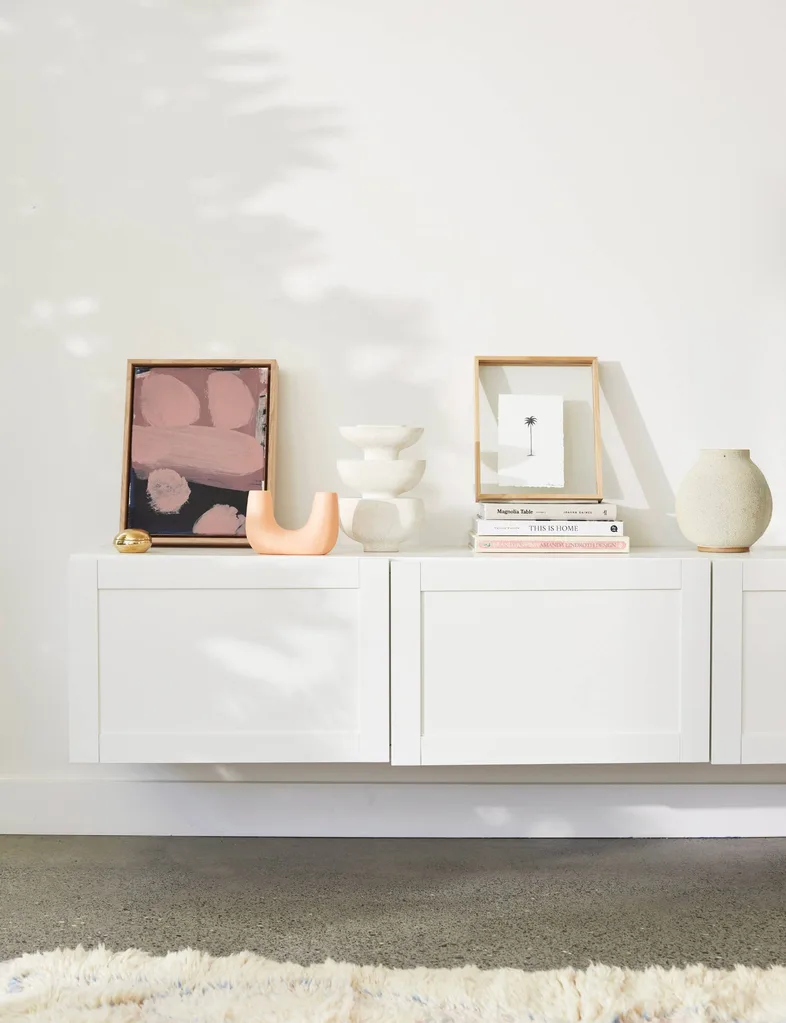
Well, wait a minute – what if we look at Cloud Dancer, an admittedly cutesy name that conjures up visions of cotton balls and pillowy goodness, as being a palate cleanser? A fresh start. A reset. A clean background that allows our actual aesthetic colour choices to shine. Perhaps if we think of Cloud Dancer as being an indication of calmness, like white noise or a dove of peace, then surely that’s something all of us can embrace after years of disarray and disharmony. In a world that feels increasingly loud, visually and emotionally, maybe Pantone’s message is simple: let the noise soften.
So how do we include Cloud Dancer into our homes without turning it into a sterile, clinical space? How do we use it for good?
First things first: all white is not all right. Integrating Cloud Dancer into a modern interior is about using it as part of an overall colour scheme, not the colour scheme. This is not a call to turf out all colour from your home and strip everything back to being asylum-white a la Kim Kardashian’s famously austere aesthetic. Instead, this is an invitation to invite calmness and light into your home in subtle, considered ways.
As anyone who has painted their house white knows, not all whites are created equal. Cloud Dancer is described by Pantone as an “airy white hue”, a “discreet white”, and a “billowy white imbued with a feeling of serenity”. Translation: this isn’t a stark, chalky white. It’s soft, gentle and slightly warm, the kind of white that plays nicely with others.
Choosing the perfect white paint
Davina Harper from Dulux knows more than most how to work white to its best potential – and how not to.
“One of the biggest mistakes is assuming all whites are the same,” she explains.
“Whites have undertones – cool, neutral, or warm – that dramatically affect how they look. A crisp, cool white in a south-facing room can feel stark, while a warm white in a bright north-facing space may look yellow. So, it’s important to get the undertones right. Cool whites are great for bright, sunny rooms and modern interiors. Neutral whites suit open-plan spaces and homes with mixed finishes. Warm whites shine in darker rooms or spaces where you want a welcoming, homely feel. “Another common error is ignoring existing colours and elements like flooring, benchtops, or curtains. These fixed features should also help guide your choice on which tone of white to go for.”
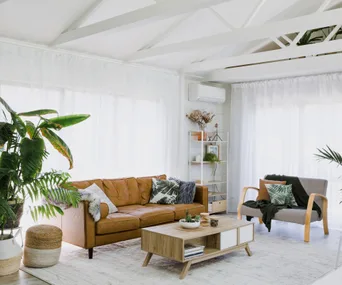
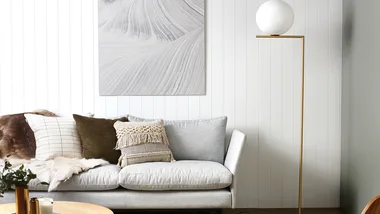
Cool whites have blue or grey undertones which create a fresh, spacious feel and work beautifully in contemporary homes or rooms with plenty of natural light, meaning they pair well with grey-toned flooring and modern finishes.

Amy Watkins from Resene agrees that white colours can be deceptively tricky.
“People often base their choice on the colour name or what a friend has used in their own home. However, just like more saturated colours, whites have undertones and it’s important that these relate to the location where the colour will be used,” she says.
White isn’t the right choice in every room and for some, you’re best to stay within the same colour family but go a few shades deeper. When it comes to a dark, south-facing bedroom, bright white may not always be the best option. Choose a colour with more depth, which will feel more comforting. And be careful with the white you choose for kids’ rooms – these are high-touch areas, and the last thing you want is dirty fingerprints all over your freshly painted walls.
Amy recommends you grab a testpot and paint it onto an A2 card, leaving a white border, then place it in the space and move it around the room to help you view it at different times of the day and under both natural and artificial light.
The do’s and don’ts of styling white at home
- DON’T – rely on one finish alone: flat white everywhere equals flat energy.
- DO – layer whites with texture – smooth, rough, soft, organic or structured.
- DON’T – go all white for everything in your home.
- DO – use white to highlight what you love – art, furniture, views.
- DON’T – pair it exclusively with cool greys unless you’re deliberately going for minimalism.
- DO – warm it up with timber, texture, soft lighting and your choice of feature colours.
- DON’T – assume all whites behave the same in every room.
- DO – test it in your own light – morning, afternoon and evening.
- DON’T – forget to pair it with colour, pattern and personality.
- DO – think of it as a mood, a vibe, a state of mind – not a rule.
A designer’s advice on incorporating white into your interiors
Queenstown-based interior designer Isis Winter is a big fan of Cloud Dancer – “it has nice depth” – and of white in general, so long as there is a clear purpose to it.
“I love white, but unless you’re designing a gallery, it’s worth remembering that we’re not painting a blank canvas. We’re creating a home, and that requires depth, contrast and, yes, colour. White is the starting point of the palette, not the entire plan,” Isis says.
Isis particularly likes white as a classic base colour, layered with lush greens, sea blues and soft beige tones to create a calm, modern retreat feel.
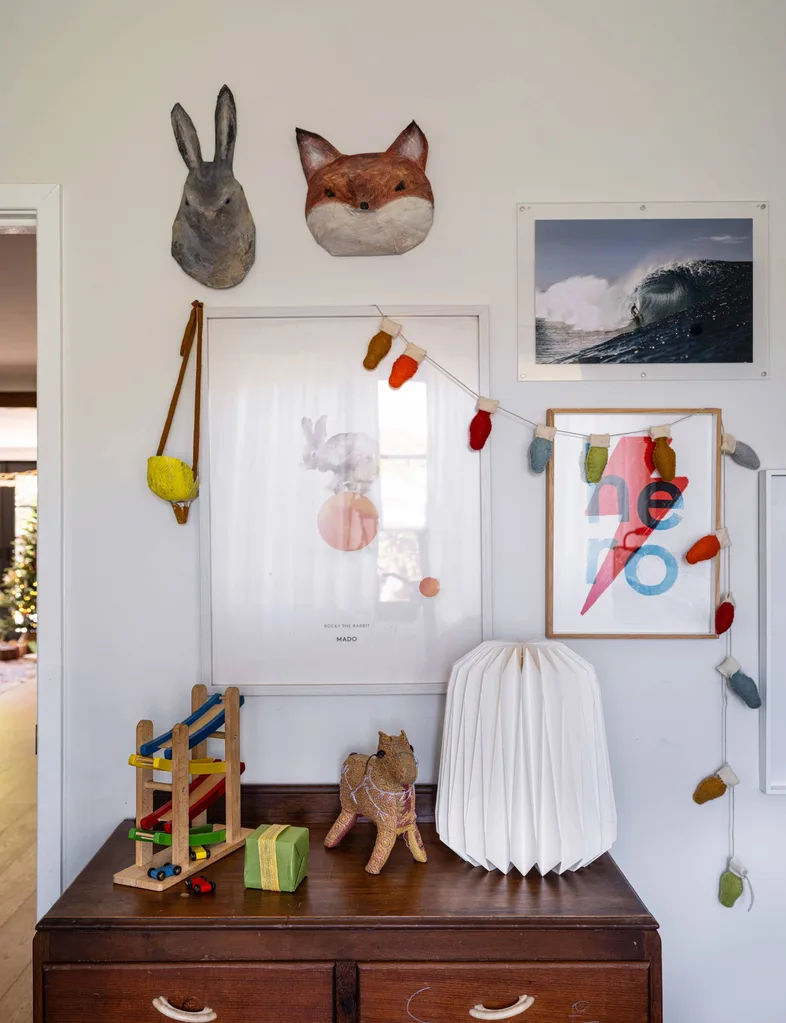
“I think a common mistake is people painting walls, ceilings and skirtings all the same white, without architectural detailing such as scotia, wall panelling or architraves, or without any contrast – this leaves a space feeling flat and institutional. Nobody wants to live in a medical centre.”
To make white feel warm and lived-in, Isis likes to work with multiple depths of the same colour.
“I start with a white with a warm undertone, such as Resene Merino, then use Merino on walls, Half Merino on trims and Triple Merino on doors to introduce subtle contrast and help a space feel layered rather than one-dimensional.”
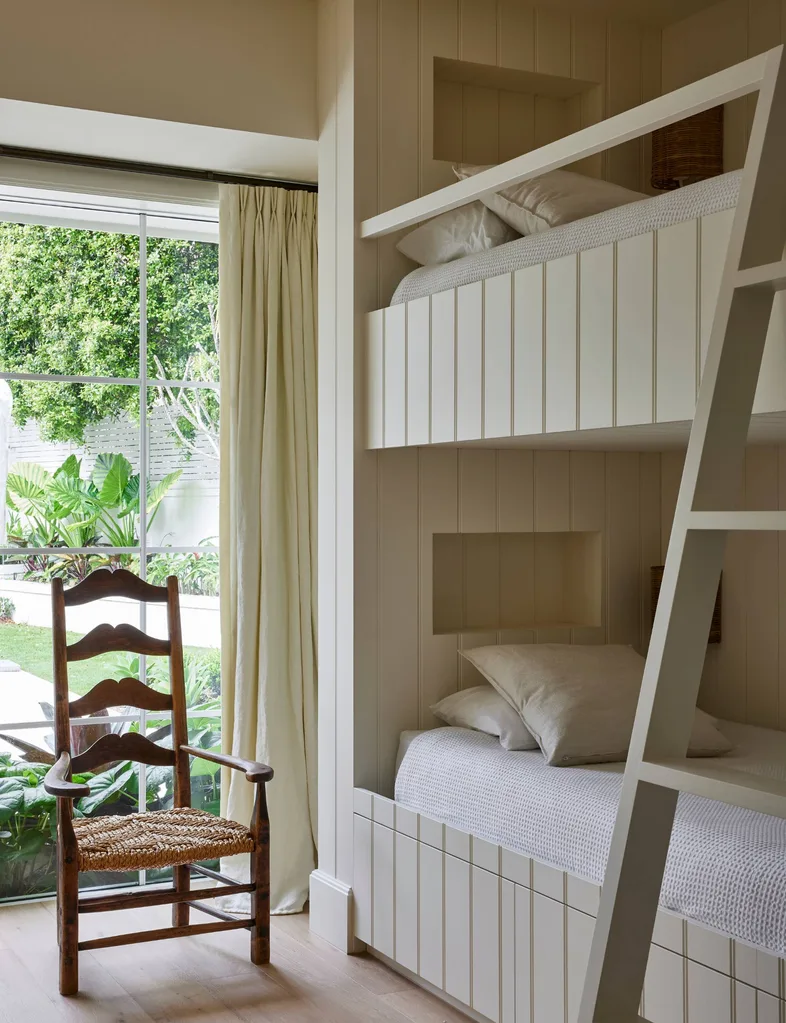
Then she pairs it with natural materials, “which are timeless”. Some of her go-tos include bronze and patinated brass, marble or natural stone, oak and walnut timbers, handmade subway tiles, jute, antique rugs, natural textiles like linen, and wool carpets, throws and rugs.
“And don’t forget to introduce colour and texture through soft furnishings. A rug, cushions, artwork and curtains can transform a white room. Adding mood lighting, such as lamps and wall sconces, also makes an immediate difference. Recessed downlights, particularly in cool colour temperatures, can make a home feel clinical.
White interiors benefit from layered lighting, specifically: warm bulbs, dimmers where possible, and the addition of lamps and wall sconces to create atmosphere rather than brightness. Light should feel soft, not over-lit. In my house, I’m very much a “don’t turn on the big light” person.”
Why texture matters when decorating white interiors
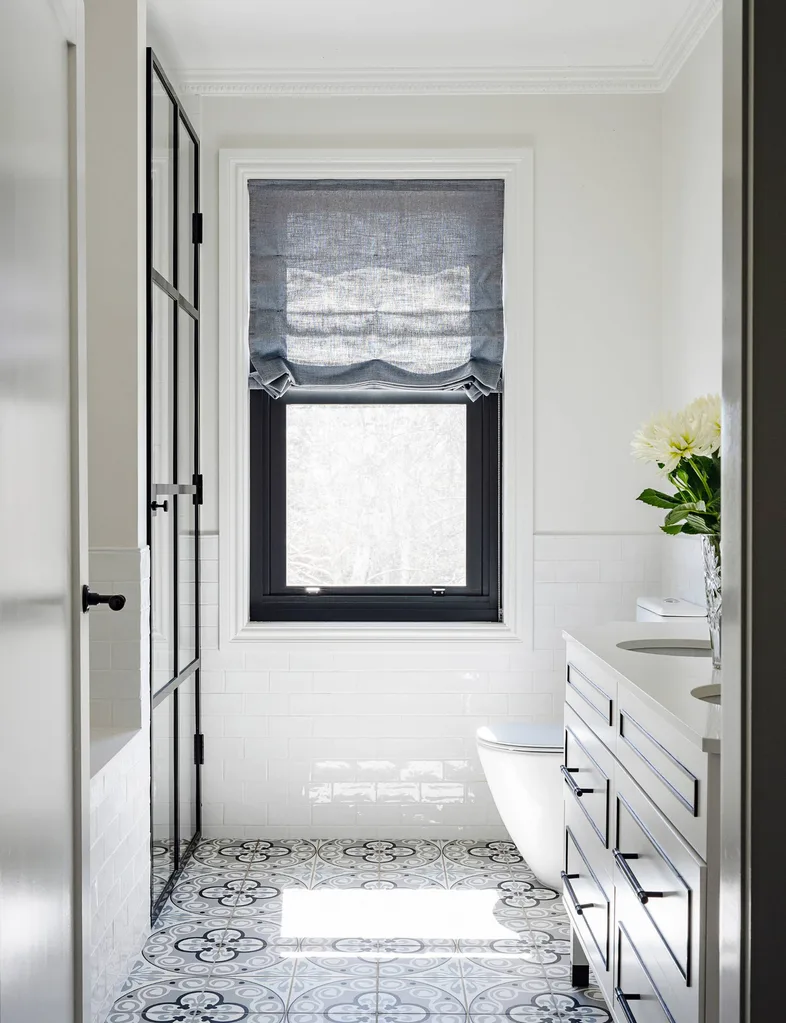
If there’s one golden rule when decorating with white, it’s this: texture matters. Without it, white can fall flat very quickly. An all-white room with slick, hard edges immediately gives connotations of a cold, can’t-touch-anything-here, pretentious art gallery. Or an ice bar. Either way, not the serene space we need.
Soft furnishings are an easy place to start. Linen sofas, boucle armchairs, wool throws and cotton rugs all bring warmth and tactility to a white palette. Even subtle variations – crisp cotton next to rumpled linen, matte finishes paired with a gentle sheen – add visual depth. Hard finishes matter too. White-painted walls feel instantly warmer when paired with timber floors, stone benchtops or lime-washed plaster. Natural materials stop white from feeling cold and instead make it feel grounded. Even white floorboards against a white wall work well, if the flooring has visible grain, texture or a slightly matte finish to soften and add interest.
And don’t underestimate the power of imperfection. Handmade ceramics, slightly irregular finishes and aged woods all stop white spaces from tipping into shiny showroom territory.
How to incorporate Pantone’s Cloud Dancer with other colours
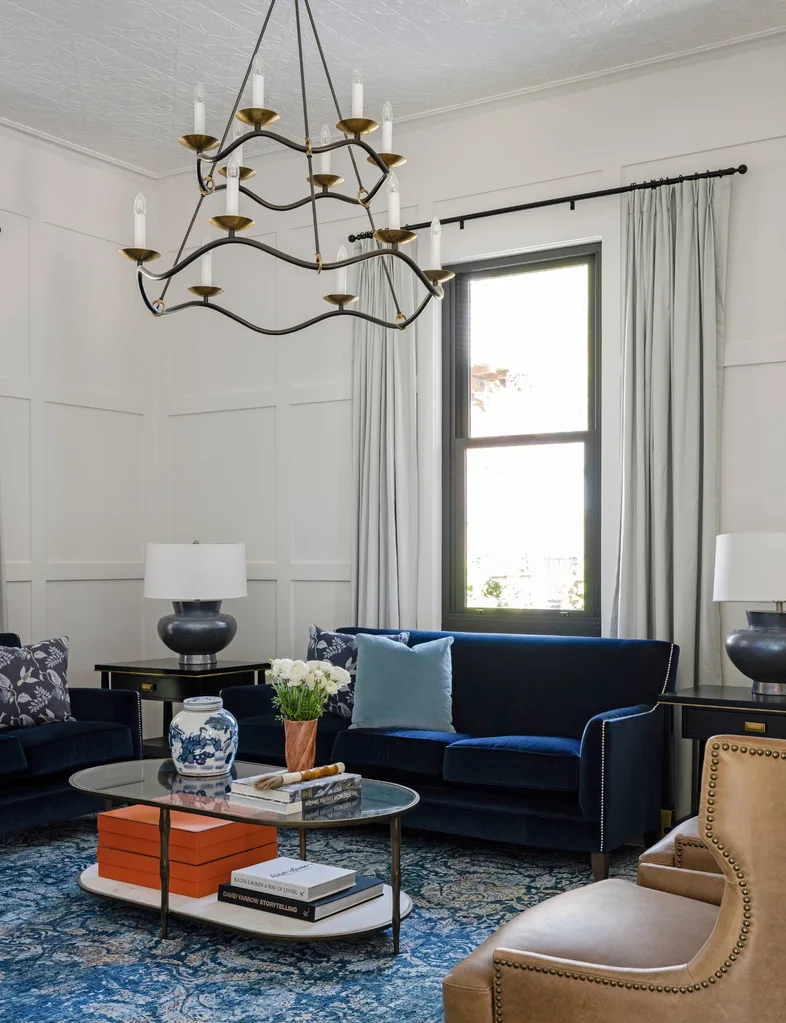
Of course, one of the best things about Cloud Dancer is its flexibility. Everything plays well with white. It doesn’t dominate, it supports – which means it works beautifully with a range of colour stories. Think of it as your wingwoman of colour.
1. Pair Cloud Dancer with pastels
Soft pinks, powder blues, sage greens and buttery yellows sing against white. It keeps pastel shades from feeling sugary or juvenile, giving them a fresh vibe and allowing them to shine. Think blush cushions on a white sofa, or pale blue cabinetry against white walls.
2. Pair Cloud Dancer with zingy brights
Love colour, but not enough to slather it all over your walls, like the terrifying blue feature walls of yesteryear? White is your safety net. It balances bold shades like cobalt, tomato red or emerald green, allowing them to pop without overwhelming a space. A bright artwork, a single statement chair or colourful tiles feel intentional rather than chaotic when grounded by a calm white backdrop.
3. Pair Cloud Dancer with warm neutrals
White doesn’t have to feel cool. Pair it with warm neutrals – caramel leather, soft taupe, clay, rust or mushroom tones – and suddenly white becomes incredibly cosy. Layer soft lighting and add plush textures and you’ll get that soft, “cloud-like” feeling before you know it.
Furniture, finishes and details
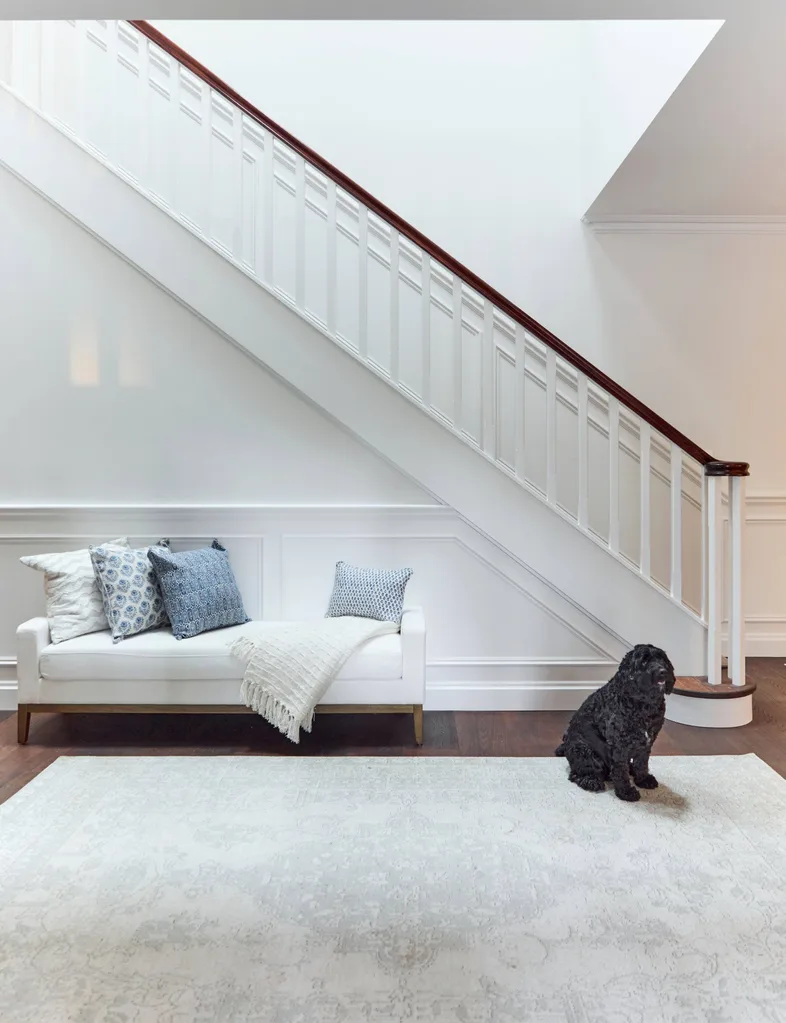
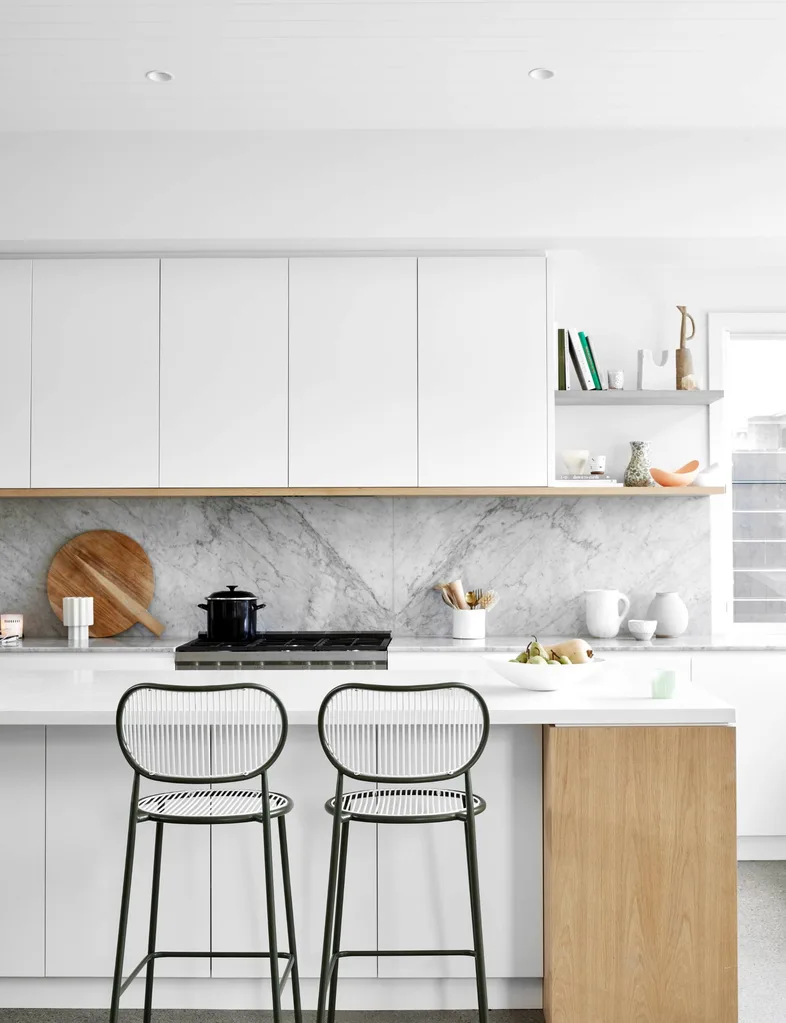
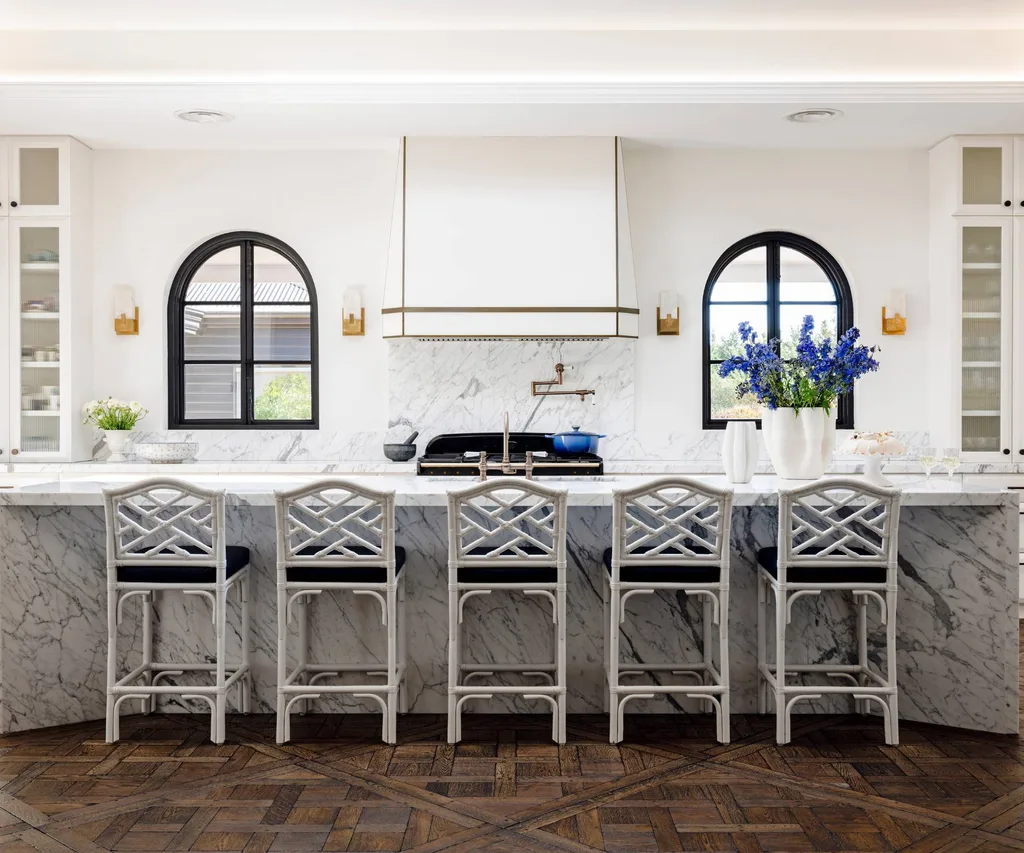
White furniture can be tricky, but done well, it’s timeless. Upholstered pieces in off-white or cream feel especially luxurious when contrasted with darker floors or richly coloured walls. Painted furniture in white can lighten heavy forms and allow them to kind of recede – perfect for sideboards, shelving or kitchen cabinetry. And obviously, white kitchens are still going strong. Whether matte or gloss, you can’t go wrong with white cabinetry paired with timber, your choice of hardware and splashbacks with texture or colour.
A quick guide to incorporating white colours into your space
Still wondering how to incorporate white into your space for maximum effect? We’ve broken it down to something like a mathematical equation to do white right.
1. Airy optimism AKA fresh Scandi & coastal interiors
Equation: Soft white + sky blue/pale green/butter yellow + light wood
White plays a major role here with secondary colours that add interest and energy without overwhelming the lead colour.
Ideal in: Kitchens, living rooms, open-plan spaces.
2. Modernist white AKA gallery modern & unapologetically contemporary feels
Equation: Crisp white + charcoal/navy/forest green + metal or glass
White becomes the spotlight and contrasts the darker colours making them feel bold and confident.
Ideal in: Entrances and studies.
3. White with a side of wabi-sabi AKA organic modern for a calm, restorative zen-like vibe
Equation: Warm white + sage/ clay/linen
Imperfection and softness is key here. Instead of a stark interior, you’re aiming for a feeling of calm and quiet contrast with chalky or rice-paper tones.
Ideal in: Bedrooms and spa-like bathrooms.
4. Reinvented rustic AKA Mediterranean modern
Equation: Chalky white + terracotta/olive/sand + stone and pottery
Earthy pigments and raw materials are balanced out and lightened with white walls for a warm look.
Ideal in: Living spaces, hallways.
5. New luxury AKA low-key elegance & modern refinement
Equation: Creamy white + taupe/mushroom/blush + velvet/brushed brass
The scheme doesn’t go too far out of white’s wheelhouse, preferring to create quiet, soft sophistication with tonal depth without all the noise.
Ideal in: Dining rooms, bedrooms.
6. Playful AKA graphic statements
Equation: White + saturated colour + graphic contrast
Here, white gives structure, so bold colour feels designed, rather than chaotic.
Ideal in: Children’s bedrooms, powder rooms.
Read more:
- Introducing Mocha Mousse, Pantone’s colour of the year for 2025
- Très chic or a design cop out? Here’s how to make all-white interiors interesting and cosy
- How to choose the perfect white paint colour for your home

