

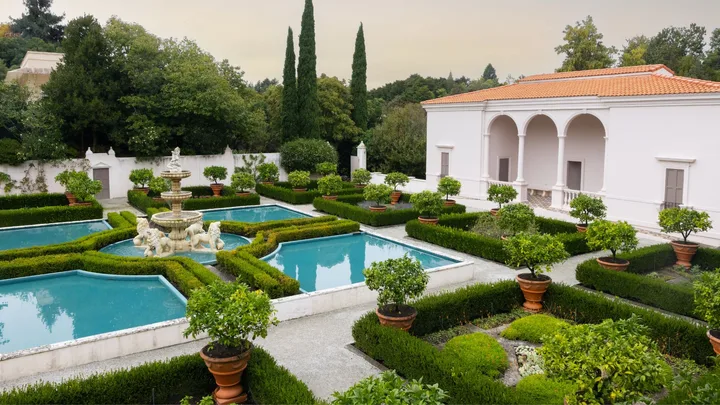
Director of Hamilton Gardens Lucy Ryan reckons she has the best job in the world. Who could disagree when she gets to travel back in time every day?
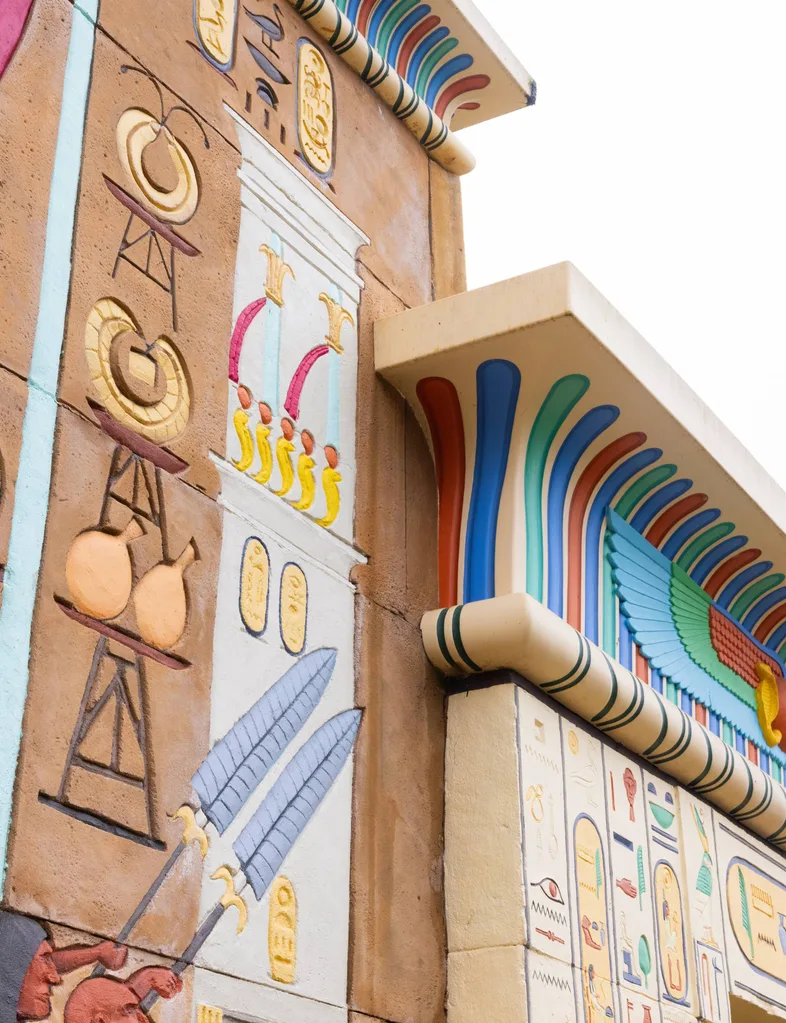
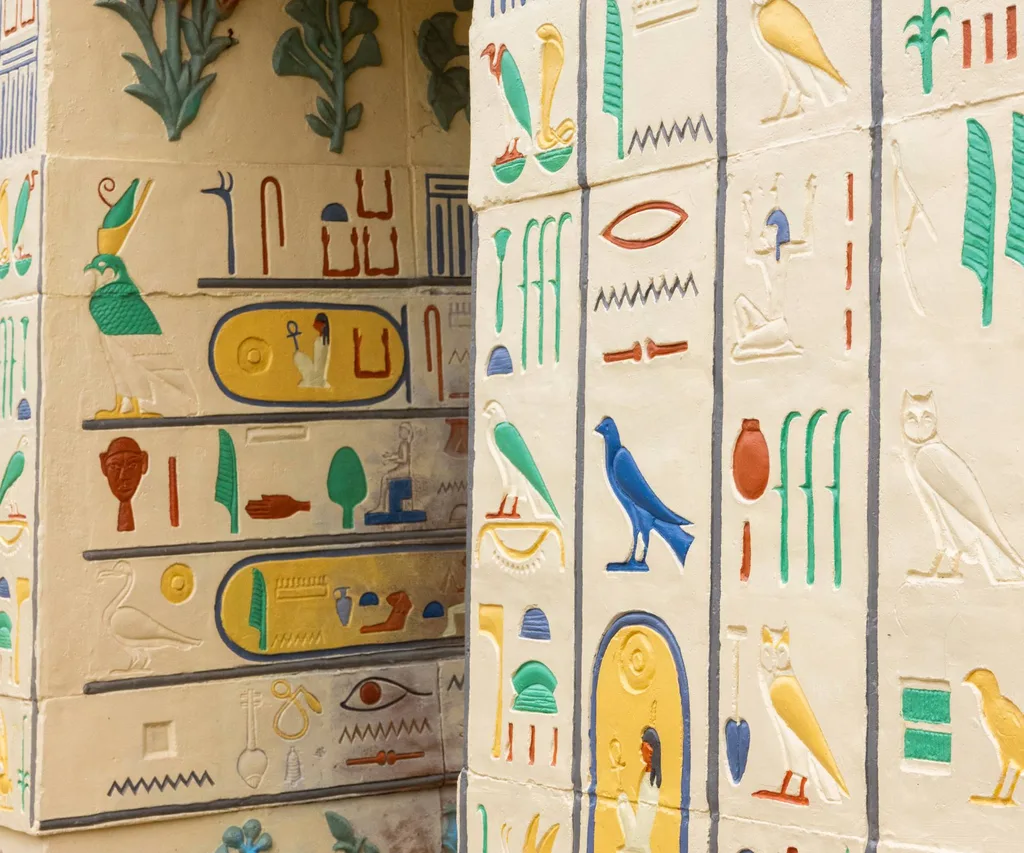
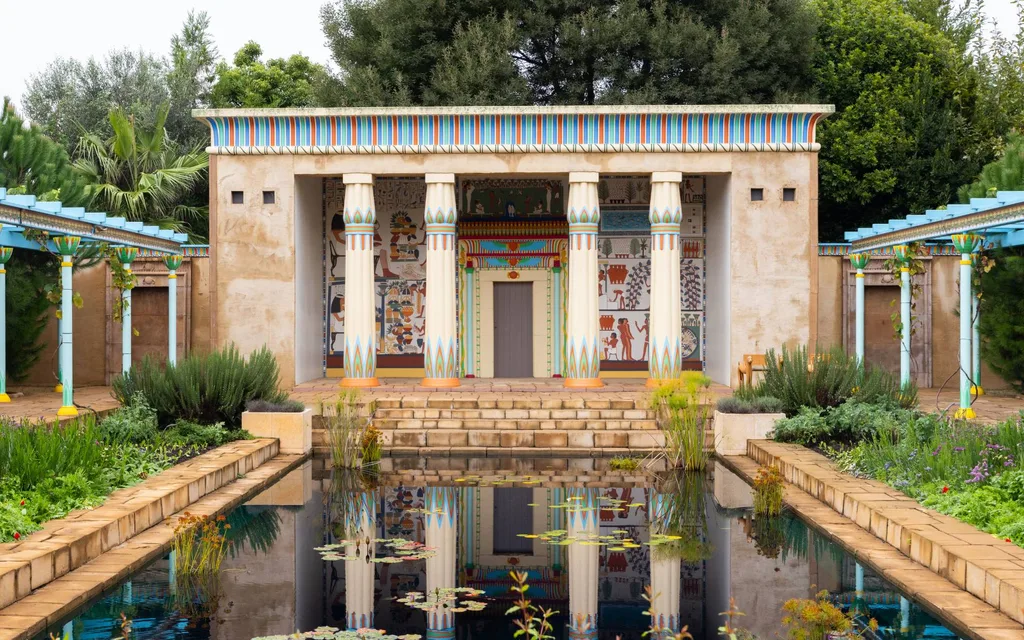
Whether it’s going back 4000 years to gaze on hieroglyphics in the Ancient Egyptian Garden temple, encountering unicorns and dragons in the 16th-century Tudor Garden or marvelling at the living floral Persian-style carpet in the Indian Char Bagh Garden, there is always something to take your fancy at the international award-winning destination.
The inspiration
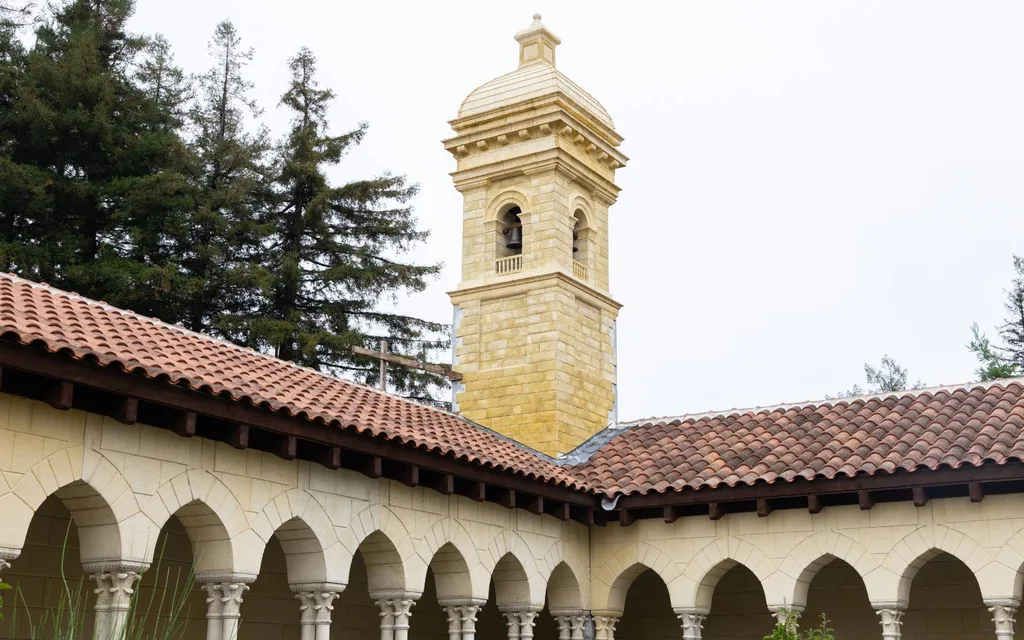
The Medieval Garden is the latest enclosed garden soon to be opened, and visitors can now take a turn through the Middle Ages. It’s based on the courtyard gardens that were found in monasteries across Europe between the 12th and 16th centuries and is inspired by the Church of St John of the Hermits in Sicily.
“In the Middle Ages, monasteries were islands of calm in an unpredictable world,” says Lucy.
“Within their walls lay places of learning, care and refuge. They offered medicine for the sick and a meal and bed for any traveller in need.”

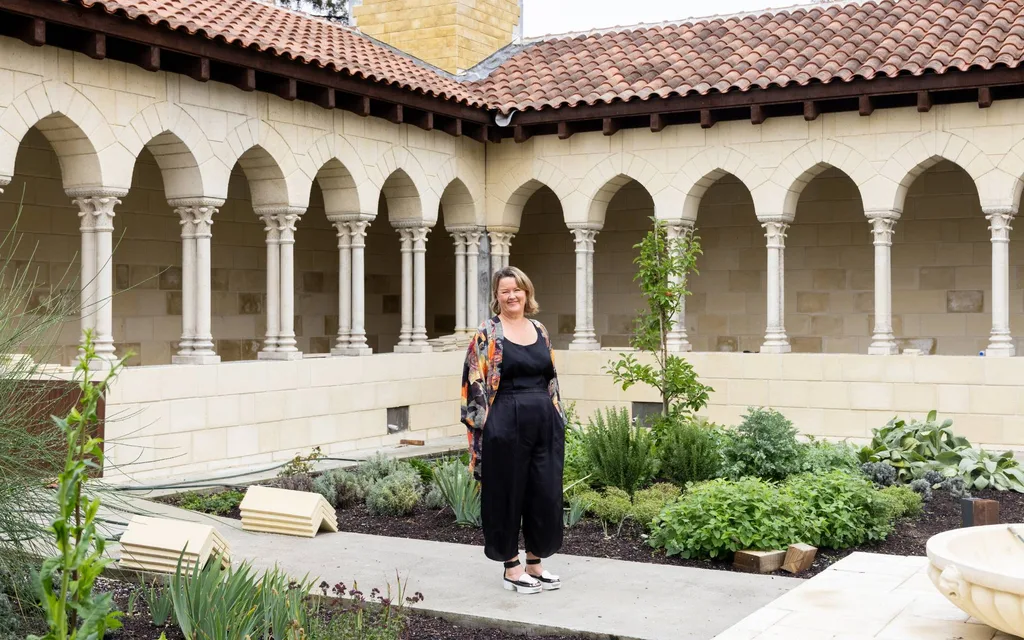
The new garden encompasses two types of gardens common in monasteries: a cloister garth for prayer and contemplation and an apothecary garden, used for medicinal cures. The cloister garth traditionally sat alongside the main church and was a place where monks studied the Bible.
“These were highly minimalist gardens, planted only with turf and occasionally a symbolic pine or juniper,” explains Lucy.
The cloister garth at Hamilton Gardens is glimpsed through a window.
“While it is a significant garden form for the period, its essence can be conveyed through a partial view, and having mysterious, inaccessible areas is an important part of any good garden.”
Created with love and care
Construction of the cloister, which includes a bell tower and a covered walkway, has been completed by Glen Morris from Tuscany Statues, a local concrete manufacturer who works in a converted cowshed.
“Glen poured 258 tonnes of concrete and laid every single paver and tile by hand,” says Lucy.
The apothecary garden includes traditional healing herbs that monks grew.
“Some monasteries specialised in caring for the sick, injured and people with leprosy, although most large monasteries included an infirmary for monks to recover after regular blood letting. Monks were typically bled six times a year to relieve stress and were then allowed time to rest and recover. They are considered the forerunners of modern hospitals and pharmacies.”
There’ll be no blood-letting here, but visitors will be able to stroll under the cloisters and examine more than 40 types of medicinal plants that were cultivated in medieval times and have been sourced from Kahikatea Farm organic nursery in Hawke’s Bay. They include apple mint, lungwort, feverfew, achillea, geranium, comfrey and other herbs we still use today, like fennel, rosemary, thyme and marjoram. Each of the beds features a central crabapple tree, Malus ‘Wrights Scarlet’.
Having visions
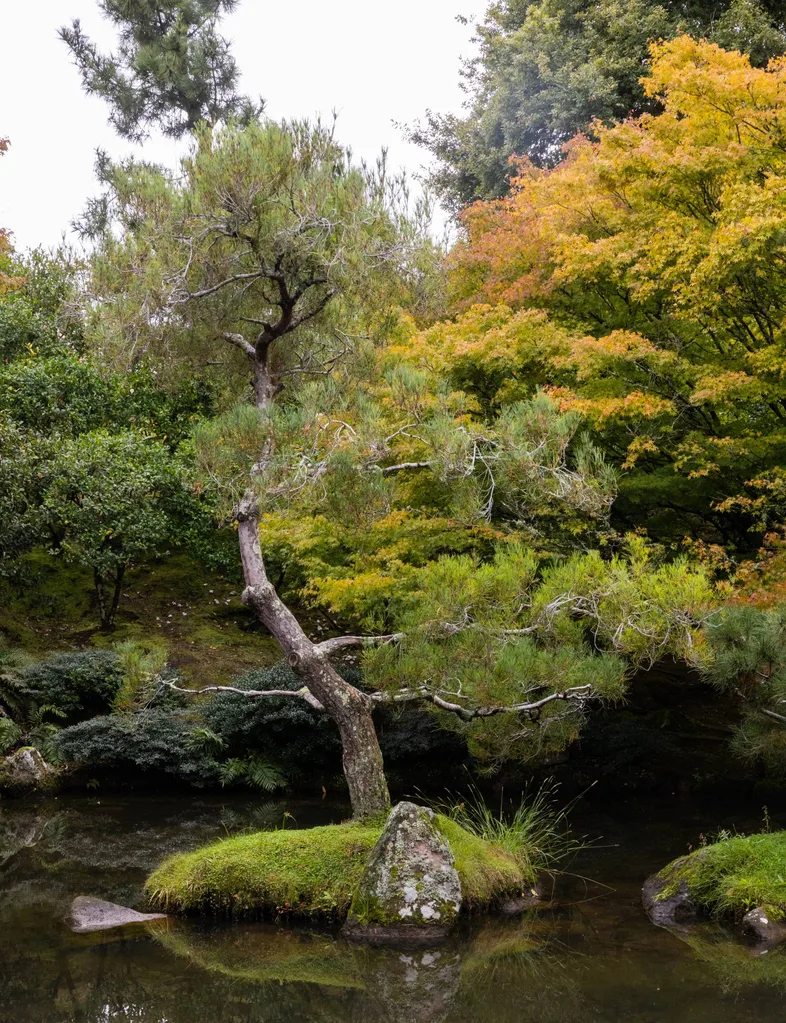
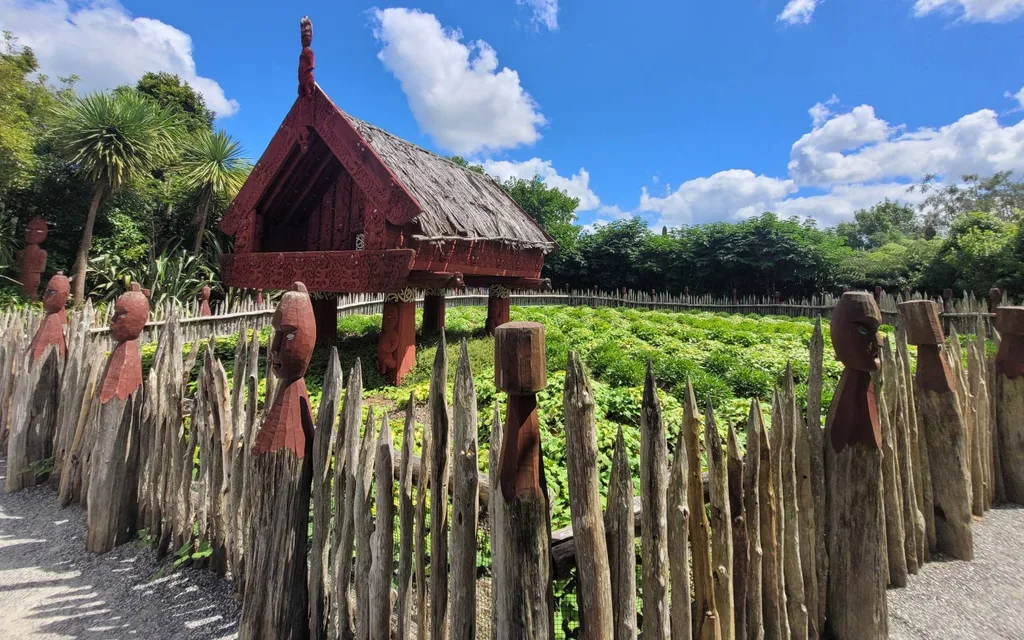
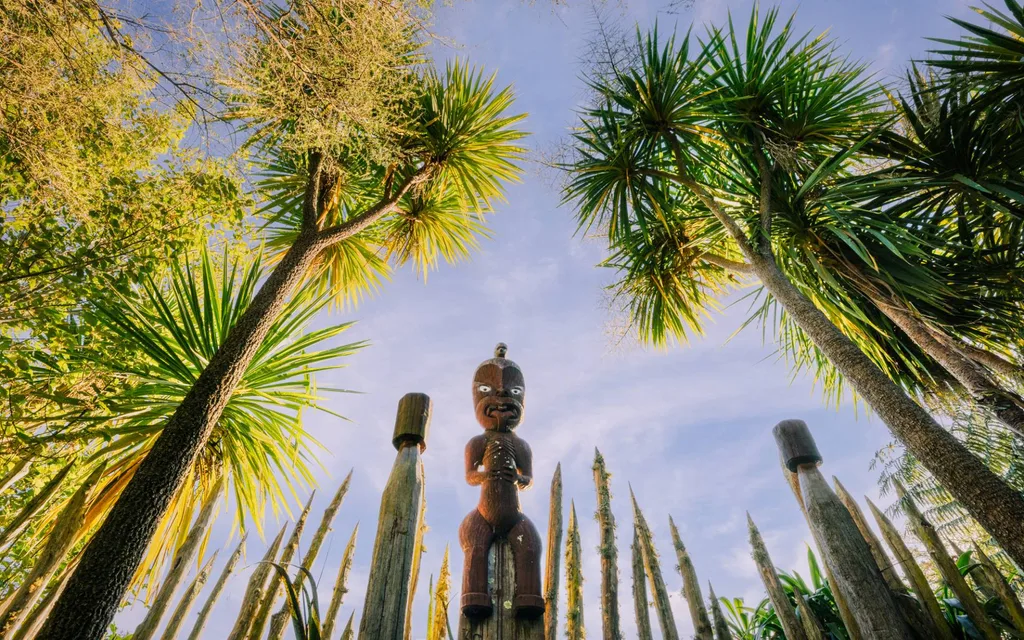
Historically, the Hamilton Gardens site has been an area of cultivation since humans arrived in Aotearoa. Ngaati Wairere grew kūmara and other crops there as far back as 700 years ago at a settlement called Te Parapara (the name of the traditional Māori garden at Hamilton Gardens). But after the land was confiscated by the government in the 1860s, it was used for various purposes, including as a rifle range, sand quarry, dog dosing area, go-kart track, and even as the city’s rubbish dump.
In the 1950s, the Hamilton Beautifying Society lobbied for the site to be converted into a public garden, and in 1960, a 1.6ha space around the glasshouse was named Hamilton Gardens. Initially, a rose garden was planted, but it was Peter Sergel, a landscape architect, who later became the Gardens’ director for 25 years, who had the vision to transform the 45ha park into a gallery of 30 gardens from around the world. He did his first sketches in 1978 and the first enclosed gardens opened in the 1980s.
“To understand each garden, you need to understand the historical context and the transformation that created it,” says Lucy, who took over the director’s role about five years ago.
“But by the same token, the gardens are also a great way of understanding those transformations. They give you a glimpse into the cultures of ancient times. Take the Ancient Egyptian Garden. It reflects humanity’s belief in the afterlife and the role of nature in spiritual continuity. The Japanese Garden, for example, is a direct result of the spread of Buddhism.”
Paradise, Fantasy and Productive
The gardens have been grouped into three categories: Paradise, which reflects idealised visions of nature and emphasises beauty and reflection; Fantasy gardens that spark wonder and curiosity; and Productive, which show how humans have cultivated plants for food, medicine and daily life.
A further 17 gardens are planned before the full collection is complete. Next on the list are the Baroque Garden and Pasifika Garden, with a Dutch Renaissance Garden, a Bee Meadow and
a Mahayana Sanctuary Garden, among others, to come.
Growing community
It would be hard not to catch the growing bug when you’re surrounded by botanical inspiration on the daily, and Lucy is herself is a keen gardener.
“I’m an amateur, but I’m proud of what I’ve achieved.”
When it came to transforming her own patch of lawn into a garden, Lucy decided to stick to a palette of four colours: green, burgundy, blue and maroon, although she’s gradually introducing pops of pink. There are Japanese maples, low-growing hedges, hellebores, salvias and gaura. “It’s very clean, crisp and immersive.” A favourite spot is a hedge of Hydrangea paniculata ‘Limelight’, where she’s added seating and a bird bath. She also grows plums, peaches, feijoas and mandarins, and she and her husband like to sit and read their books under an arbour of grapes.
With a team of 28 gardeners for colleagues, she’s never short on expert advice.
“I try and get as much as I can out of them,” she says, reading out notes one of the gardeners has given her on citrus care.
“Cut trees down to a height that you can reach for picking, make sure a bird can fly sfideways through it for good air flow, prune in April or May so they can put on a bit of a growth before winter to protect them, give them a heavy feed after pruning, mulch around the bottom and apply long-term release fertiliser in spring.”
Making use of the edibles grown
And it’s not just about ornamental beauty. The edibles grown at Hamilton Gardens are also utilised. The glorious terracotta pots of Seville oranges in the Italian Renaissance Garden are turned into marmalade, which can be purchased at the Gardens’ shop, along with honey, lemon curd and chilli sauce, and every autumn the kūmara harvest from Te Parapara is shared with local iwi as well as the Salvation Army to distribute to those in need.
Lucy says that community is one of the most important aspects of Hamilton Gardens’ story, particularly its 68-strong volunteer team, some of whom have been involved since the 1980s.
“Many of them were there from the beginning, working alongside Peter, literally with their spades in the ground, making this garden happen.”
Now the story of the Gardens has been told in a documentary, The Time Traveller’s Guide to Hamilton Gardens, which Lucy says is a special must-see.
“It’s such a visual medium to capture such a visual, beautiful place.”
Plan your visit! For opening hours, tickets and garden highlights, visit hamiltongardens.co.nz.
Read more
- Landscape designer Guy Hessell on growing native plants in New Zealand gardens
- These are the best vegetables to plant in your garden in June
- Harakeke: A story of New Zealand flax and its cultural meaning

