

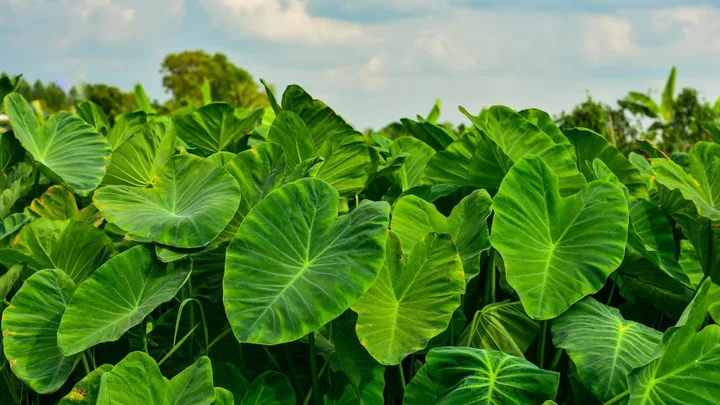
Lush foliage, exuberant vines, swaying palms, brilliant flowers and warm breezes – that’s the essence of sub-tropical paradises. These are not the preserve of the tropics, or even the subtropics. With some smart choices, you can recreate the vibe in almost any part of Aotearoa.
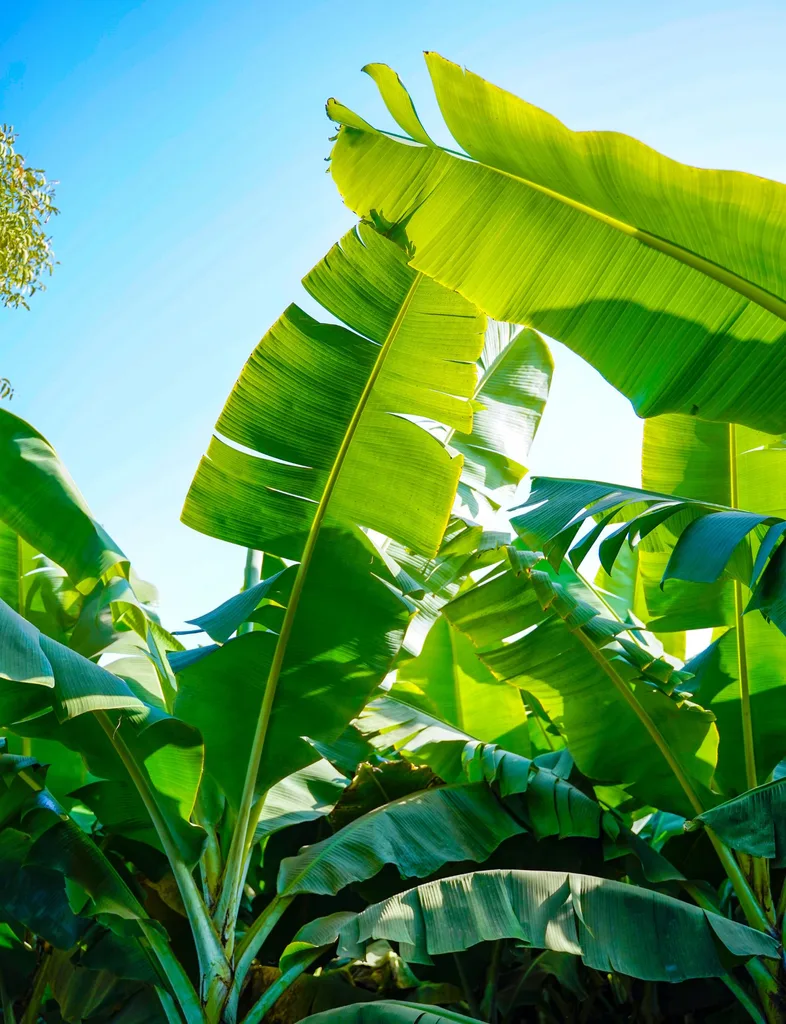
Luxe leaf
Big leaves are one of the quickest ways to give a garden a tropical look – think monstera, taro and banana, their great slabs of foliage catching every scrap of available jungle light. In warm, moist conditions, where water is plentiful, plants can afford to produce such generous leaves, giving them a large surface area for photosynthesis and powering rapid growth. Fortunately, plenty of temperate plants have got in on the act too, producing foliage with all the drama of the tropics without requiring tropical weather.
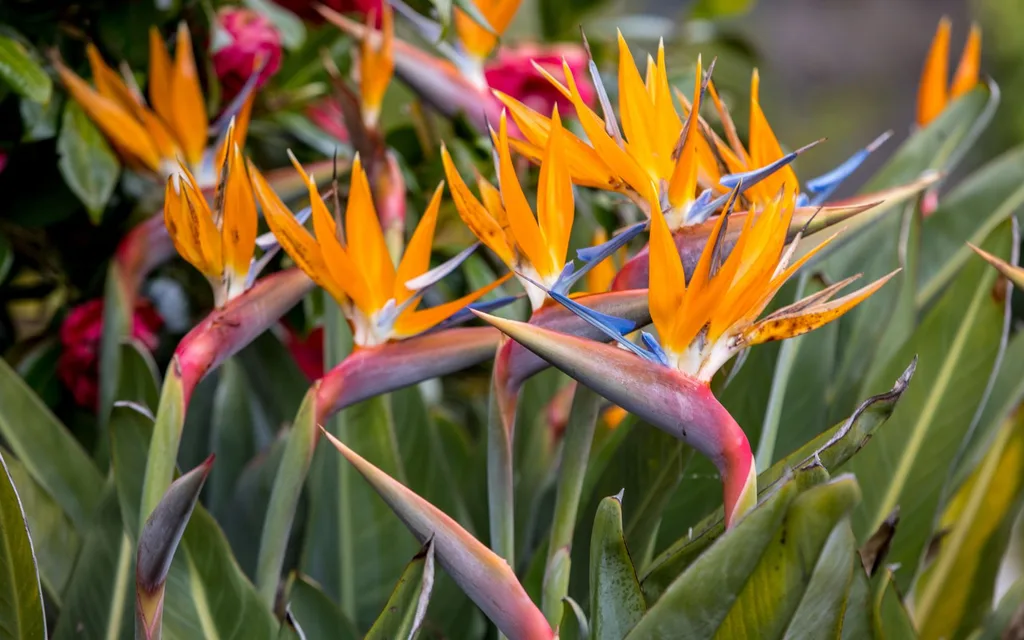
Big bird
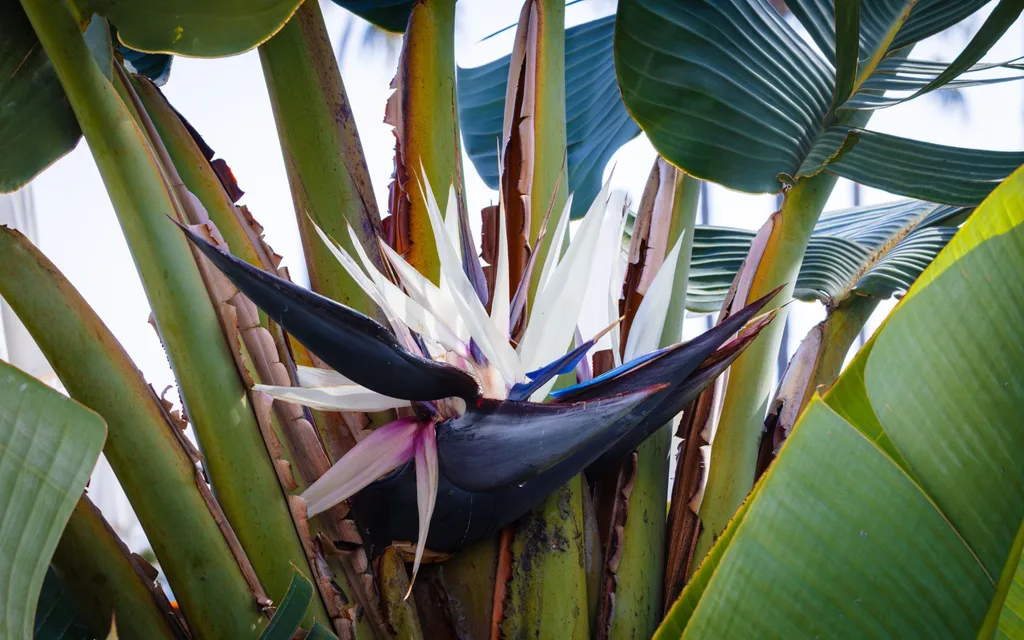
The brilliant orange blooms of Strelitzia reginae introduce an exotic touch to the garden. Each flower resembles a bird of paradise, hence its common name. These distinctive blooms appear to hover inquisitively above the broad, paddle-shaped leaves. From South Africa, it prefers plenty of sun but will tolerate partial shade where it may not flower as bountifully. While S. reginae may form a clump up to two metres high and across, its bigger sibling, Strelitzia nicolai, can easily grow to six metres or more, eventually developing a trunk. Its flowers are less dazzling, being predominantly white, but only a little less beautiful. Both tolerate a light frost, although it may burn the leaves. Mulching around the base can prevent more permanent cold damage to the roots.
Miss froggy
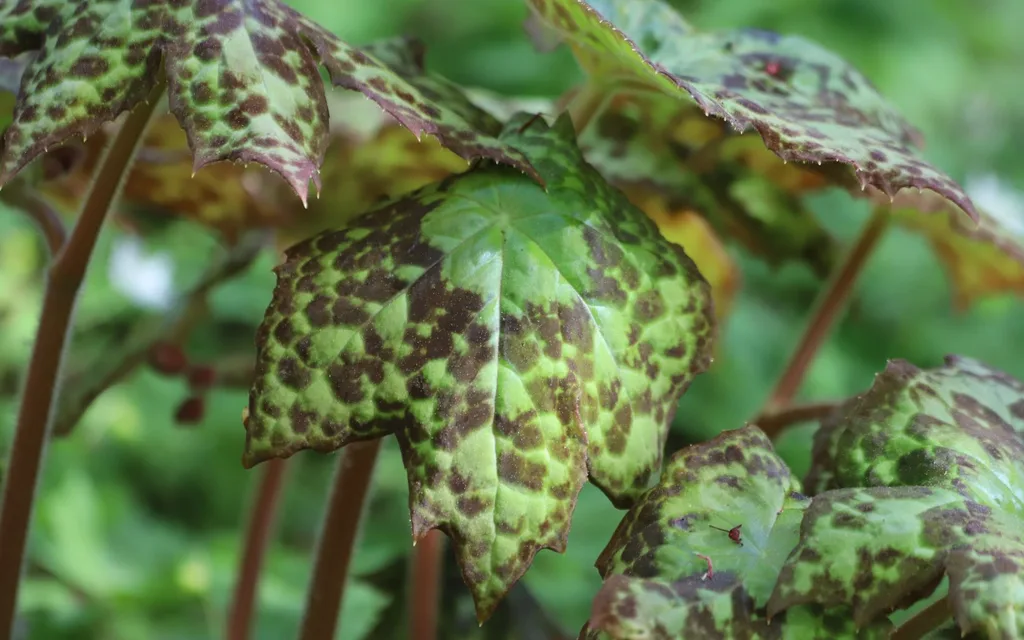
With its huge, splodgy, spotty leaves, which bear an uncanny resemblance to a toad – in an ugly-but-fascinating kind of way – Podophyllum ‘Spotty Dotty’ is a dramatic and unusual addition to the home jungle. This striking perennial from the woodlands of China has deep-red, tassel-like flowers, which are as attractive as their scent is not. The fact that pollination is dependent on flies says it all. Give it dappled light; although it will tolerate sun, the leaves tend to scorch. As it dies back in winter, frost and cold are not usually a problem. An organic mulch over winter helps maintain the humus-rich soil it prefers.
Yes, you canna
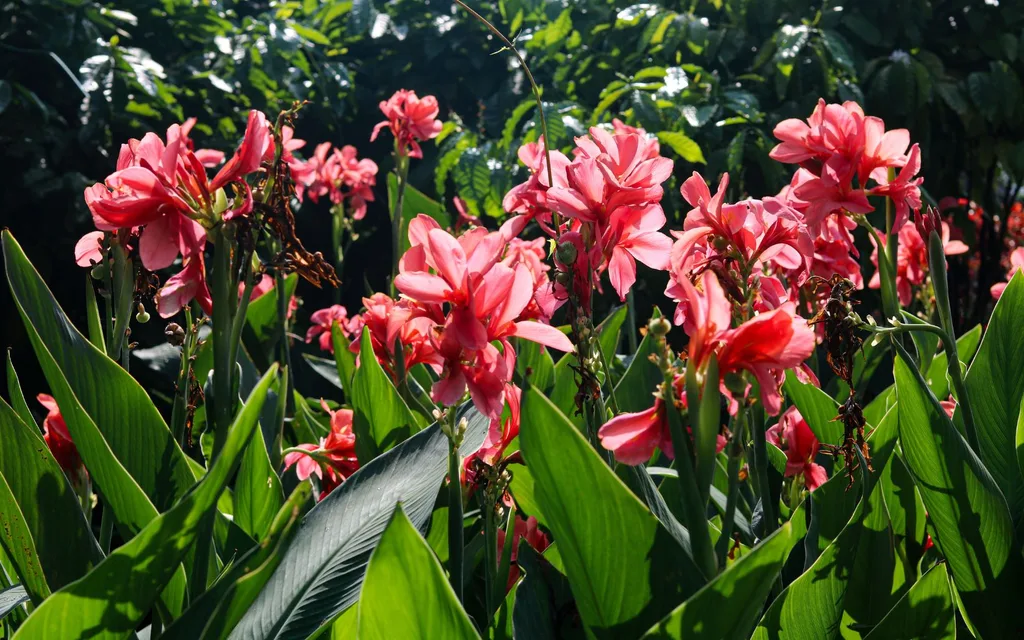
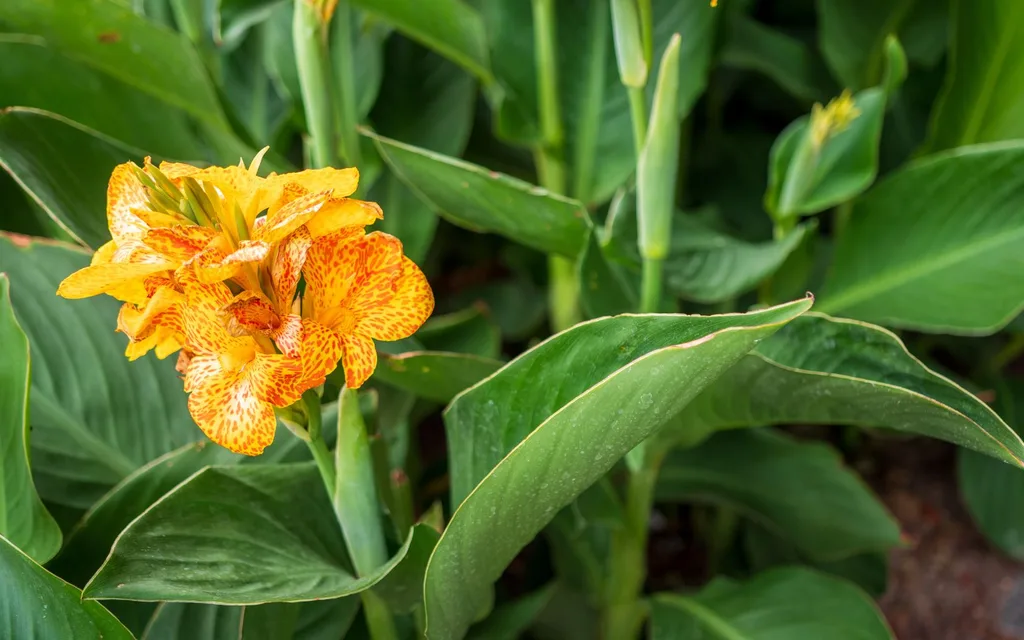
There is definitely something wild and exotic about canna foliage, particularly the striped and variegated forms of this lily that ain’t. For despite its name, the canna lily isn’t a lily at all, but a rhizomatous perennial from tropical America. Shooting up in spring as tightly rolled spears, the leaves unfurl into broad fans. Those with purple and bronze foliage intensify their colours in full sun. Should these veer toward green, that’s a sure sign it is not getting enough solar rays. Likewise, the flowers bloom way more prolifically in a brighter spot. Growing up to 1.8 metres tall, cannas like well-drained soil, rich in organic matter. Once the foliage dies back, cut it to the ground. And a winter mulch never goes amiss, especially in colder districts.
Other suitable large-leafed plants include: rodgersia, ligularia, aralia, banana and taro.
A subtropical garden without a palm or two is like a resort without a sun lounger. Just not right. Luckily, several palms will survive in colder climates.

Isthmian idyll
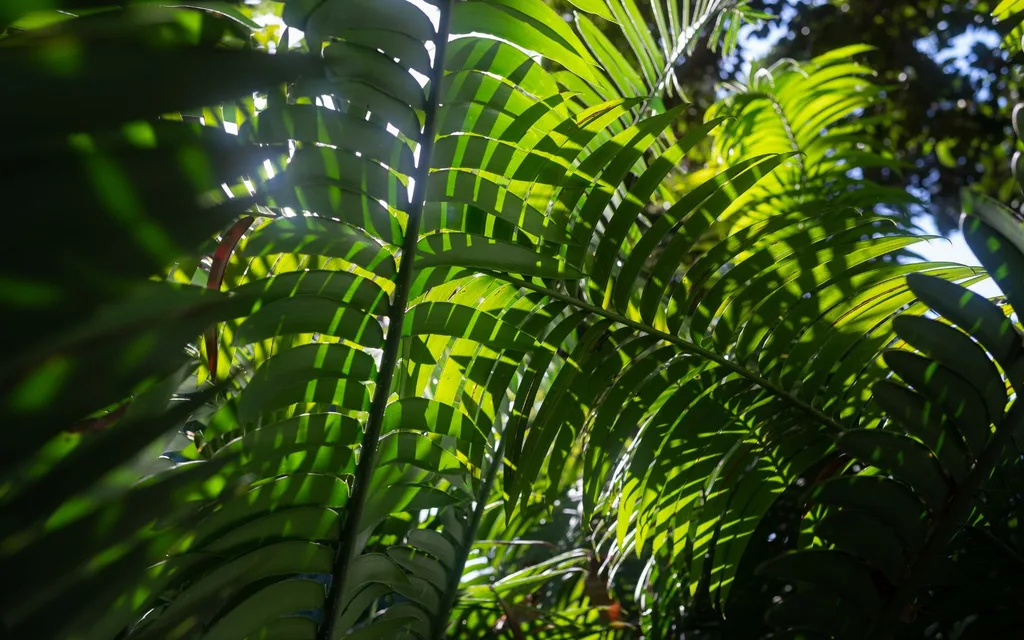
The botanical name of the cluster or bamboo palm gives away its exotic origins. Chamaedorea costaricana (pacaya palm) is, of course, native to Costa Rica, the land of Caribbean beaches and rainforest-clad volcanoes. This small clumping palm is an easy way to bring some of that lush, exotic atmosphere home. It forms clusters of upright, slender stems topped with dark green, glossy, pinnate fronds. Reaching only three metres tall and about half a metre wide, it’s perfect for small gardens and screening. Growing in the jungle in its native land, it does best in dappled shade, though it will tolerate some sun, and even full sun once established if water is plentiful. Protect it from hard frosts in cooler climates.
Pine for a palm
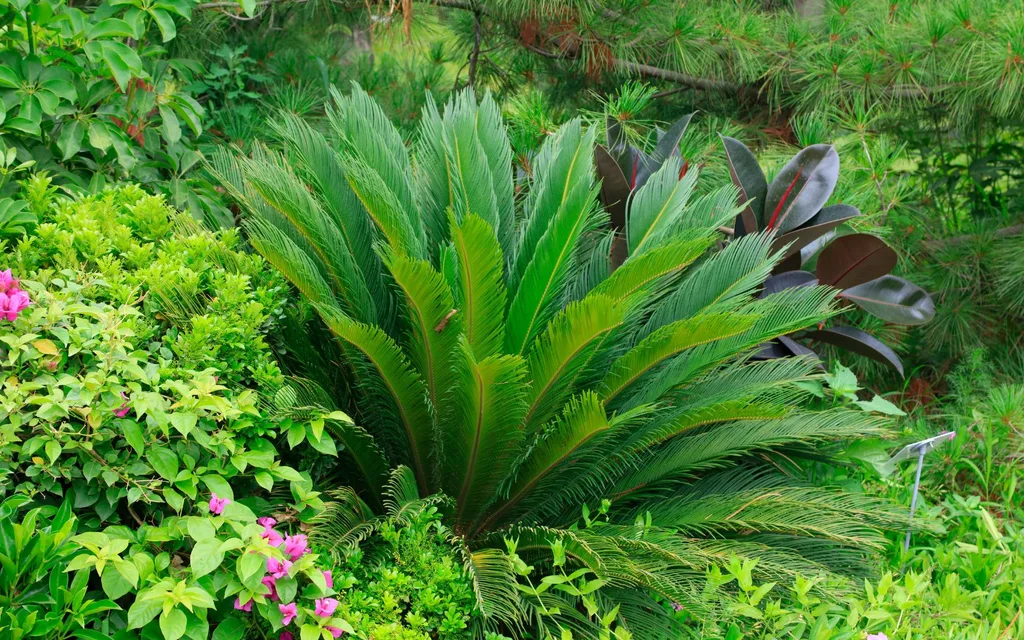
One mightn’t associate palms with Japan – and in truth, the sago palm (Cycas revoluta) from the country’s subtropical south is not one. It is a cycad, an ancient type of plant more closely related to conifers than to palms. But with its attractively thick trunk and feathery fronds, it looks like a palm – so it serves its purpose here. Given its ability to withstand salt-laden winds, drought, frosts and even snow, it’s a top choice. Just give it full sun (which makes it useful as a nursery plant for more sun-sensitive members of the garden) and free-draining soil. Too much moisture can lead to root rot. It is slow-growing, taking decades to reach its eventual height of around three metres, but looks good at every stage.
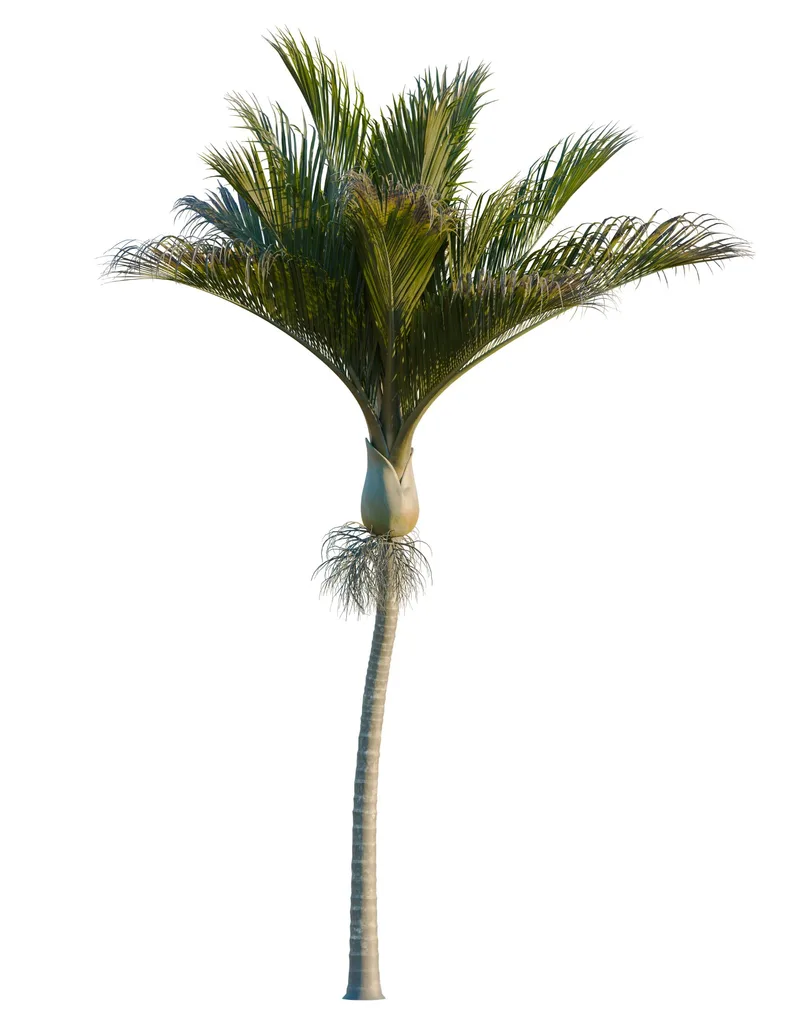
Other relatively hardy palms include: the European fan palm (Chamaerops humilis) the kentia palm (Howea forsteriana), and our own and the only palm – the nikau (Rhopalostylis sapida).
Mandy who?
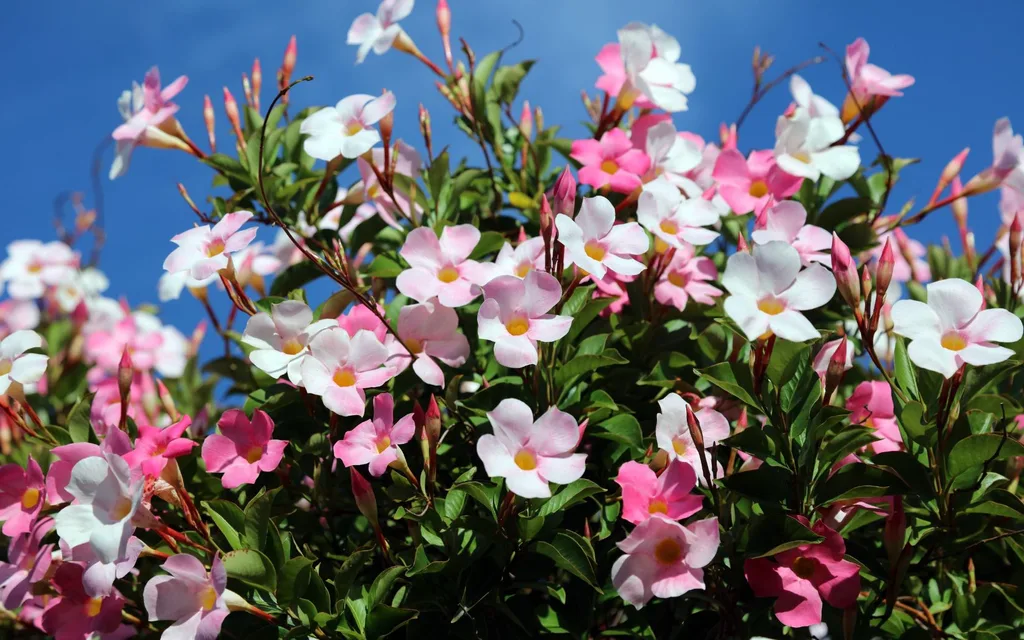
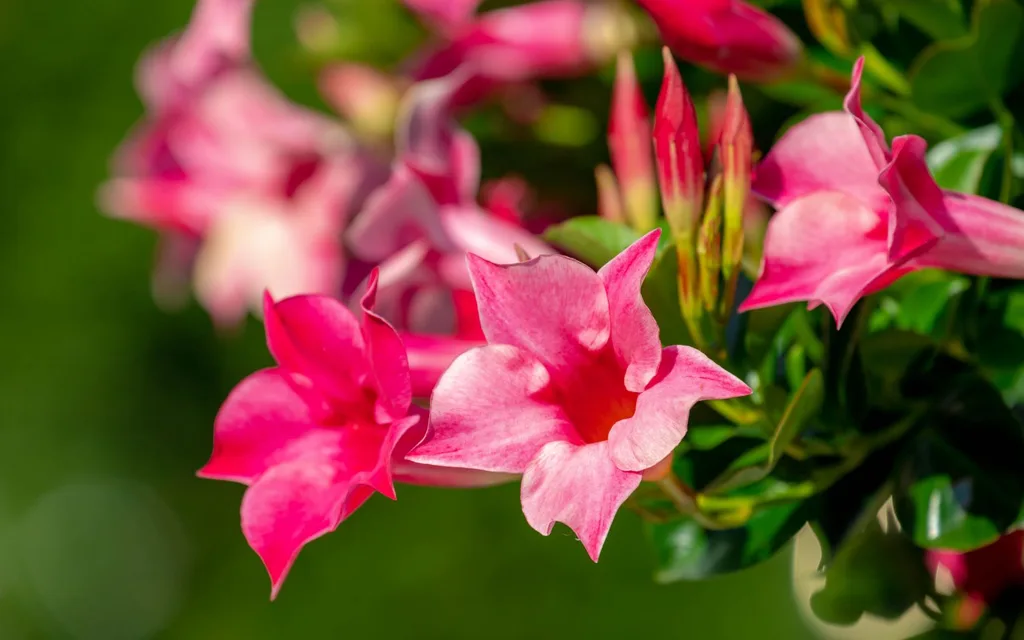
Give mandevilla something to twine itself up and away it goes, covering itself in fragrant, trumpet-shaped flowers from spring until autumn’s first frosts. While blooms come in many shades of whites, pinks and reds, the deeper, more vibrant shades align best with the tropical atmosphere. Not that the butterflies care – they seem to be attracted to any of its colours with equal enthusiasm. This vigorous climber flowers better in full sun but will cope with some shade – which will, of course, encourage
it to greater heights in search of sunlight. In cooler districts, check out Mandevilla laxa, a deciduous variety that better tolerates frosts.
No self-respecting subtropical jungle can be without swags of vines looping through its depths. Add a vibrant flower or two and the look is complete.
Jack of all trades
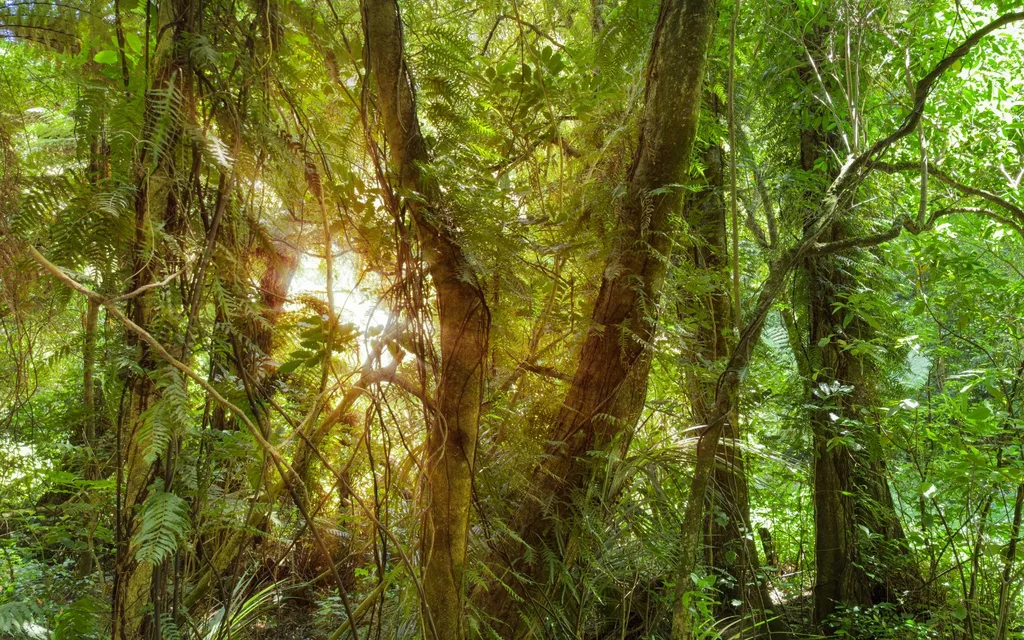
If you want that frisson of danger that the tropics can exude, of something lurking in the undergrowth, of having to watch your step as well as your back, then a supplejack or kareao, (Ripogonum scandens) may be the place to start. This vigorous native vine of our lowland forests takes a while to get going. It starts life as a small shrub, but once it finds its climbing feet, watch out, it can grow up to 5cm a day in midsummer, winding itself anti-clockwise around whatever it can find, even itself, producing rope-like swags, ready to trip or snare the unwary. Medium-sized leathery leaves and inconspicuous greeny white flowers followed by red berries complete the look.
Heaven scent
The subtropics have a distinctive smell – warm, damp and slightly earthy. Add the perfume of exotic flowers and the effect is irresistible. Frangipani is one of the classics, its pretty waxy flowers giving off a creamy, warm fragrance with fruity undertones. Give it a sheltered, north-facing spot protected from strong winds. Frangipani is frost-tender, particularly when young, so keep the frost cloth handy, or grow it in a pot that can be moved under cover when the temperature drops.
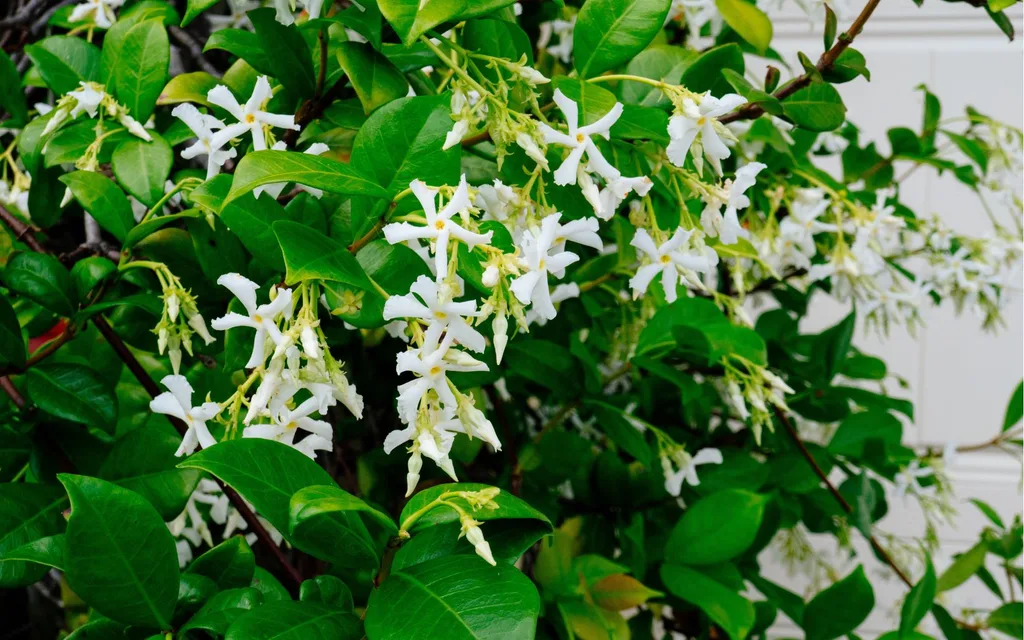
For a similar sweet effect in areas prone to frost, try: daphne, star jasmine or michelia.
Trumped up
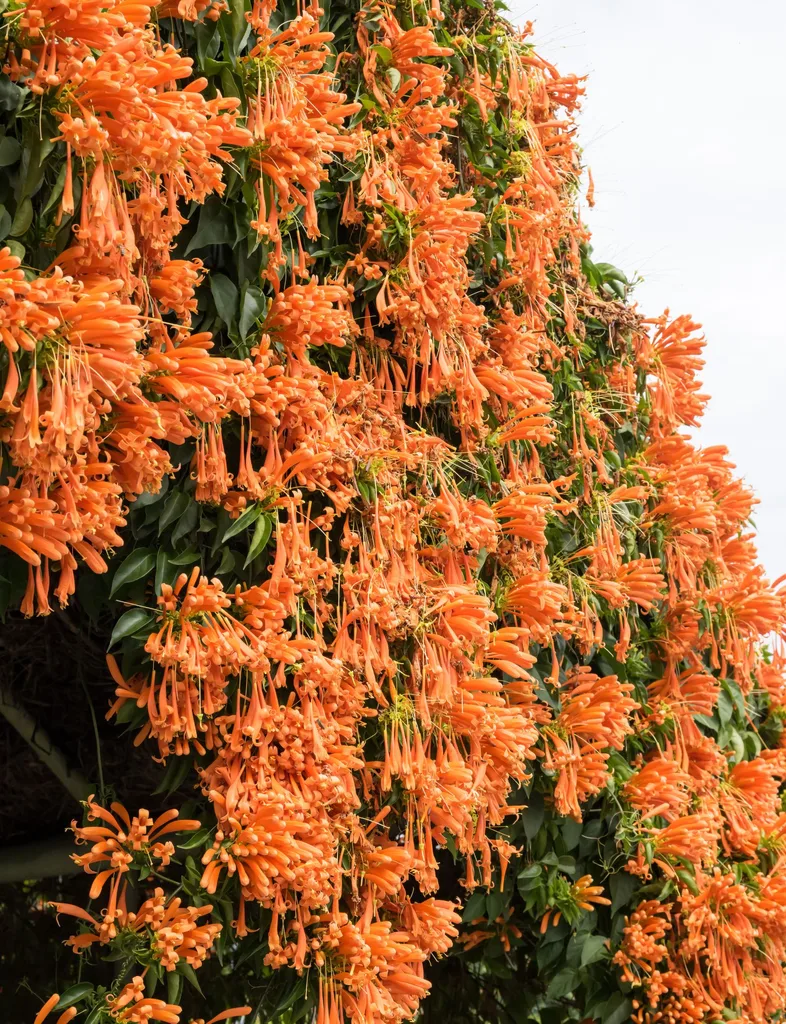
Just when you think all the colour is over for the year in the subtropical garden, up flares the orange trumpet vine (Pyrostegia venusta, aka Bignonia venusta, aka flame vine). This gorgeous orange-bloomed climber is at its most dazzling best from late autumn and through winter – and flowers best in full sun. Seldom have the subtropics been so gaudy. A very vigorous climber, it can quickly produce a solid wall of colour, making it a stunning backdrop. Grow it up a fence, over a pergola or arch – and prepare to be wowed.
Top tips
- To allow more tender subtropicals to grow, microclimates can be easily created in a garden by planting shelter and choosing somewhere out of the reach of cold winds.
- Many subtropicals hate prolonged periods of wet feet, so elevate beds if winter rain is a potential problem.
- Many subtropicals can be grown in pots and moved in and out of shelter according to the season.
- Just about every subtropical plant prefers well-drained soil, rich in organic matter.
Read next:
- Explore this enchanting cottage garden in Christchurch
- Your guide to creating beautiful floral displays
- The perfect hedge for every garden

