

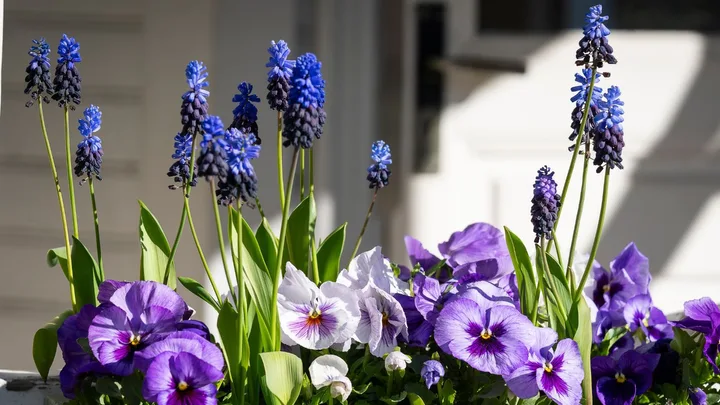
What’s more heartening in the spring than seeing a chorus of potted colour in the garden? Here’s what you need to know to create floral displays that really sing.
Containers
Containers have never been more exciting. Like garden design itself, they’ve shrugged off the old rules in favour of a freer, wilder, more adventurous style. Mix, match, experiment and don’t be afraid to break convention. These spectacular displays seen in gardens and public spaces overseas are full of ideas – borrow what you love, then make it your own.
Whatever the current zeitgeist in pots is, it pays to go with the classics, be they sharp Corten-steel boxes, classic concrete urns or traditional terracotta pots, oak barrels or wooden crates, recycled old coppers or defunct tin baths.
All plants need good drainage. If the pot doesn’t have drainage holes and you can’t or don’t want to make them, put the plants in a slightly smaller pot and pop that in the container, propped up on stones or shards of broken pottery. Before long the plants themselves will grow and soon disguise the guise.
An eclectic collection is all the rage right now, but sticking to a similar colour scheme or material guarantees success.
Anti-intuitively, bigger containers make small spaces seem bigger than small containers.
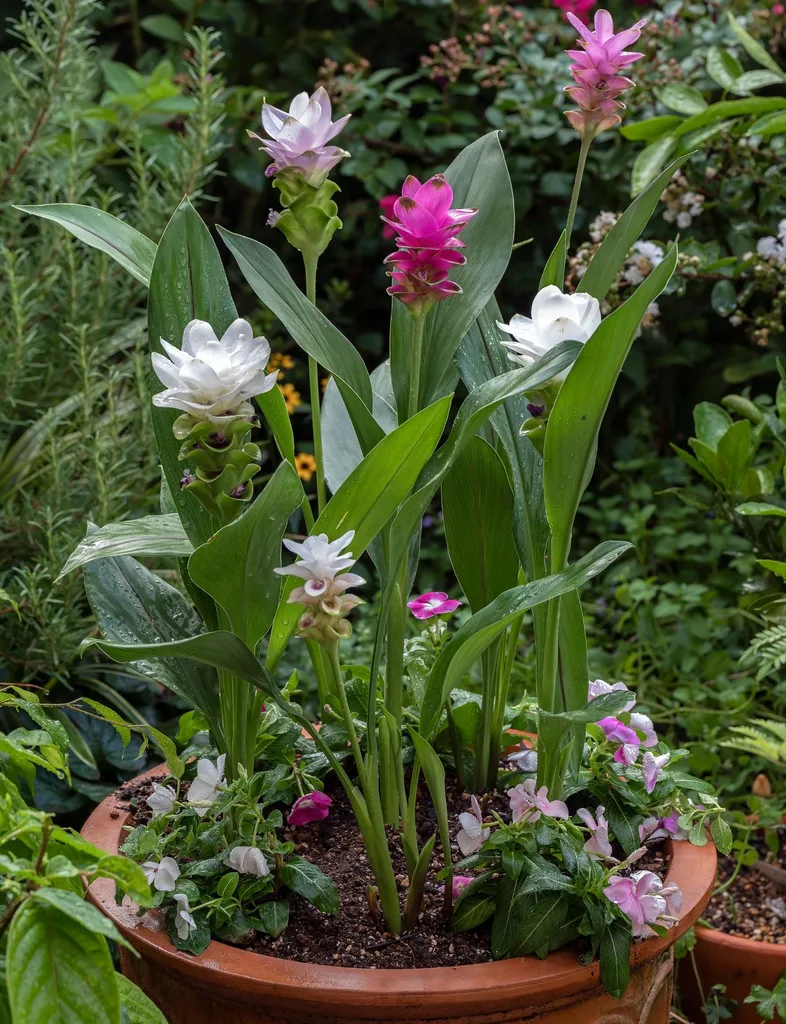
Potting mix
Unless you’re an ace gardener and soil whiz, commercially produced potting mix is the best – no worries about weeds or nutrients. This soil should last a season without additives. For seasonal displays, once flowering is over, remove the plants and tip the mix around a tree or bush, or into a garden bed. For more permanent plantings, feed as you would your garden.
Cultivation
For maximum impact, place bulbs and plants closer together than is recommended or that you might normally.
After planting, water well. Keep an eye on watering, remembering that pots, and especially smaller, terracotta and unglazed ones, dry out faster than a normal garden bed.
With commercial potting mix, plants are unlikely to require additional feeding throughout the season.
Some plants may start to look leggy or generally past their use-by date by mid-summer. Cut them back, feed and water. Or if beyond redemption, biff and replace.
Group together plants that have similar cultural needs.

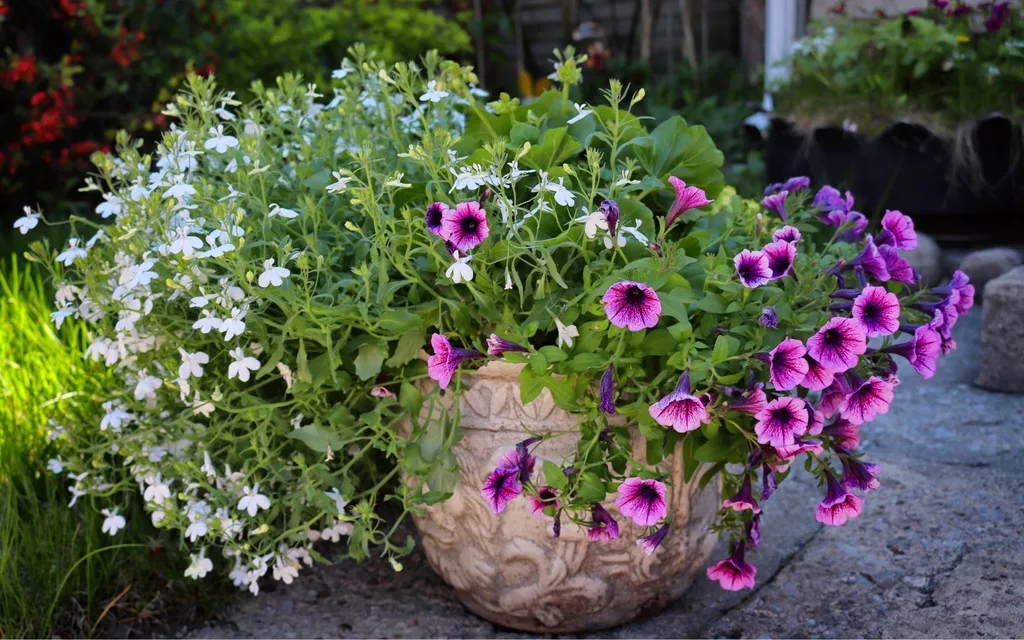
Petunias and lobelia
Why it works: Yin and yang, dark and light, big and small — this unexpected pairing has a slightly unsettling, lopsided, look-at-me energy. The petunias are big, bold, bright and pink. Alongside, though small, delicate and pale, the lobelia blooms still hold their own. Both are bonny, bountiful and prolific flowerers, promising a long, generous season. Each species comes in a range of colours and the more disparate the tones and shapes, the more striking the effect.
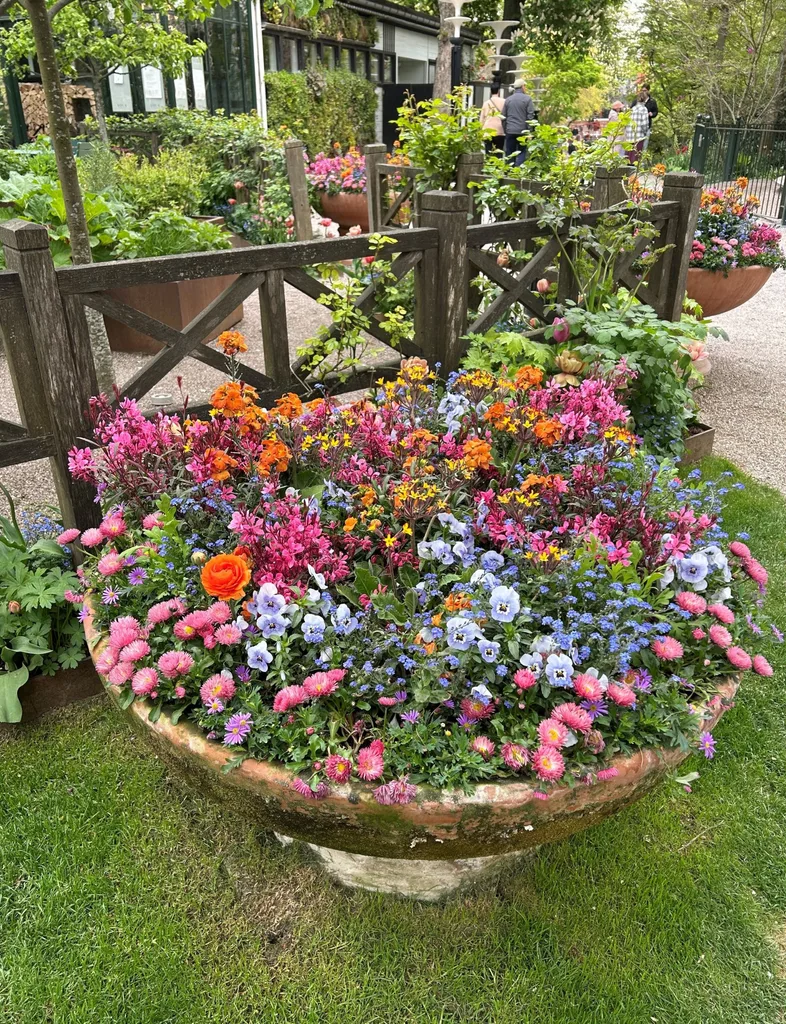
English daisies, pansies, forget-me-nots, wallflowers and asters
Colour rules are tossed into the air in this glorious display, which owes as much to fabric design as to the horticultural world. Crafted to be viewed from above, its rich tapestry includes English daisies, pansies, forget-me-nots, wallflowers and asters. All are low-growing forms, for the relative flatness of the planting is key and enabled by the generous proportions of the basin. The repetition of key colours and broad drifts knits the composition together, with cooler blues and whites sitting between the warmer oranges and pinks. These principles are worth bearing in mind, but only loosely. Throwing caution aside, you can create your own version with your favourite colours and combinations.
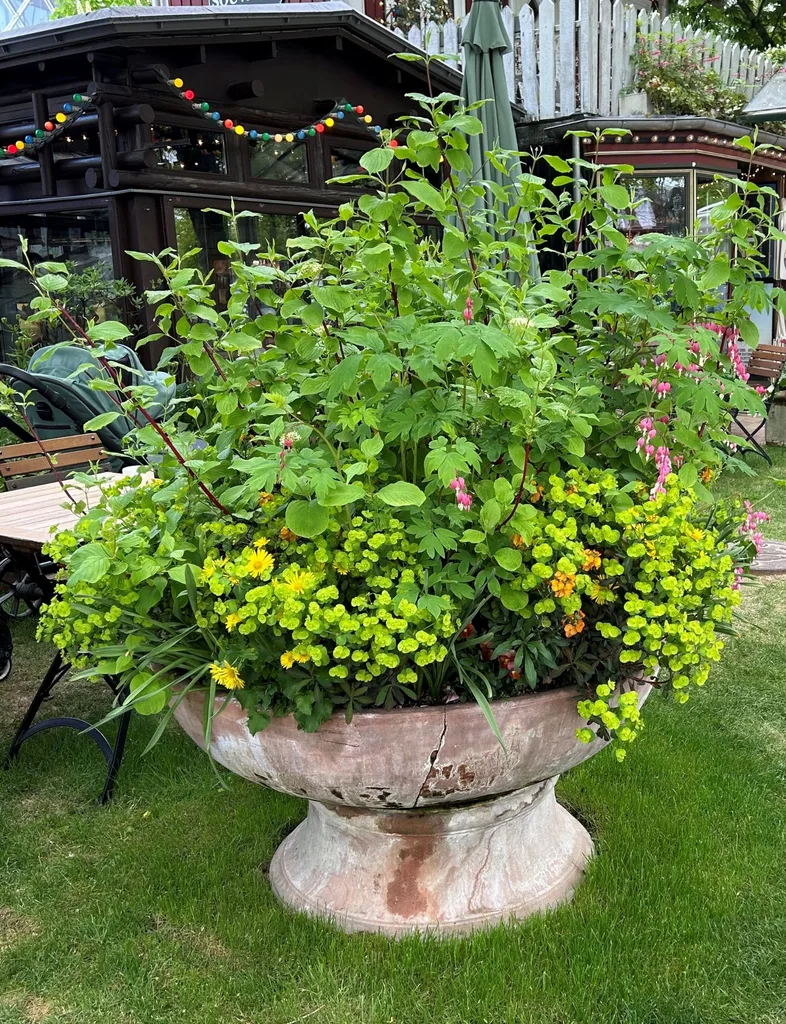
Black-stemmed dogwood (Cornus alba ‘Kesselringii’), pink bleeding heart (Dicentra spectabilis) and low-growing acid-yellow euphorbia (E. cyparissias)
This divinely unruly triumvirate is both on-trend and as refreshing as a long cool drink on a hot summer’s day. The three main plants are all perennial (though strictly speaking the dogwood is a shrub) and will last for years in situ, or at least until they outgrow the pot. So, make it a big one. The fresh green of the dogwood is heightened by its dark stems and lifted further by the acid yellow of the euphorbia, while the delicate pink bleeding heart blooms give a cute pop.
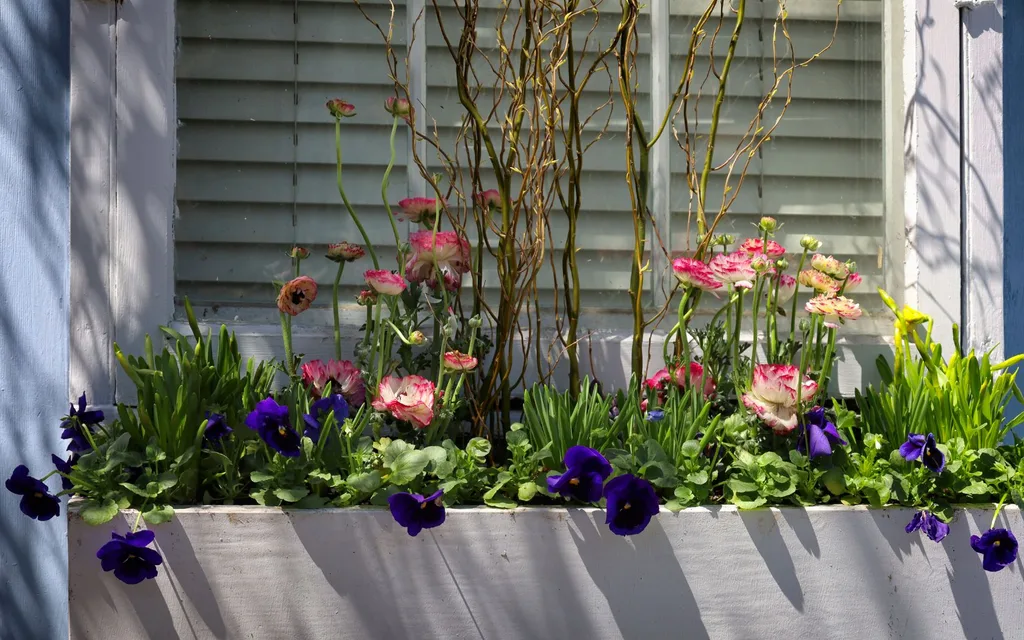
Blue violas, ranunculus, daffodils and pussy willow
Why it works: This spring set-up in a white planter box is designed to create a layered, textured look with early-blooming daffodils and frilly ranunculus mixed with long-flowering violas. The foraged pussy willow adds vertical structure to the display.
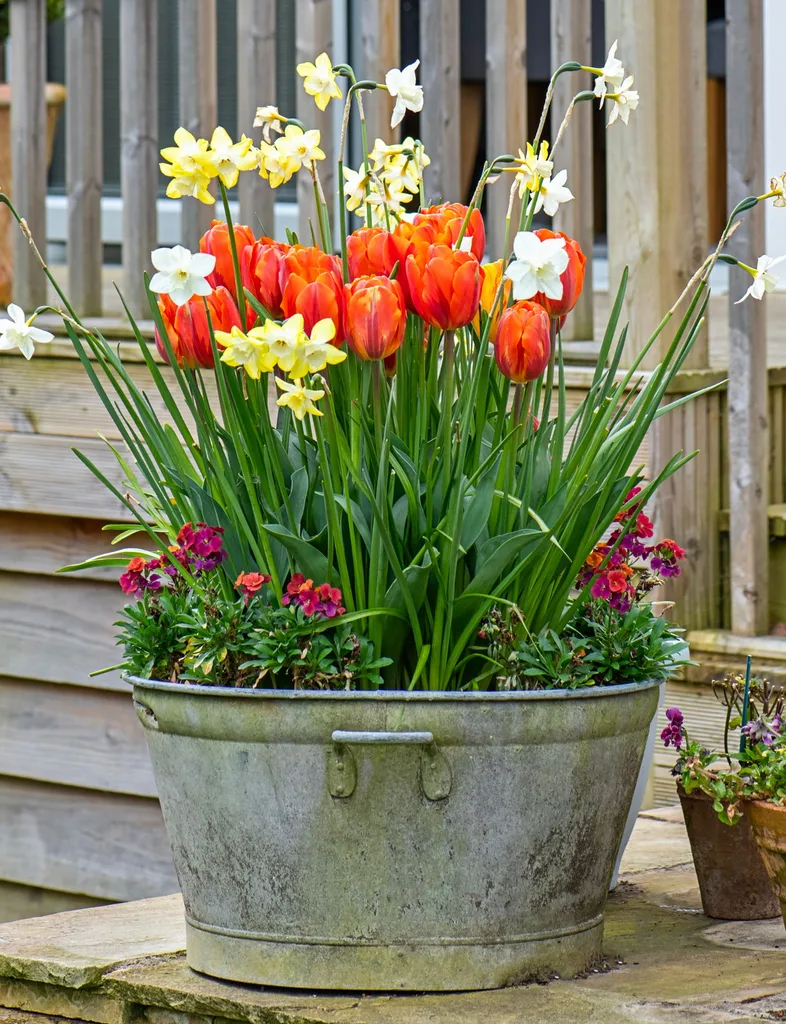
Orange tulips, jonquils and wallflowers
Why it works: Hefty orange tulips and delicate jonquils erupting from a skirt of wallflowers give this bathtub grouping all the energy of a fireworks display. To create, plant tulip bulbs deepest, then add a layer of potting mix, then add the jonquil bulbs and finally the wallflowers.
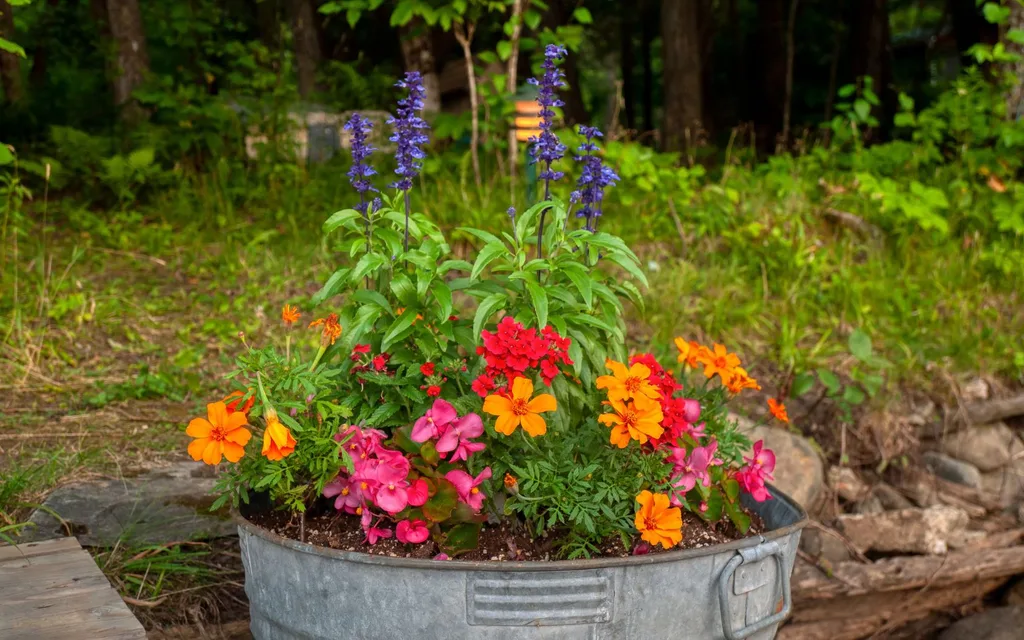
Salvia farinacea ‘Victoria Blue’ or ‘Blue Bedder’; Tagetes tenuifolia (aka Mexican marigold); Lychnis chalcedonica (Maltese cross) and Begonia semperflorens (the bedding begonia)
Why it works: Fortune favours the bold with this glorious blaze of orange, scarlet and hot pink, from which tall purple spires rise like exclamation marks. Had the purple been scattered among those fiery hues, the composition would have lost much of its punch. Instead, it stands apart, making the colours around it glow all the more brightly. With the dazzling range of bedding plants now available, dreaming up your own combinations can be one of gardening’s great pleasures. Before reaching for the plants, try playing with children’s paints on a sheet of paper. A few carefree dabs can reveal colour pairings you might never have considered. The result is far more likely to be something unmistakably your own.
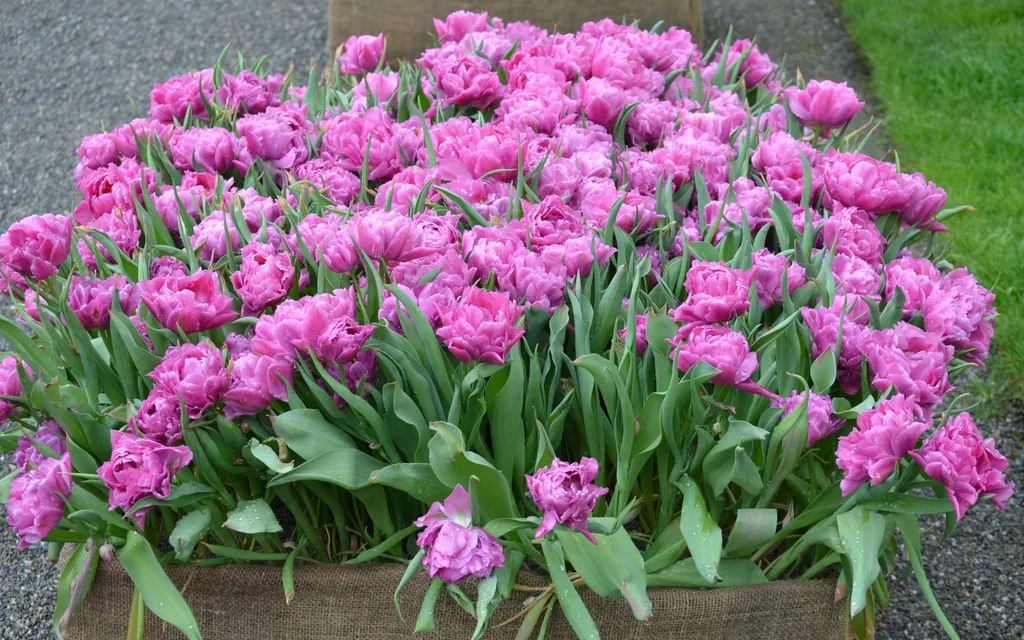
Tulips, pure and simple
Why it works: Never doubt the drama of the monocultural container and never be faint-hearted in your approach to it. Here, dozens of tulips have been so densely packed together they appear to be jostling, erupting up with unbridled passion. Container plants virtually always look better crammed in and with no soil showing. Just feed them more generously than you might otherwise do.
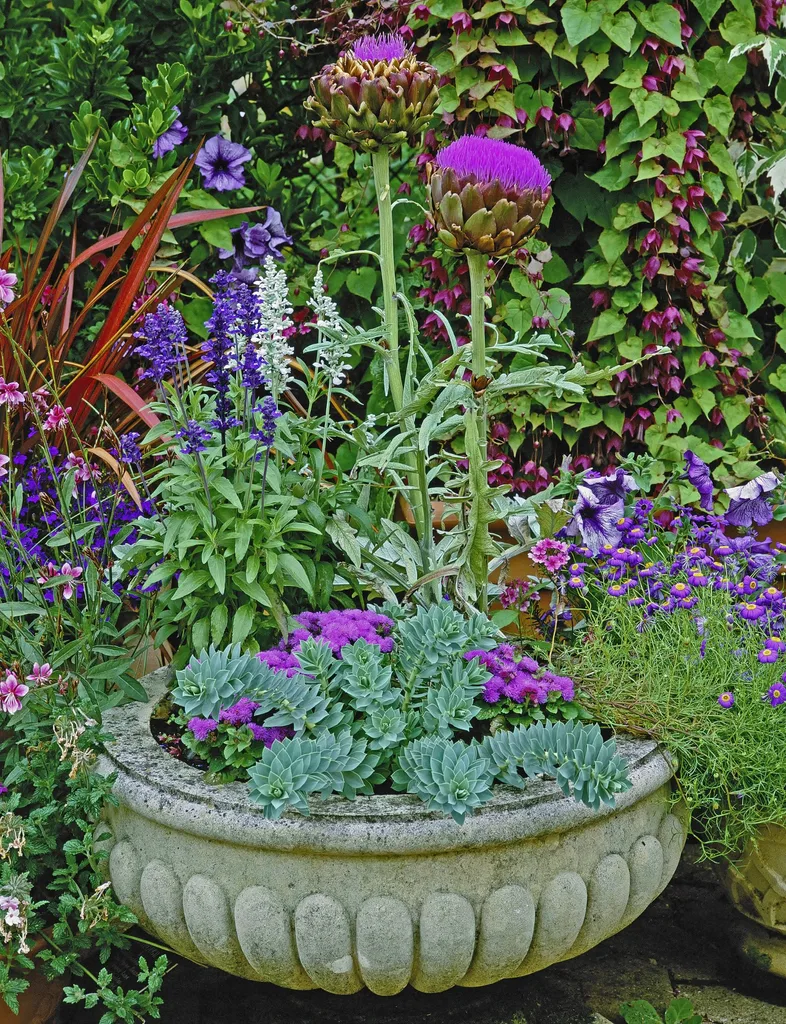
Purple salvia, ageratum, petunias, daisies – even a globe artichoke
It looks as though someone has gathered a handful of their favourite purple-flowered plants and tossed in a few pink ones (gaura and bergenia) for good measure.
Why it works: The result is stunning. Charming in part because it feels accidental rather than orchestrated – though who knows if it really was. The purple daisy lolling over the edge of the pot isn’t balanced by anything. The two globe artichokes stand there looking slightly awkward. The petunias seem to have gate-crashed the party, while the sedum is busy doing its own thing, oblivious to its neighbours.
Monochromatic plantings like this are almost guaranteed to succeed. Choose one side of the colour wheel and work it.
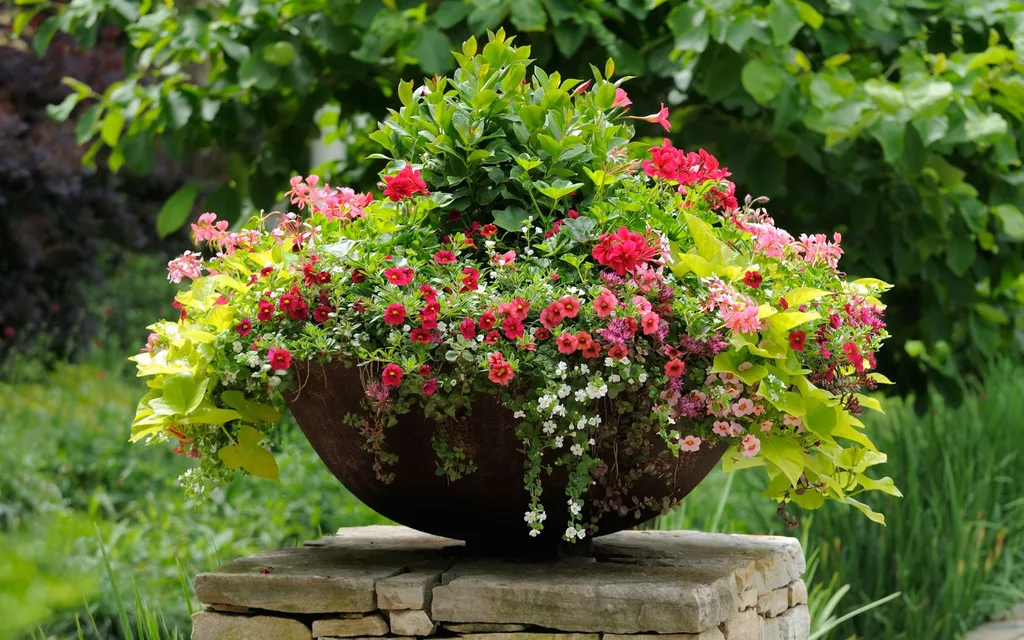
Million bells, geranium, mandevilla and sweet potato vine
Why it works: This uses the “thriller, filler and spiller” design formula to create a balanced planter arrangement. Placing a tall perennial in the centre acts as a focal point, which is then surrounded by smaller flowers, such as pink mandevilla, and a spiller like trailing sweet potato vine.
Read next:
- The perfect hedge for every garden
- The art of the coastal garden: Beauty shaped by wind, waves and salt
- Composting at home: How to create your own ‘black gold’

