

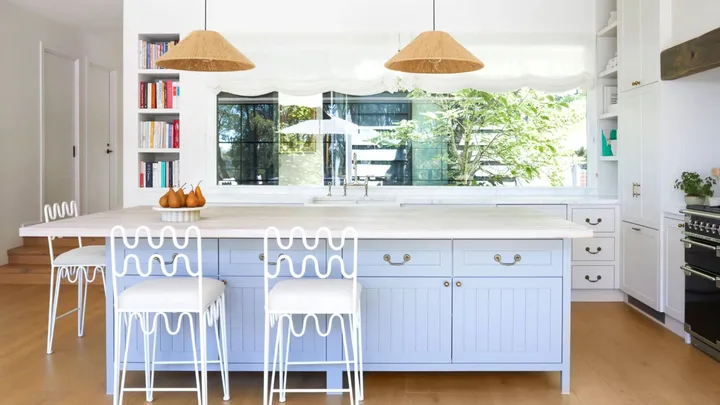
Who doesn’t love a day at the beach? Coastal-style interiors tap into a rich vein of seashore inspiration, from colours and materials that evoke the sea and sand dunes, to objects of nautical whimsy. But most of all, coastal style is about a mood. Channel the barefoot bliss of a day at the beach with interiors that make you instantly unwind.
Perhaps the ultimate anti-trend, coastal interiors have an evergreen – and even global – appeal. The serenity of a salt-spray vacay is always desirable. After all, anyone can appreciate the allure of a home that’s as soothing as a holiday – Kiwis included.
Here in New Zealand, where the natural world is such an intrinsic part of our national identity, where the coast is always a day trip away, and where the humble beach bach is the ubiquitous setting of romanticised childhood memories, it’s no wonder coastal style holds such enduring charm. The connection to nature is key, says interior designer Margaux Word of Chroma Interiors. “In New Zealand, people love when their interiors feel like an extension of the outdoors.”
Ahoy, mateys
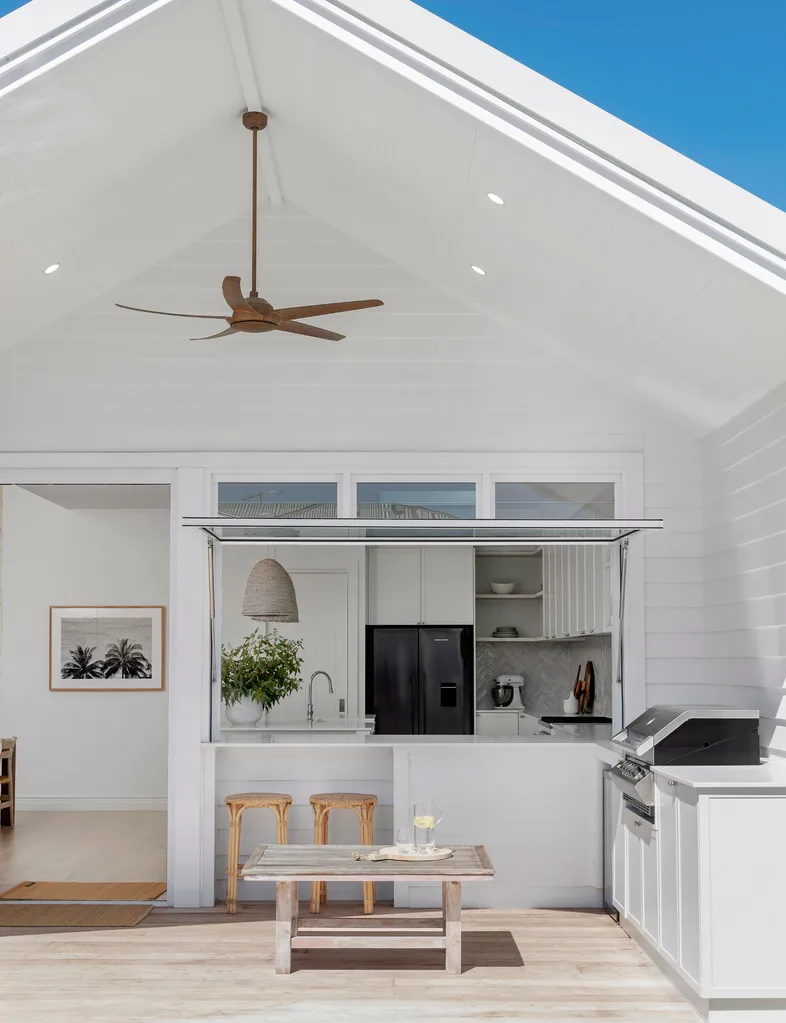
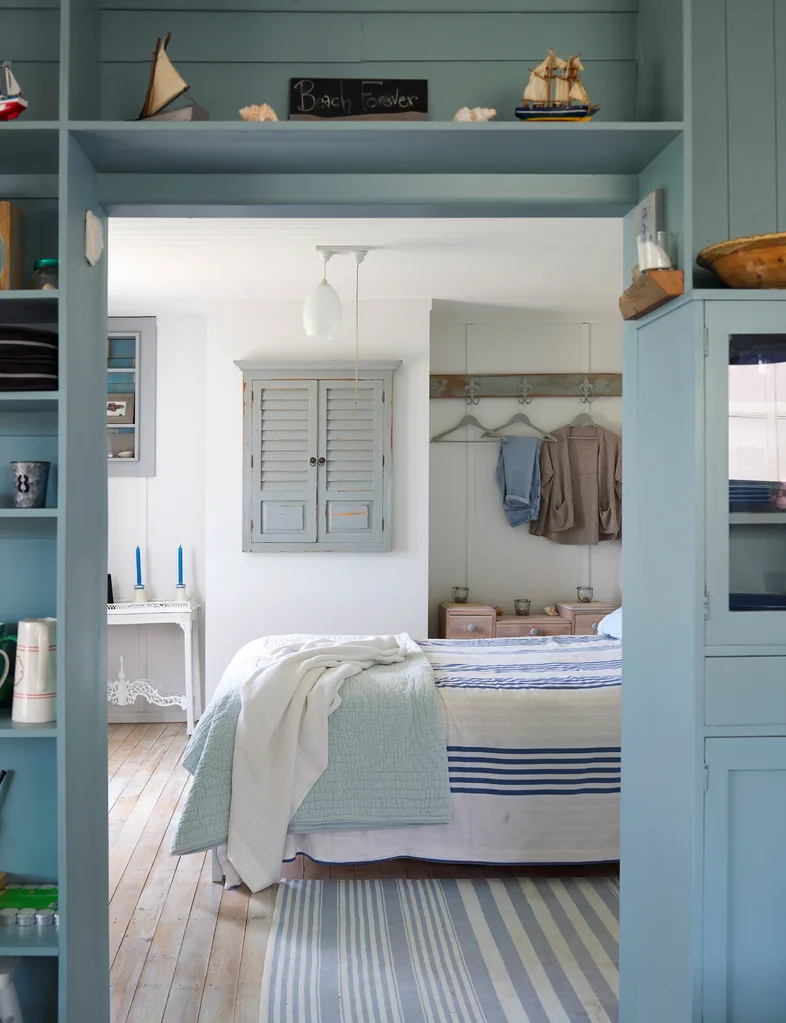
Coastal interiors come in various salty flavours. When we think “coastal”, we’ve usually got a particular and instantly identifiable look in mind. Classic coastal style takes all the most iconic elements of a beach escape. It combines a calming colour palette and marine-inspired textures, then seasoning with a dash of maritime motifs.
The key elements of a coastal look are:
Sun: A coastal interior is as light as the sun glittering off the ocean and as airy as the limitless horizon. To capture the look, welcome in as much light as possible. Keep windows and doors clear and ready to be pushed wide open. Floaty sheers are better than heavy drapes. Pair with discreet roller blinds or textured matchstick blinds for blocking light – or leave windows bare. To amplify the light, opt for lavish use of white on walls, furnishings and even whitewashed floors, if you’re brave.
Sand: Inspired by sandy beaches, classic coastal interiors usually start with a backdrop of white or beige, while furnishings double down on the sand tones. Timber furniture leans toward pale or limed wood, with a soft finish as though scoured smooth by sand. Rattan both ticks the box for sandy colour and is reminiscent of resort holidays. Bring softness to floors with seagrass or jute rugs.
Ocean hues: If you’ve ever collected sea glass off the beach, that’s the colour palette commonly associated with coastal style: muted and milky blues and greens. For a sophisticated look, keep the palette neutral (greige, white), but with accents in navy. Or for a moodier coastal interpretation – think fisherman’s cottage next to storm-tossed seas, rather than pastel-pretty summer bach and drench the space in navy from head to toe.
Nautical elements: Drive home the coastal look with maritime elements. These can be subtle; shiplap walls are a coastal classic, while striped fabrics suggest the sea. Beachy souvenirs like seashells, driftwood, coral, or nautical motifs – anchors, oars, rope – are more obviously coastal; add a little here and there for a subtle look, or go all in and embrace the kitsch charm.
From coast to coast
From Piha’s black-sand stretch to the turquoise lagoons of Rarotonga, beautiful beaches come in all shapes and sizes – and coastal interiors are equally diverse. To find which one floats your boat, take a metaphorical journey around the globe, exploring coastal looks from Mount Maunganui to the Med.
Hamptons
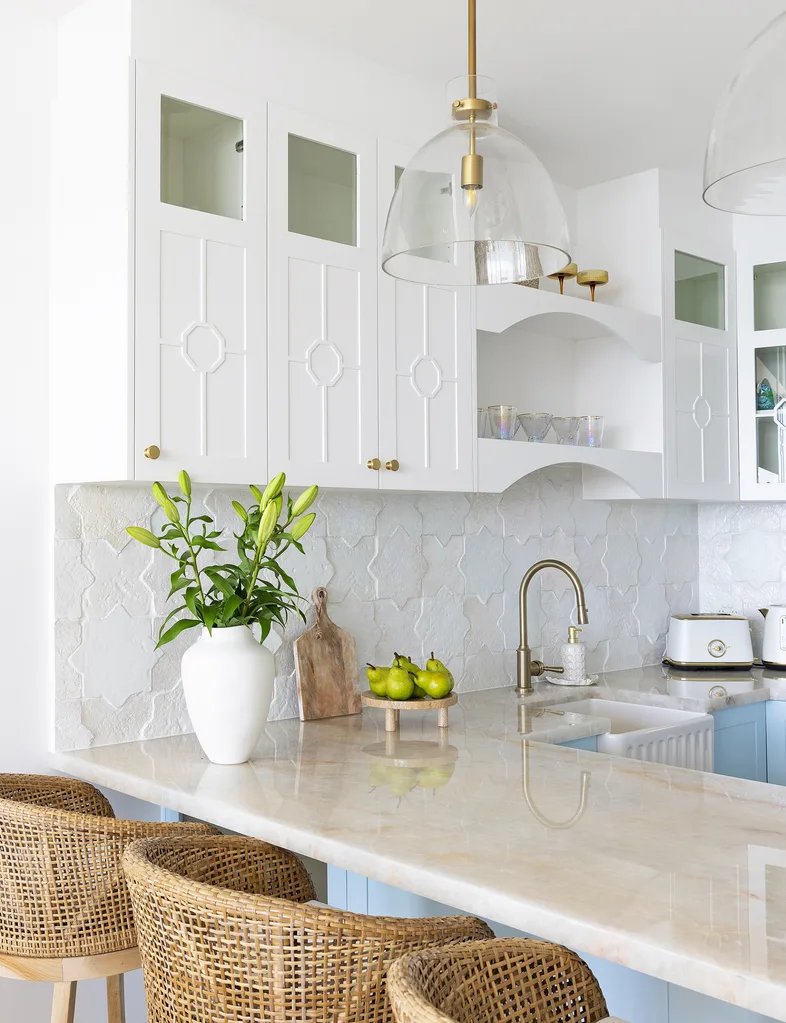
With inspiration sourced from the holiday homes of the seriously well-heeled on the US East Coast, Hamptons style gives classic coastal a sophisticated spin. More buttoned-up than your average bach – think Ralph Lauren goes to the beach. Hamptons homes combine formality and a distinct sense of luxury with the relaxed livability of a beachside home.
There are certain key elements that typify Hamptons: weatherboards and shingles, plantation shutters, Shaker-profile kitchen cabinets and strong architectural details. To capture the moneyed sophistication of Hamptons style in your interiors, think traditional or antique furniture, stately lighting (lantern pendants and oversized table lamps), wallpaper and patterned fabrics. Keep to the strict palette of blues and neutrals. Drama is brought in using accents of black, navy, or brass.

Tropical
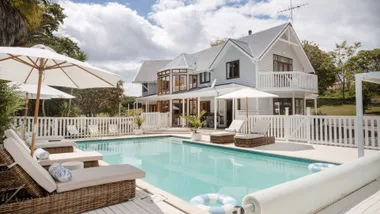
An island holiday is always on the wishlist and a tropical interior scheme gives you a taste of warmer climes every day. Tropical decor can be light on colour – whites and soft neutrals are typical. But it never feels bland, with an abundance of greenery turning the space into a lush indoor jungle.
Opt for large and leafy plants, such as rubber trees, palms, monstera, fiddle-leaf fig and syngonium. Don’t forget sightlines to the outdoors, filling gardens visible from inside with a mass of lush foliage.
Evoke a resort vibe with natural materials – rattan furniture (afternoon mai tai optional) and rattan pendants that gently sway in a breeze. Place jute rugs underfoot; timber in solid statement furniture; grasscloth wallpaper; and acres of linen. Encourage a sense of light and movement with minimal window dressings – billowing sheers exactly match the look. Bonus points if you can also incorporate them into a four-poster bed.
Accessorise with tropical print fabrics and wallpapers, and bamboo motifs (for example, bamboo cabinet handles). Keep it minimal for a fresh, resort feel, or amp up the pattern to take tropical into the delightfully overstuffed territory of British expat decor.
Mediterranean
From Spain to Cyprus, the Mediterranean combines natural beauty with an evocative sense of the ancient. Centuries of design make it an architecture buff’s playground, but the universally seductive element is the way the buildings blend the indoors and outdoors.
“The temperate climate of the Mediterranean allows for an incredible indoor-outdoor flow to the home. My favourite elements are rooted in this design feature,” says interior designer Nickola Horrocks of Horrockses Design.
Capture this seamless flow by continuing materials, particularly flooring, from interior to exterior. Pay equal attention to styling outdoor rooms – a long table for epic lunches, pots inspired by the terracotta roof tiles of the Med filled with lavender, rosemary and olive trees, plus a grapevine-fringed pergola for shade.
Bring a sense of living history, says Nickola. “Introduce elements that get better with age: natural linen, leather, wood and stone.” Travertine tiles are a good example of a Med-influenced material that will never age or go out of style.
Against a base palette of white – think white-washed exteriors and soft, textured plaster indoors. Use colours inspired by nature: the blues and greens of the sea, of course, but also golden shades of sun-yellow, mustard and clay.
New Zealand coastal
If Hampton’s style is polo shirts and boat shoes, the New Zealand coastal home is jandals and sand between the toes – and that’s what we love about it. “The Kiwi approach is relaxed and unpretentious, using a ‘less is more’ philosophy,” says Margaux.
The idea of the classic bach is at the root of New Zealand coastal interiors. These lean toward simplicity of materials and form – whether that’s concrete floors and plywood walls. It’s a nod to the slapped-together baches of old.
Our distinctive shoreline plays a part. Kiwi coastal homes veer toward darker palettes that are more sympathetic to the surroundings. They don’t stand out in bright white. “The colour palettes reflect the environment, drawing on bush, sea, sky and beach. They create calm and meditative spaces that are a true respite from our busy city lives,” says Nickola.
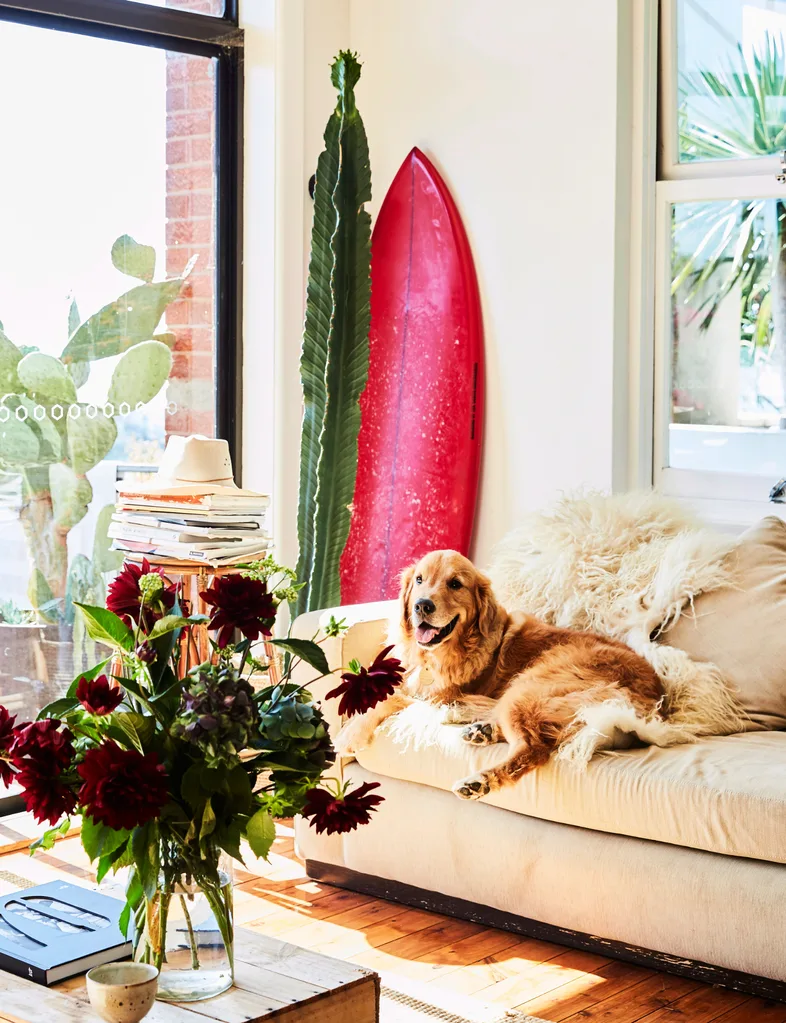
There’s a sense of humour to New Zealand coastal homes, too. Decor gives a wry nod to the retro furniture, op shop art and Crown Lynn mugs of the classic bach. This can be expressed through delightfully kitsch accessories, or by the use of colour. Let go of the white reins to embrace playful hues.
Modern coastal
While classic coastal is enduringly charming, contemporary coastal interiors are all grown up. Swap overt marine motifs for more oblique coastal references, using a curated palette of materials to subtly evoke the natural beauty of the shore.
“I think of modern coastal design as a home that feels like an extension of its environment. It’s not just a house on the beach. The themed ‘beach house’ look is gone and has been replaced by homes that use natural materials and tones. It’s a style that feels effortless yet considered,” says Margaux.
The modern coastal home is characterised by a sort of soft minimalism. It combines clean lines with the welcoming warmth of sun-heated sand. Nickola believes that a subtle coastal vibe is created with materials like limestone floors (with visible shells and fossil casts), aged timber and petrified wood. But most of all, she says, the essence of a modern coastal home is still that feeling of liveability and barefoot luxury.
“Natural fibres or performance fabrics that look natural but will stand up to wet swimmers, sandy feet and dogs straight from the beach. Think slipcovers that can be washed and put back on slightly wrinkled; scrubbed tables that withstand spills and the children’s arts and crafts; washed linen curtains that flow in the sea breeze – all these things that just get better with age and the collection of memories.”

