

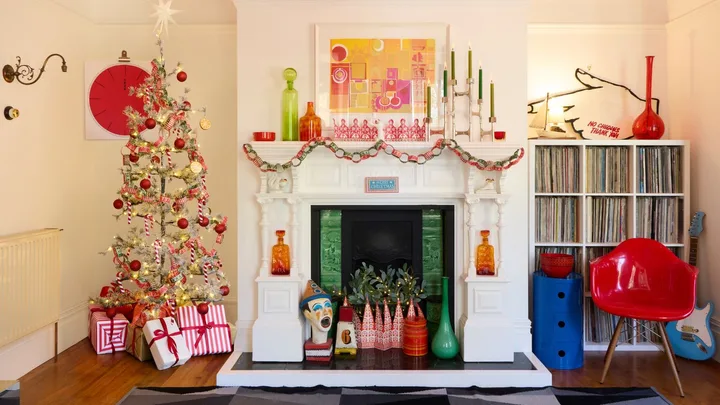
Rebecca Lovell-Smith has adored Christmas ever since she was a child.
“Well, what kid doesn’t?” she says.
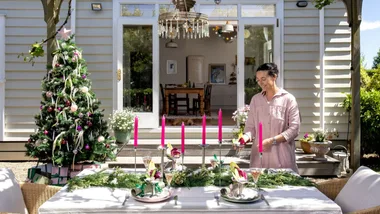
Fair point. But Rebecca has taken her enthusiasm further than most, with an annual Christmas Shoppe at The Tannery in Christchurch and an eclectic collection of seasonal paraphernalia of her own.
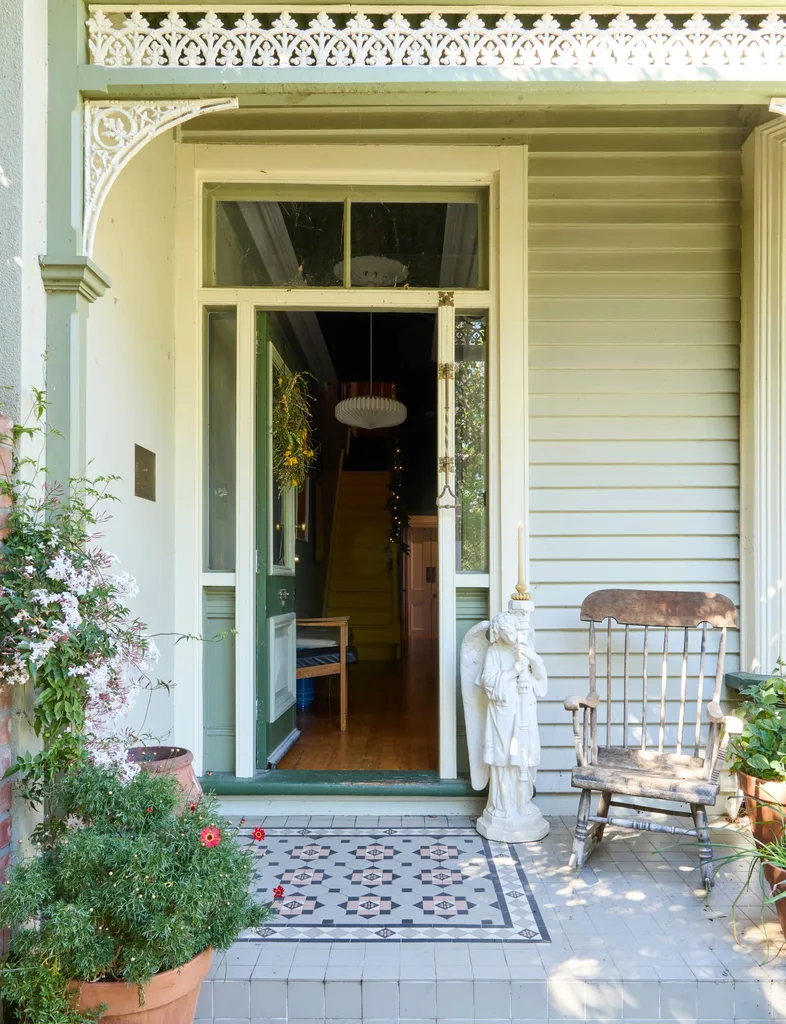
“I’ve always had Christmas trees,” she says. “My first was when I was a poor student and couldn’t afford any decorations, so I found a pile of plastic fruit at an op-shop and used it to decorate a macrocarpa branch.”
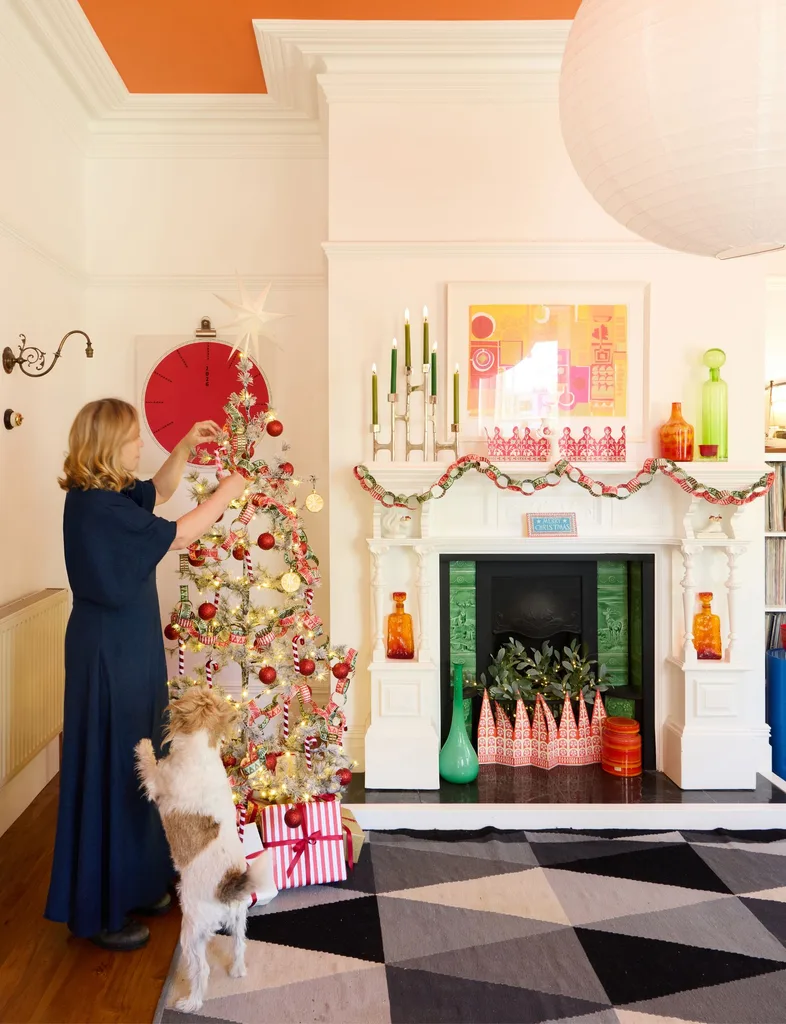
Meet & greet: Rebecca Lovell-Smith (shopkeeper), husband Christian Carruthers (illustrator and design tutor), son James, 21, dogs Wolfie, Foo and Tipsy, and cats Buster and Turnip.
Home profile:
The property: Four-bedroom semi-detached Victorian Italianate villa in Christchurch.
Nowadays, her trees are more likely to be pink, red or turquoise, and one is seldom enough. Her decorations spill out of boxes – those that fit in boxes, that is. These do not include the leaping life-sized fibreglass reindeer from Christchurch’s old Hay’s Procession Santa float, which her husband, illustrator and art tutor Christian Carruthers, found at a dump shop.
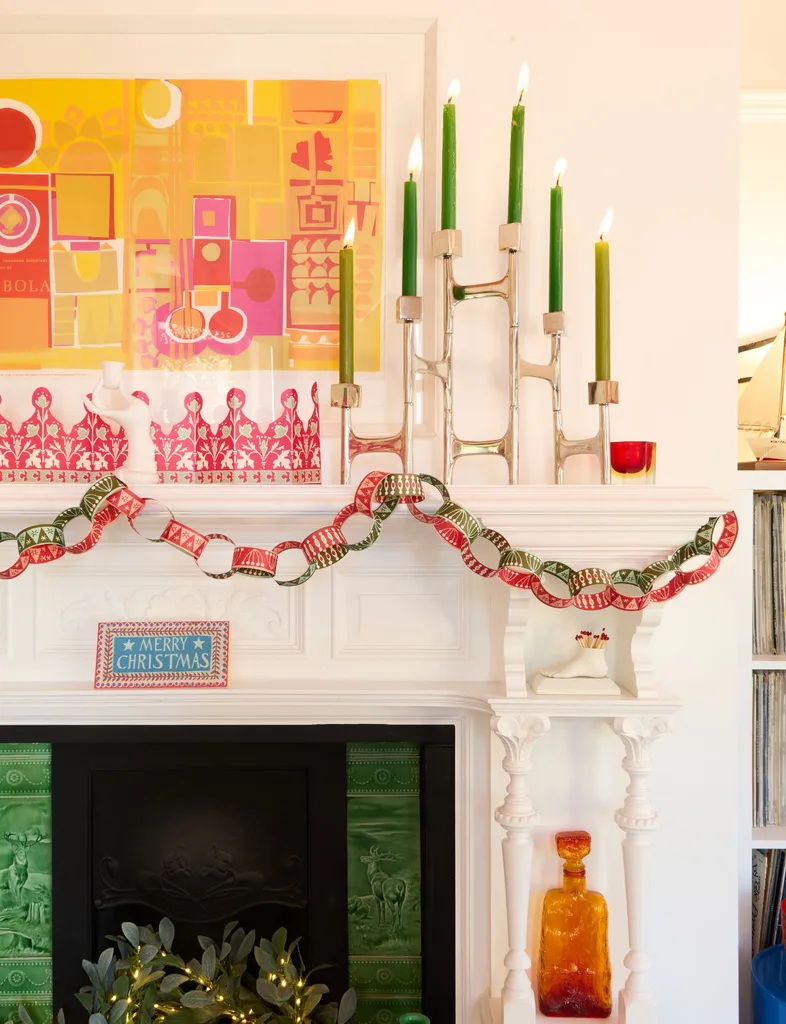
Christian shares her love of the curious and the collectable – one of the couple’s first dates was spent op-shopping.
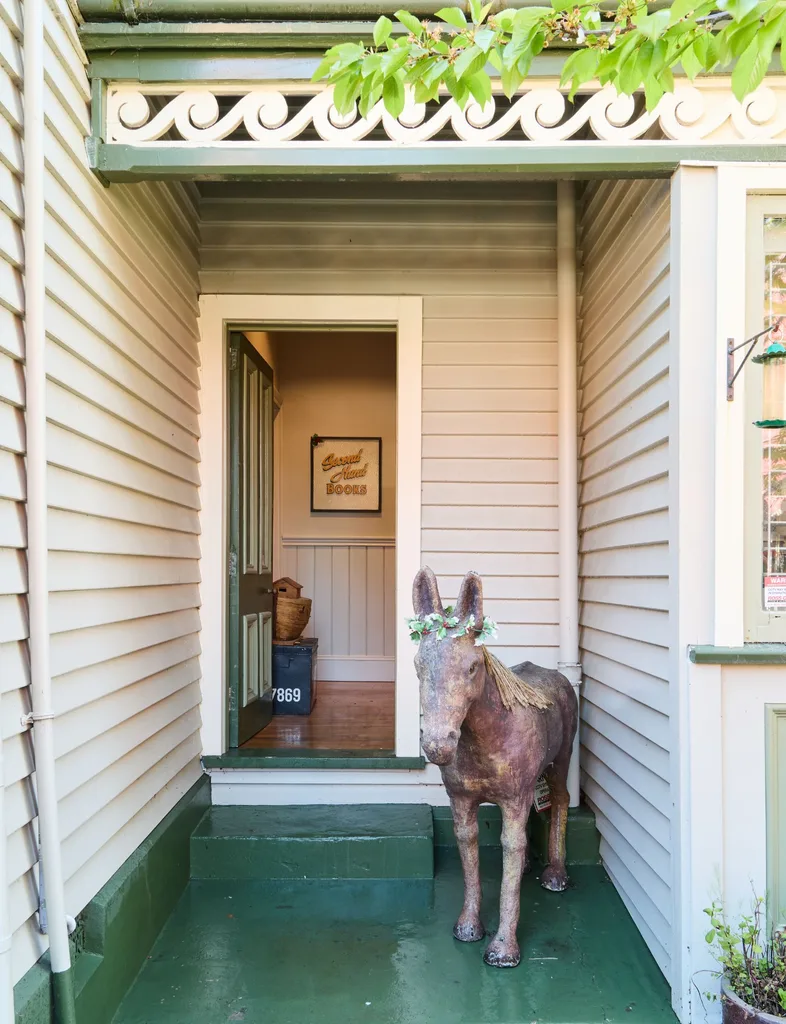
There’s also the 2m-long Christmas cracker made by Rebecca’s niece, Zoe Lovell-Smith, who also made the 1.2m pencil, which matches the outsized scissors that the couple bought years ago at an auction. The battered half-size Father Christmas was found in a secondhand shop, and the full-scale donkey, star of many nativity scenes, was inherited from her mother. In between festive roles, it lives in the courtyard of the 1890s semi-detached villa in downtown Christchurch that Rebecca and Christian share with their son, James.
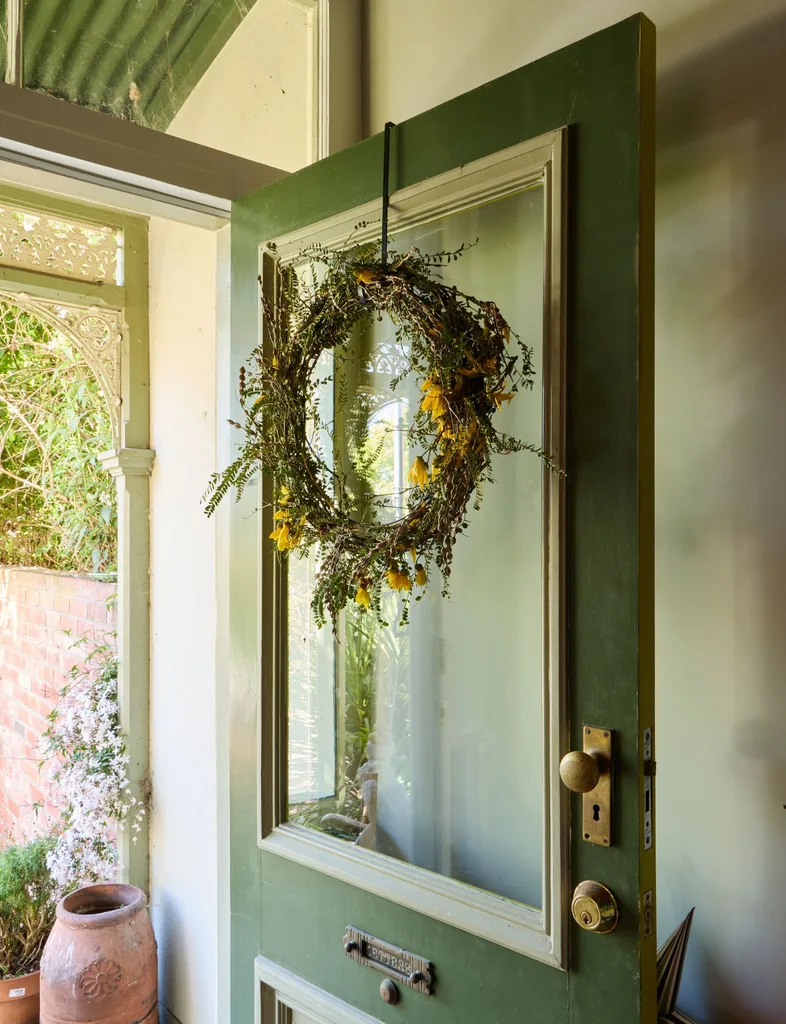
The art of festive decorating
Like her husband, Rebecca is an artist, so preparing for Christmas is not merely a matter of hanging decorations on the tree and stringing up fairy lights. Often, she will reorganise a whole room to perfect the look. This year, it’s Christian’s light-filled study that gets the full treatment – in reds and oranges with a modernist vibe.
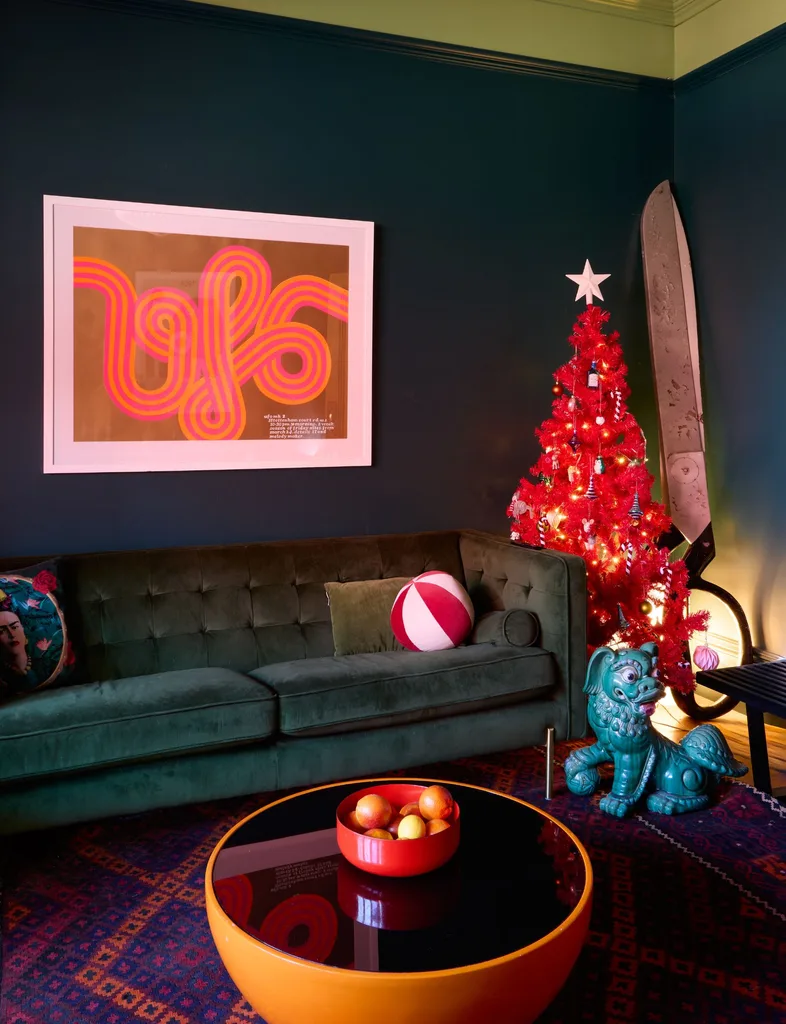
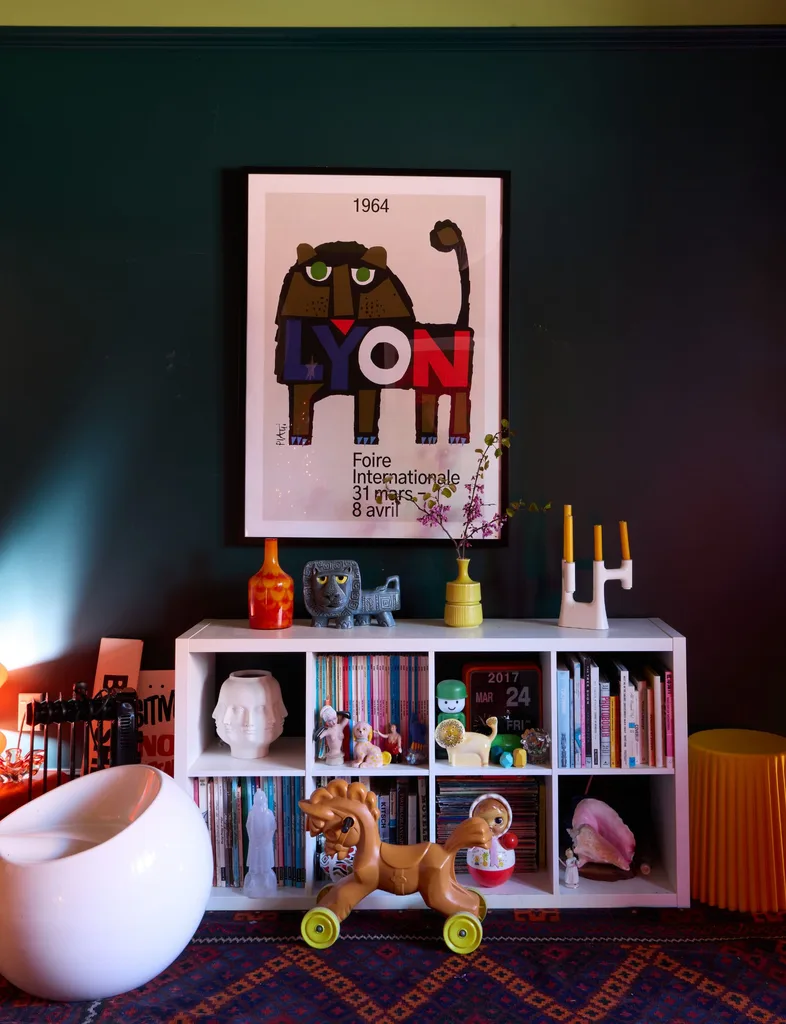
“I love those colours and it goes with the orange ceiling,” she says. “Our living room is darker and moodier, so I’ve given it a more cosy Christmas feel with reds and gold.”
As a shopkeeper, Rebecca has to keep up with the latest trends. What’s hot this year, you may ask?
“Fortunately for me, it’s what I really like,” she says.
“It’s very eclectic, kind of anything goes. Lots of old stuff is coming back – ornate glass ornaments, red and white stripes, paper chains, velvet ribbons and bows… New colours are coming through too. Burnt orange and mustard, for example, which work well with traditional Christmas green.”
A lifelong dedication
While this maximalist, ornate Victoriana trend seems custom-made for their current home, no style of dwelling has been spared Rebecca’s distinctive Christmas touch.
Over the past 30 years, the family has lived in a 150-year-old fisherman’s cottage on the estuary edge, a mid-century modern house on the Port Hills, and a 16-bedroom former Sisters of Mercy convent in Lyttelton.
After the 1930s brick convent building was destroyed in the 2011 earthquake, they bought a three-storey office block and warehouse in Lyttelton’s town centre. Built in 1960 for the Union Steam Ship Company and partially converted into an apartment, it offered plenty of space – complete with a toilet block – for the two collectors.
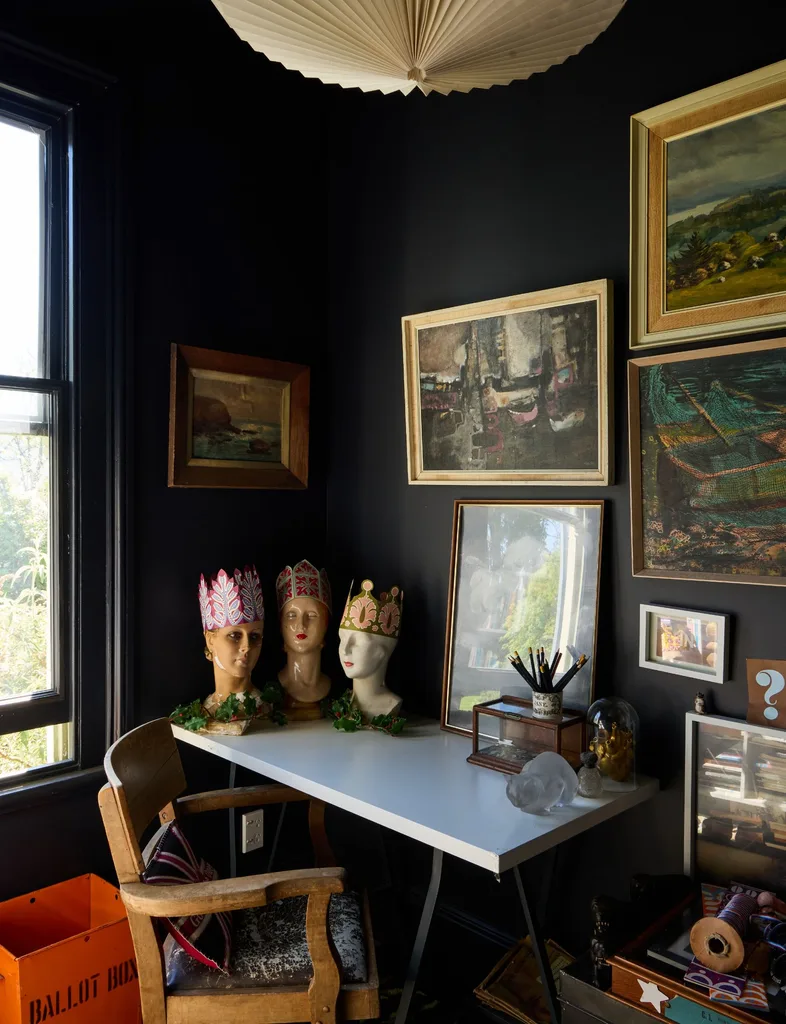
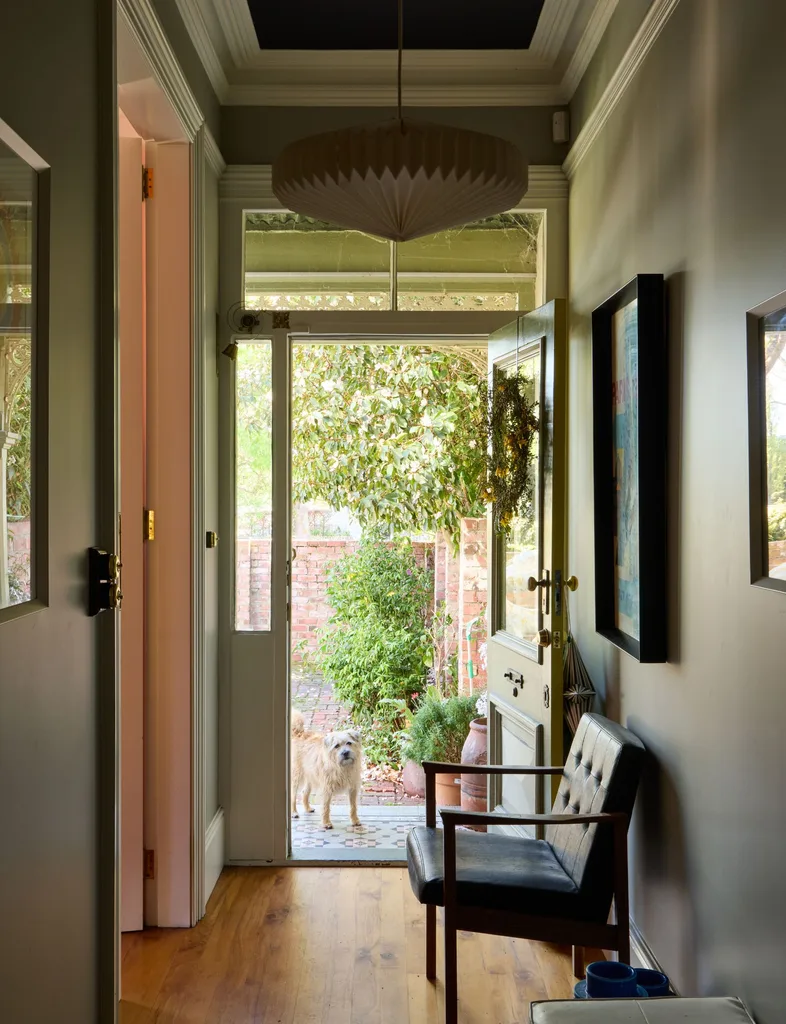
They added the neighbouring art moderne hotel, The British, to their portfolio before Rebecca’s longing to return to the city was realised in 2023 when their current home came on the market. An elegant, two-storey semi-detached townhouse, it was one of eight built in 1892 by an architect for his six children. They remained in his family until 1961, when they were converted into flats and offices. In 1992, the house at the end of the row, now occupied by Rebecca and Christian, was restored to its former glory by a local heritage advocate.
“I love old buildings and I love this house, with its high ceilings and beautiful leadlights,” Rebecca says.
Bold design
She also adores colour – so much so that she had the whole house repainted before moving in, having found the previous Victorian palette too sombre.
“I went for bold colours because it’s what I know and love. I painted most of my first flat red – including the ceiling – and the bathroom hot pink with black and white stripes above, after the shop in the Go Ask Alice book. I wish I could do subtle or pastels, but I’ve never been able to master those.”
The acid-yellow staircase may not be subtle, but its combination with pale grey walls and a black ceiling is masterly.
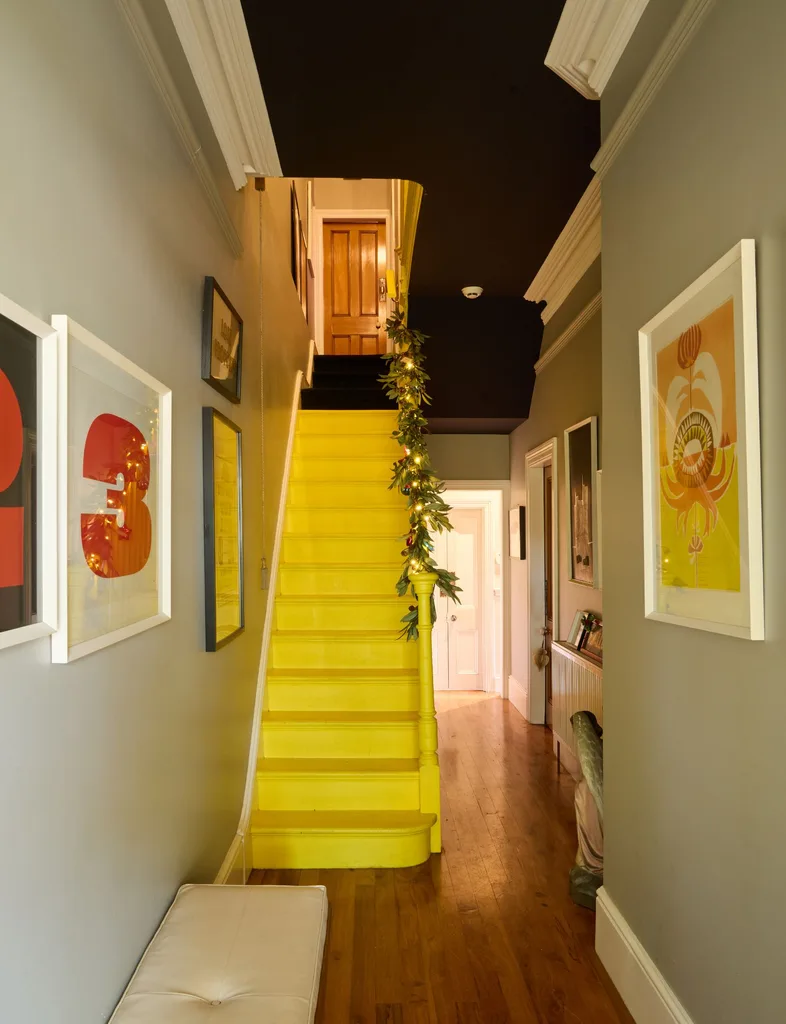
“Christian has always been a fan of black ceilings,” explains Rebecca. “As a young punk, he would paint the ceilings of his rooms black after Charles Rennie Mackintosh.
I should have pushed him to make more of the colour choices because he has a much more sophisticated colour sense.”
Rebecca says orange has been a feature colour in her homes ever since the first one she owned, where she and her best friend repainted the kitchen “a warm and happy” orange. “Growing up, I always wanted Mary Tyler Moore’s apartment, but with Rhoda’s red, purple and orange colour scheme.”
A love for the unusual
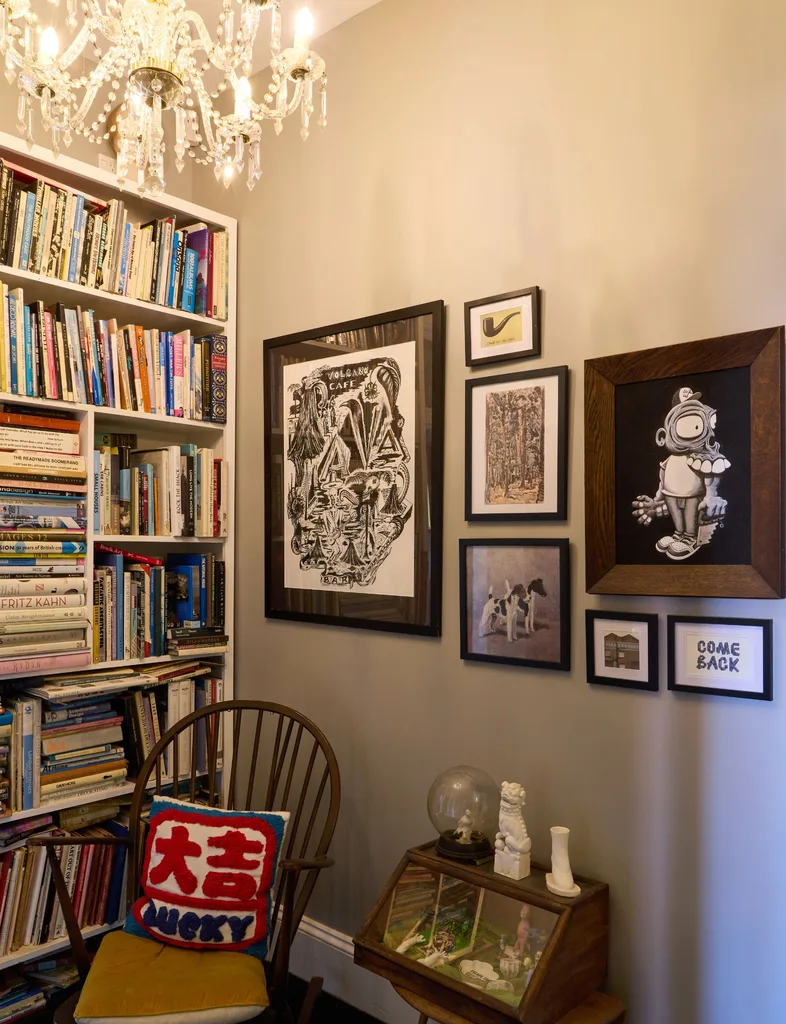
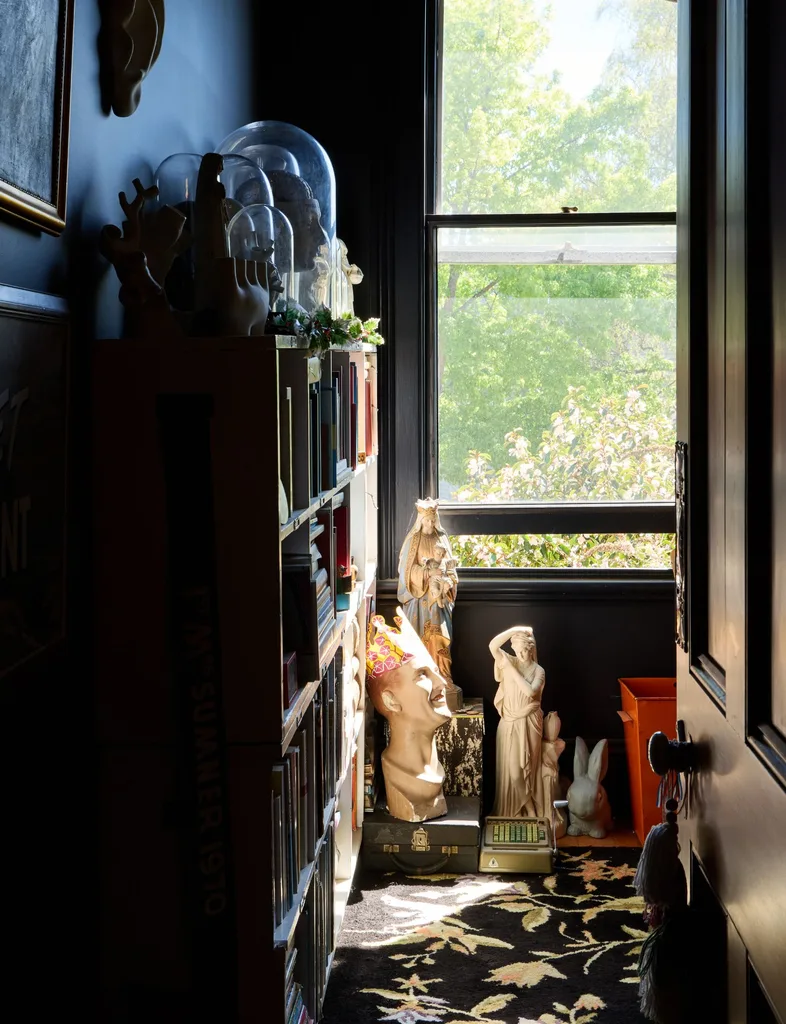
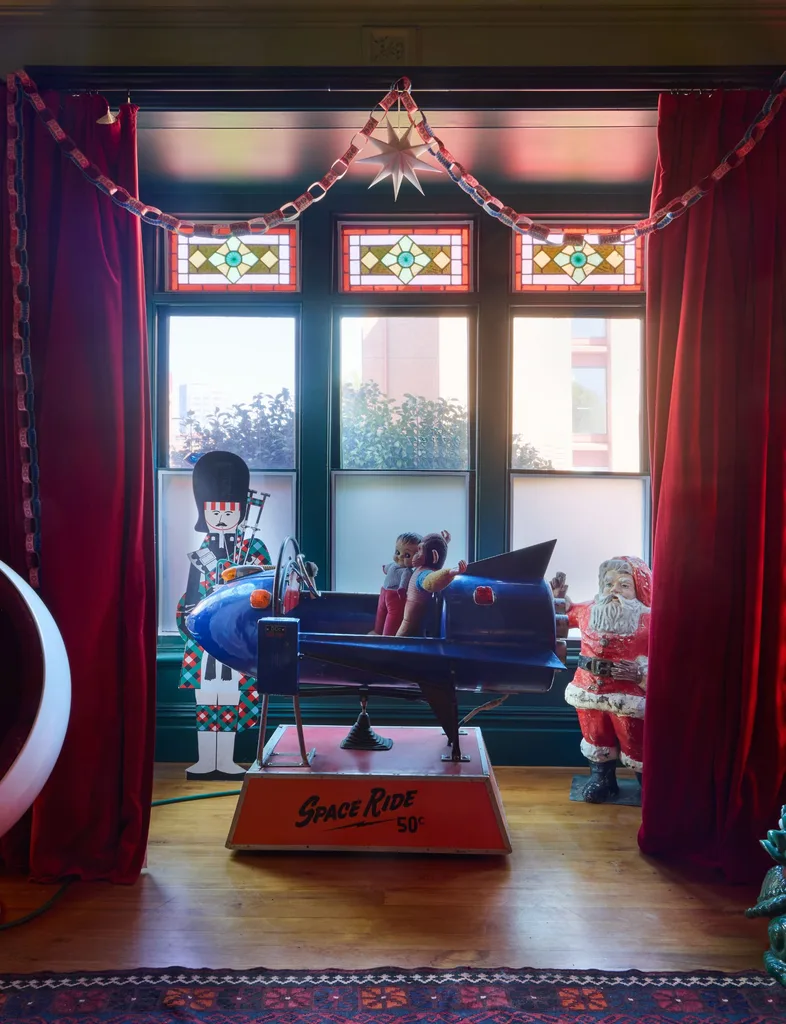
The couple’s love of pop culture, design classics, and the idiosyncratic and odd is evident throughout their villa. Graphic prints and posters adorn the walls, along with old shop signs and neon signs. Also resident are statues of angels and other heavenly figures, medical curiosities, ball chairs, tulip tables, arabesque dinner sets, laughing clown heads from fairground sideshows, foo dogs, kitsch souvenirs, coloured glass, mannequin heads, and Christian’s pottery (they also have a pottery studio).
Kitsch, colour and retro charm – they’re all part of the fun for two people who have never felt compelled to follow conventional tastes.
Rebecca’s decorating tips
- A nose for Christmas With artificial trees now popular, Christmas can lose some of its traditional fragrances. Bring them back with a real branch of conifer foliage, cinnamon, cloves, peppermint, or Christmas lilies. Or try scented soy or beeswax candles.
- Pomanders revisited For an old-fashioned and fragrant Christmas decoration, stud oranges with cloves, then roll them in orris root powder to dry and preserve them. Pile them in a bowl, hang them with ribbon, or tuck them among greenery.
- Going crackers Homemade crackers are special. Buy the snaps and make the crackers yourself, filling them with tiny presents or charms chosen for each guest, along with riddles, fortunes, terrible jokes or little handwritten messages.
- Matchless Christmas decorating doesn’t have to match. An eclectic tree mixing old and loved family decorations, op-shop finds, beautiful glass ornaments, children’s homemade treasures, and other bits and bobs collected over the years exudes charm. Anything of appropriate size can be a decoration if you put a hanger on it – colourful plastic fruit, pretty china teacups, miniature bottles, silver teaspoons…
- Little wonder A little doll’s house room decorated for Christmas makes a lovely display, particularly if space is limited. Add a tiny tree, presents, stockings and lights, and bring it out each year.
- Chain reaction Bring back paper chains. Make your own from old books, sheet music, magazines, wallpaper scraps or crepe paper, or you can buy specifically designed printed paper strips at Christmas shops. They’re also so fun for children to make.
- It’s a wrap Wrap presents with paper you already have – old maps, sheet music, children’s drawings, wallpaper remnants and brown paper can make things interesting. Finish with velvet ribbon, string, greenery or an old bauble. Or go Japanese and use (and reuse) fabric to wrap.
- Surprise element Put Christmas where it’s not expected. A sprig of holly on a painting, mistletoe hanging in the pantry or a miniature tree in the loo brings a charming festive touch to an unexpected corner of the house.
Read next:
- A historic home celebrating Italian festive traditions
- Explore this Provence-style Waiheke Island retreat
- This bright Whangaparāoa home radiates joy and positivity all year round

