

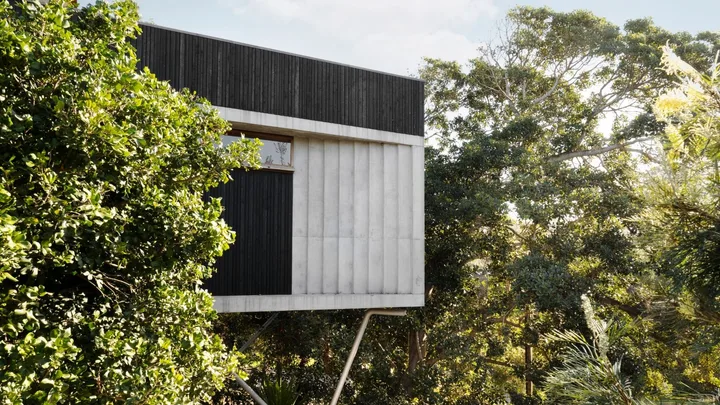
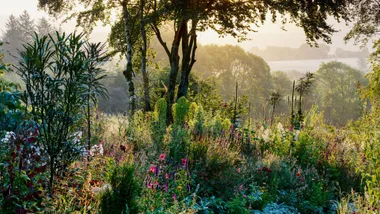
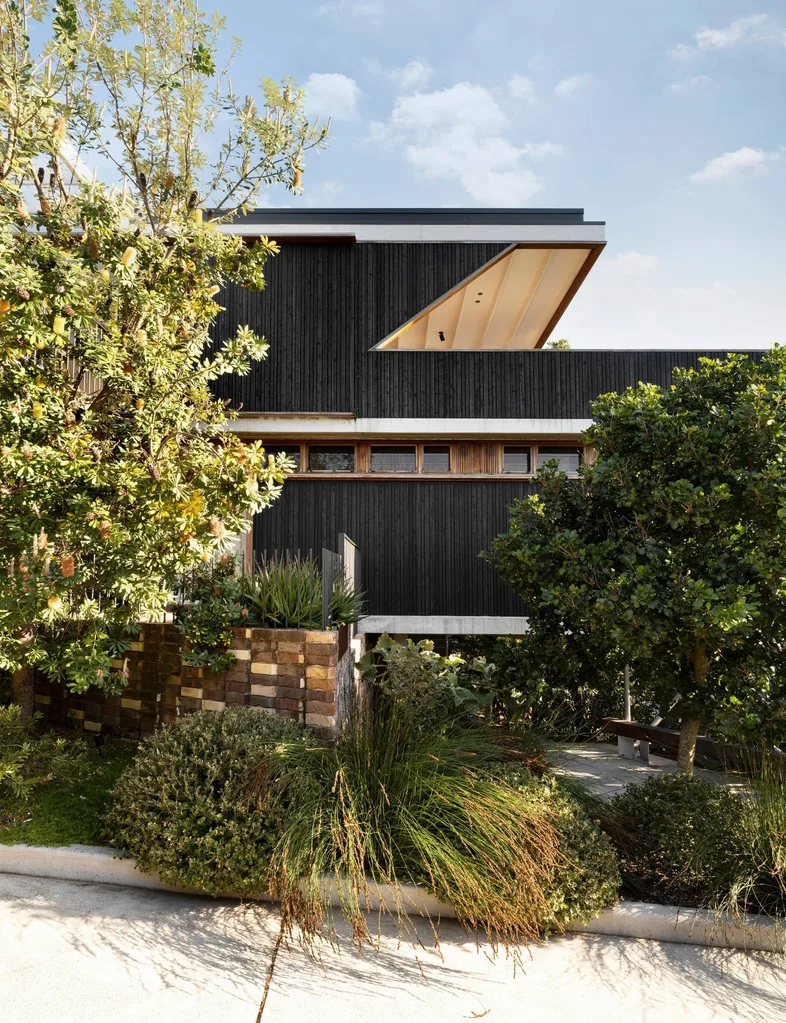
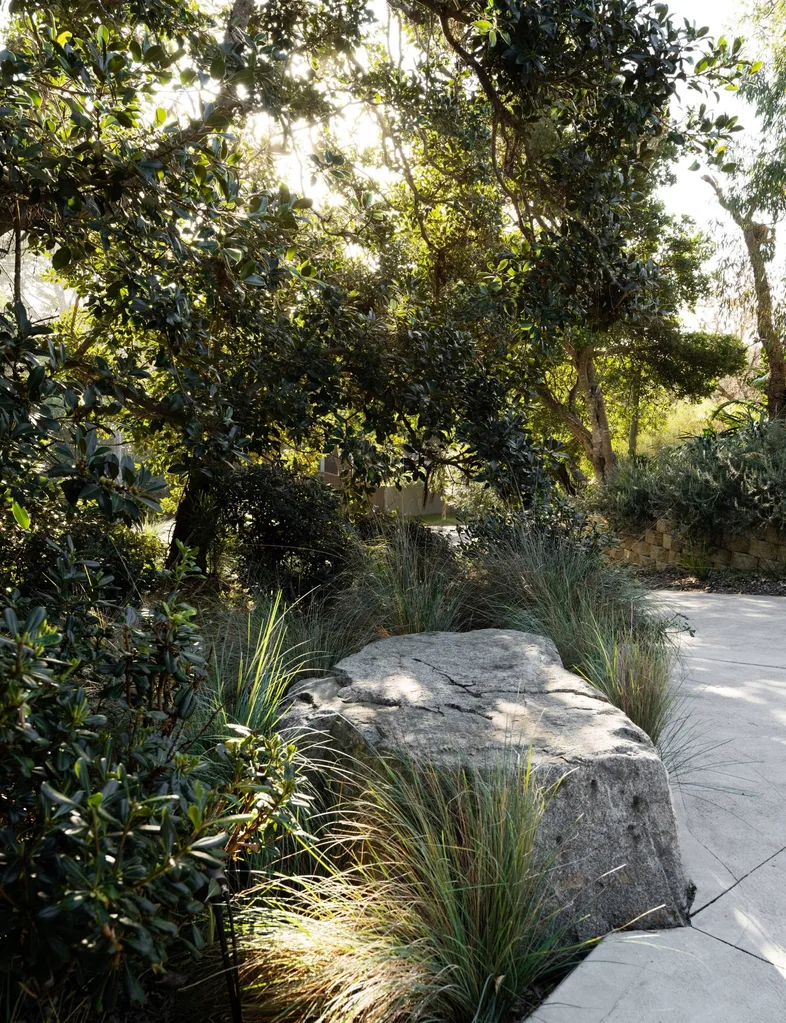
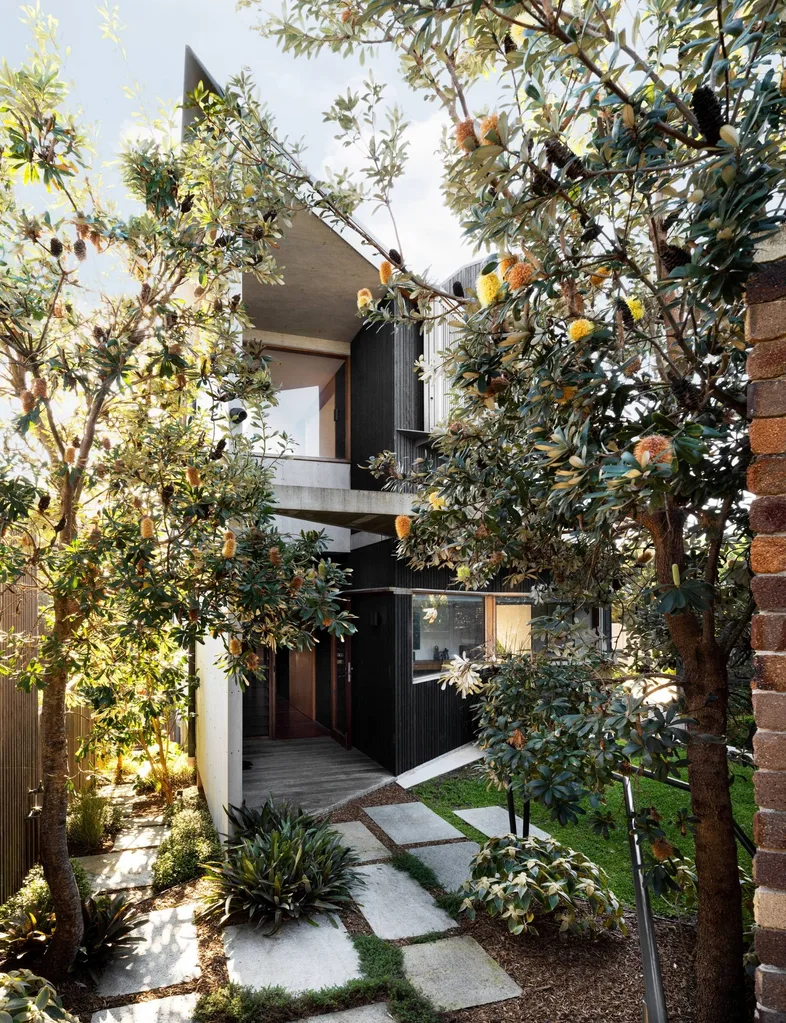
Peace and privacy reign at this coastal New South Wales holiday home, thanks to the prolific gardens that wrap around it. A wall of native Australian shrubbery along the shared driveway shields the house, while trees and grasses provide a soft contrast to the charred-timber exterior. Upstairs, elevated decks and balconies overlook lush canopies, with views of the beach beyond.
“The aim was to create a sense of entry as soon as you come up the drive, as well as to enhance the sense of greenery when you’re inside looking out,” says landscape designer James Headland about the engaging, all-purpose space that acts as a buffer between the four-bedroom home and its nearby neighbours.
“The garden has grown a lot in the few years it’s been there, with the trees forming into taller structures and the shrubs filling out and doing what they’re meant to do.”
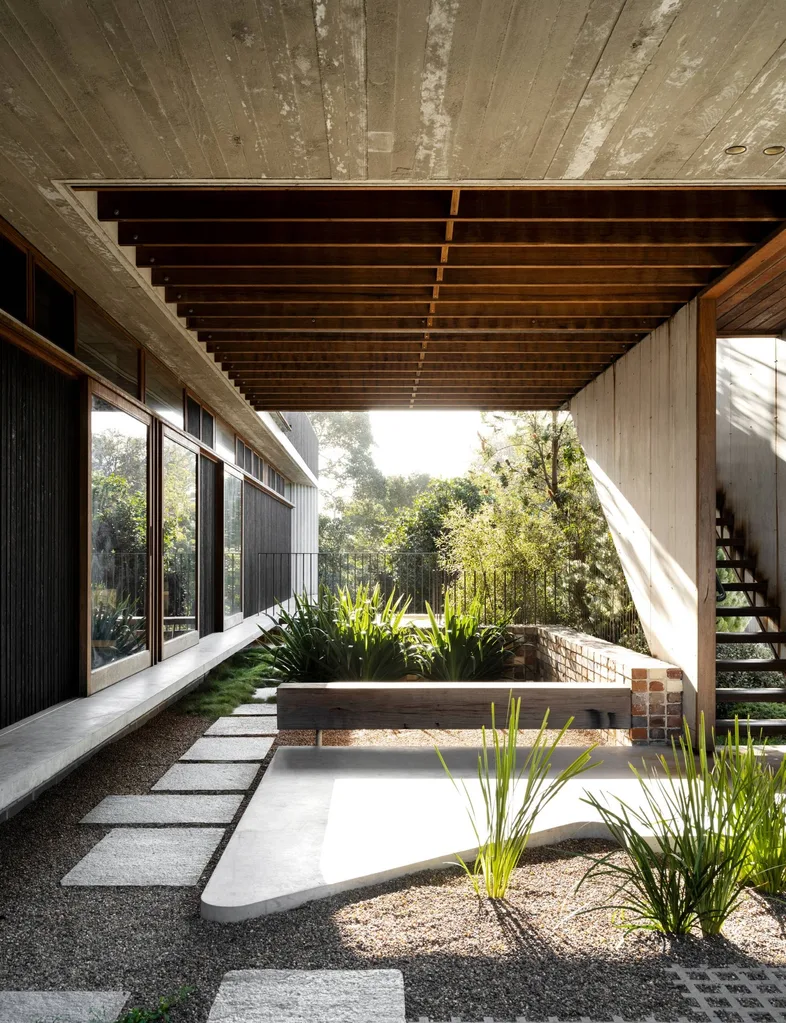
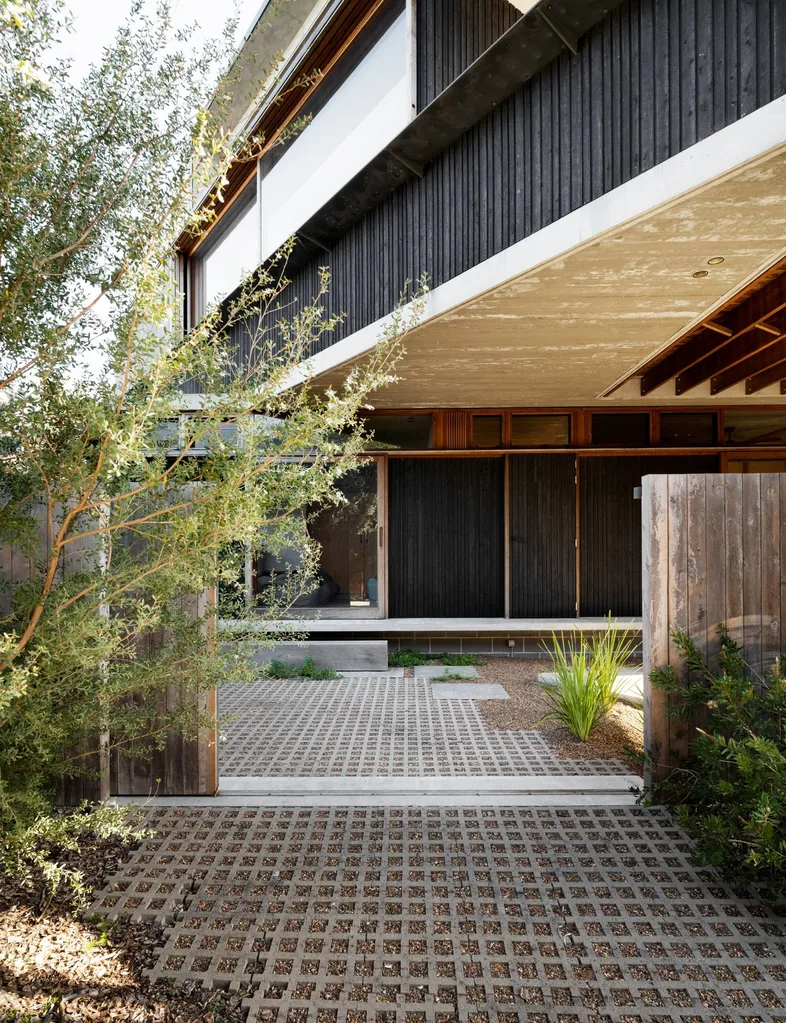
The gardens are designed in response to the main building’s linear form. They assist in maintaining a sense of privacy within the subdivided block. Upon entering through the timber gates, permeable pavers act as a living carport. A garden bed of coastal tea tree (Leptospermum laevigatum) sits to one side, complete with a concrete entry landing on the other. From there, Endicott stone pavers lead to a pebble-lined garden beneath the elevated deck and stairs.
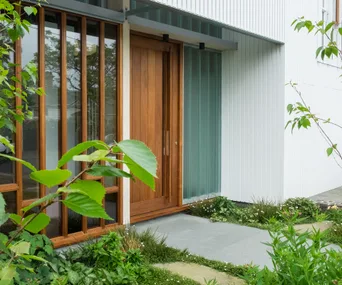
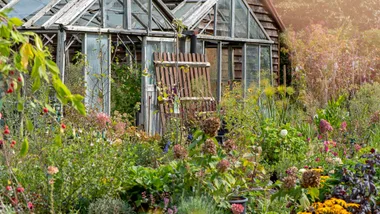
“It’s a nice way to resolve what is essentially a dead space,” says James of the area, which is accessed by the downstairs bedrooms and provides shelter from the sun and wind.
Upcycled entertaining
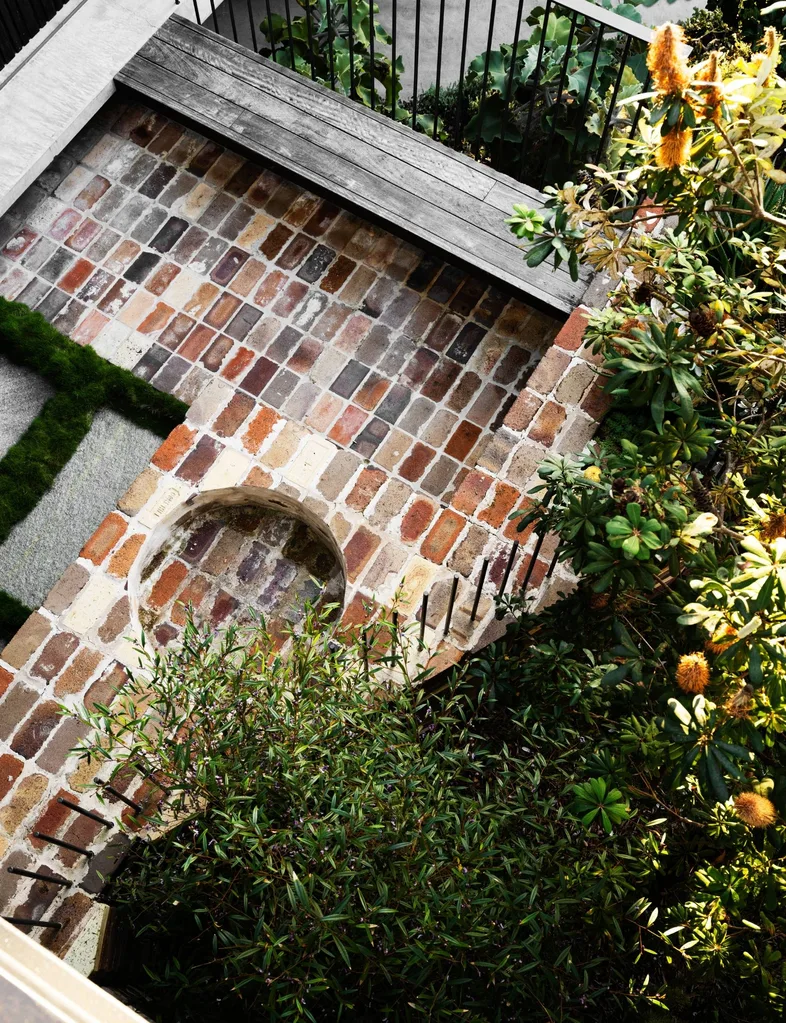
In its capacity as a holiday home, there are plenty of opportunities for easy living. One spot for this is the recycled-brick courtyard, home to a fire pit. It is surrounded by benches made from recycled wharf-timber sleepers. These are perfect for toasting marshmallows, playing cards, or chatting with a glass of wine in hand.
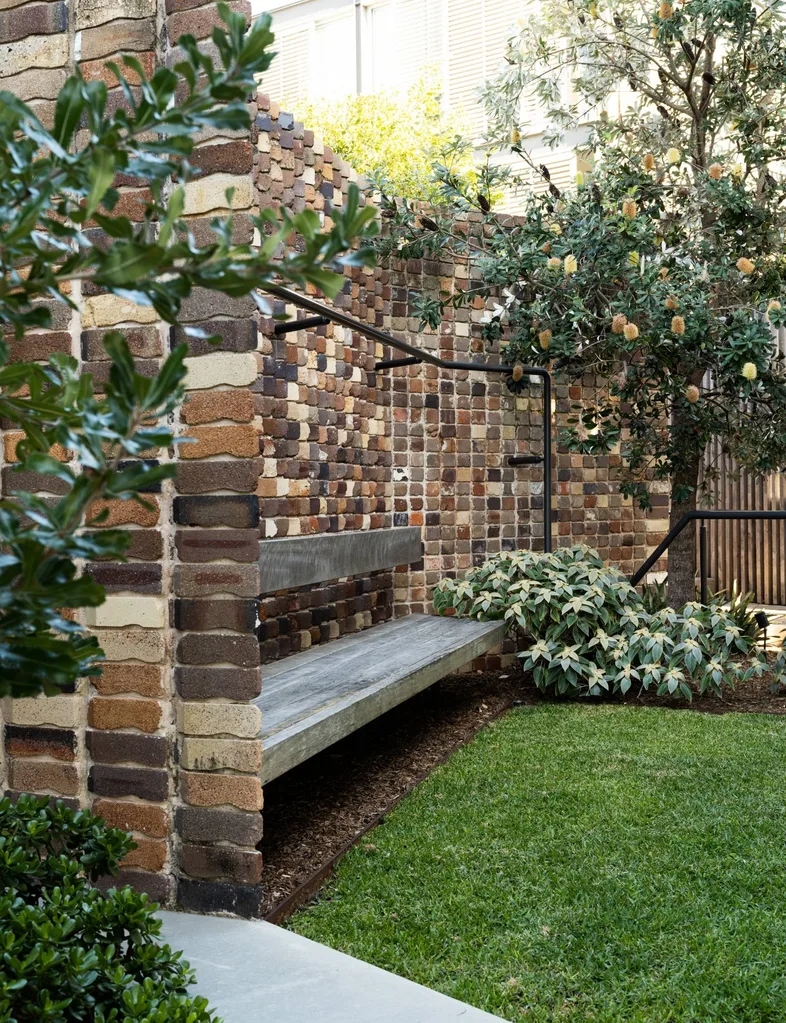
“The trees on the other side have since grown up beyond the wall to create a garden-room feeling,” James tells.
It acts to screen the area from the property in front, while a palisade-style barrier protects the family dog from misadventure. Leading up from the beach is a timber-stepped walkway flanked by coastal banksia (Banksia integrifolia). This iconic Australian native is classed as an environmental weed by DOC in New Zealand. It’s underplanted with gazania and a coastal groundcover (Delosperma cooperi) in order to stabilise the sand.
The family and their guests can come up from the beach via this private pathway. They can stop at the crazy-pave outdoor shower area to remove all the sand. Afterwards, they step onto the level lawn area, where a metal handrail makes the perfect towel-drying rack. For the construction, James chose hardy materials such as concrete, timber, and brick. He worked with a muted palette of brown and grey.
“The Endicott pavers have a grey tone that picks up the concrete, with a bit of browny warmth that ties in with the bricks,” he says.
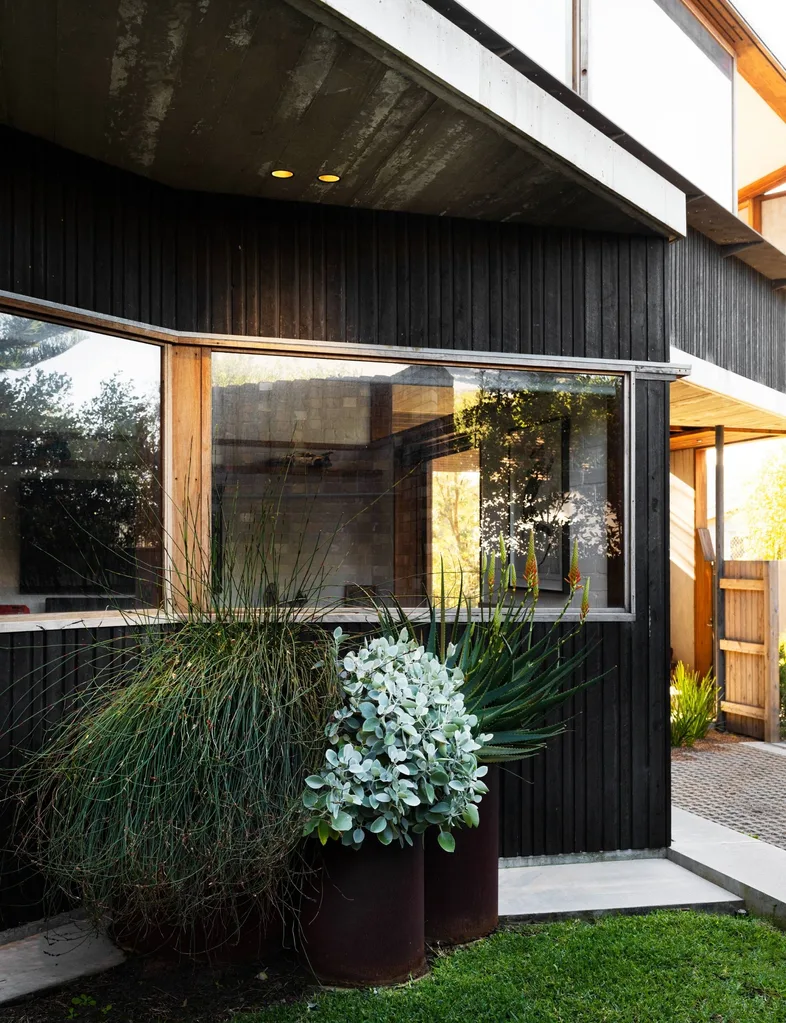
Steel risers and planters have rusted off over time to inject another textural layer to the palette.
Smart planting
For the plant selections, James took a multi-pronged approach.
“We thought about views as well as screening,” he explains.
“There’s a double-storey house next door, so it was about ensuring that when you’re standing on the lawn, you’re looking into green instead of a building, plus you get a view of foliage when you’re upstairs.”
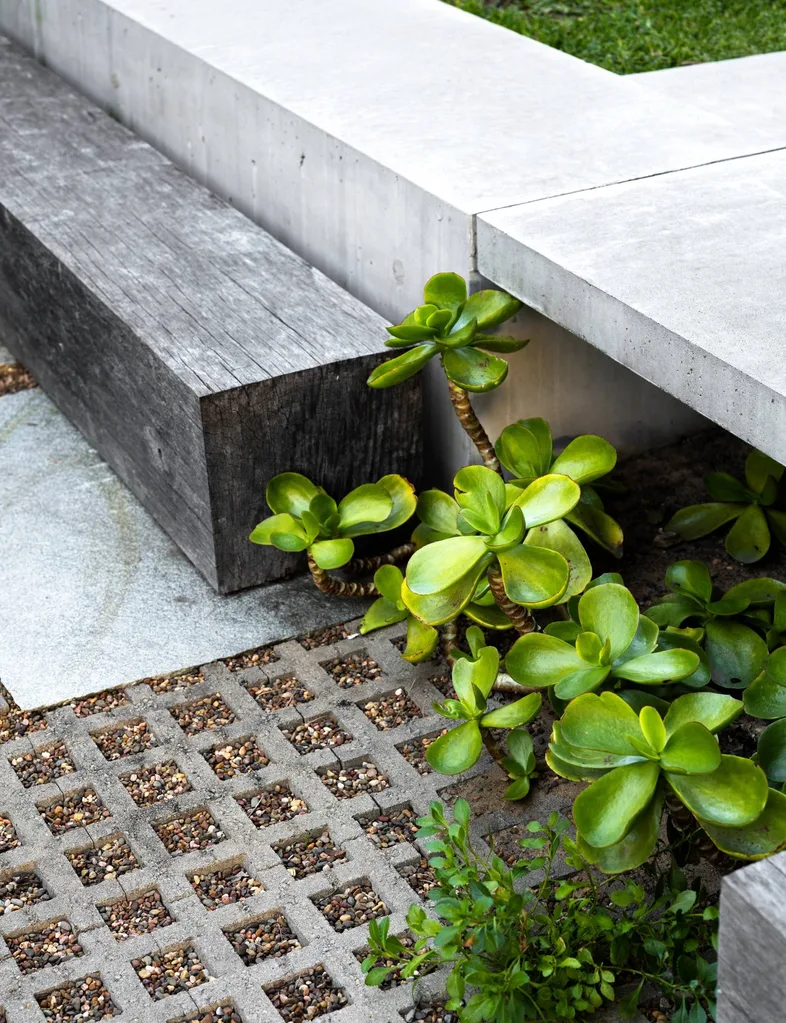
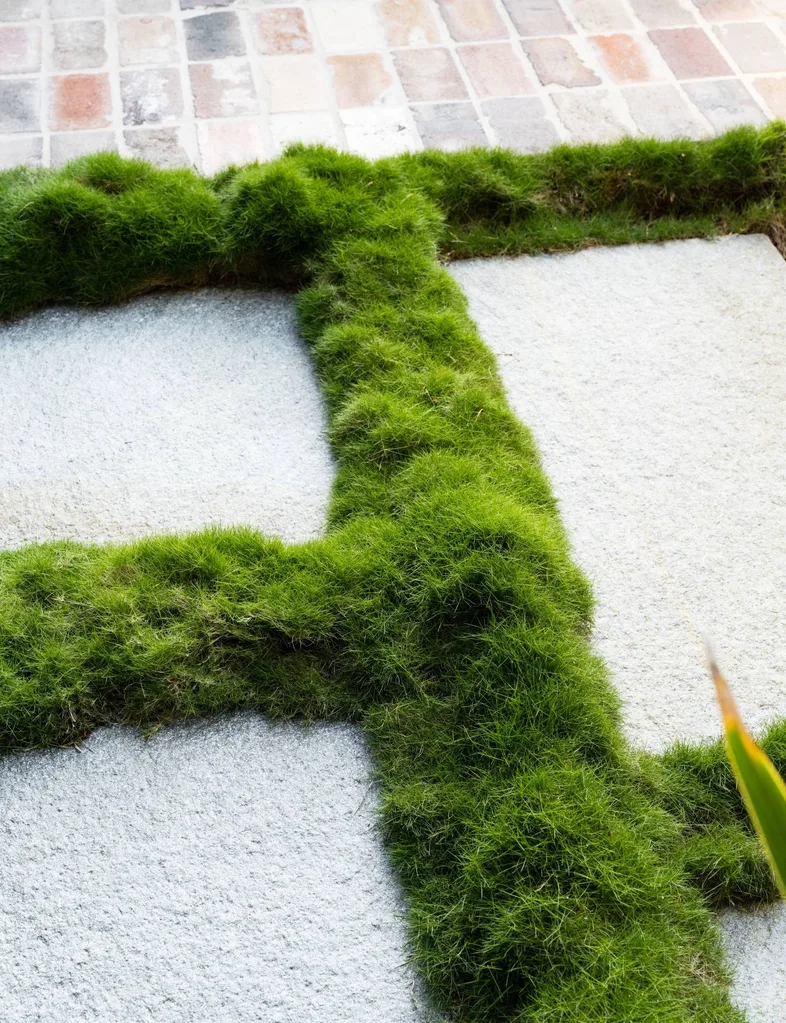
More coastal banksias bring the necessary height to the garden. They are interspersed with a variety of shrubs and grasses, including rounded white correa (Correa alba), native hovea, and small cape rush (Chondropetalum tectorum). Other strategic additions look almost arbitrary. No-mow grass (Zoysia tenuifolia) forms a soft carpet around the courtyard pavers, pewter bush (Strobilanthes gossypinus) sidles up against the timber bench in the lawn area, and a paddle-plant succulent (Cotyledon macrantha) appears to have self-sprouted in a gap beneath the lawn’s concrete threshold.
“The house is on the coast, so the plant selections we made were a response to the salt-laden, sandy location,” says James.
“We wanted something of this place, not necessarily endemic, but a low-key and predominantly native Australian garden.”
Design details
There’s at least one striking plant in every zone
- Growing in a gap beneath the lawn’s concrete threshold is a paddle-shaped succulent. It is accessed by recycled timber sleepers from a wharf.
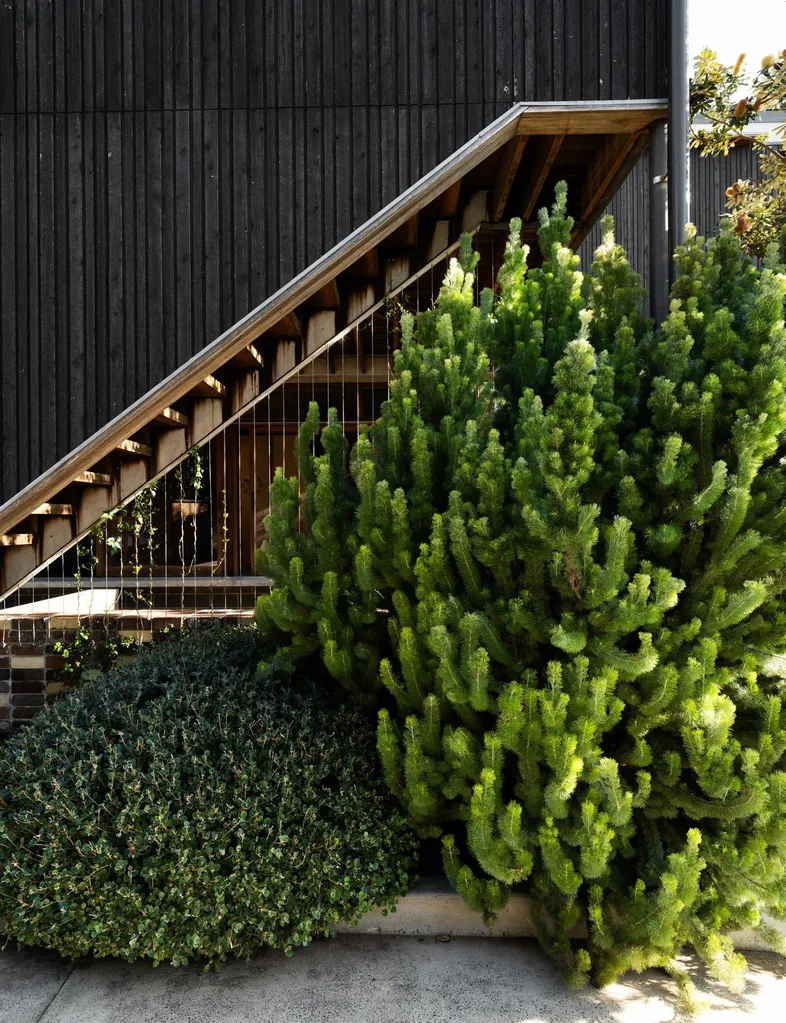
- A compact white correa and woolly bush (Adenanthos sericeus) cuddle up together in front of the external staircase.
- Fluffy no-mow grass (Zoysia tenuifolia) grows between the large-format Endicott stone pavers in the courtyard area.
- Looking down into the garden’s recycled-brick fire-pit area with its timber-bench seating and palisade-style safety barrier.
- In the lawn zone, a pewter bush (Strobilanthes gossypinus) was chosen for its soft grey foliage. Which works wonderfully in the bush setting. A metal rail above is ideal for hanging up towels to dry after trips to the beach.
- Steel planters make a feature of drought-tolerant plants, including a small cape rush (Chondropetalum tectorum), a silver-leaved kalanchoe and an aloe. Their different foliage contrasts beautifully.

